Venezuelan Authorities Strive to Protect Humboldt Glacier
Special Cover Reduces Sunlight... Some Say "Not a Glacier"
South American country Venezuela is on the brink of becoming the first nation to completely lose its mountain glaciers due to climate change. In response, environmental authorities are making desperate efforts to protect the 'last glacier' by transporting special material covers to high-altitude areas. On the 6th (local time), AFP reported that "Venezuelan authorities recently transported covers made of special fiber polymer material (Geotech style) to the high-altitude areas within Sierra Nevada National Park in M?rida state of the Andes mountain region to protect the 'Humboldt Glacier' (La Corona)."
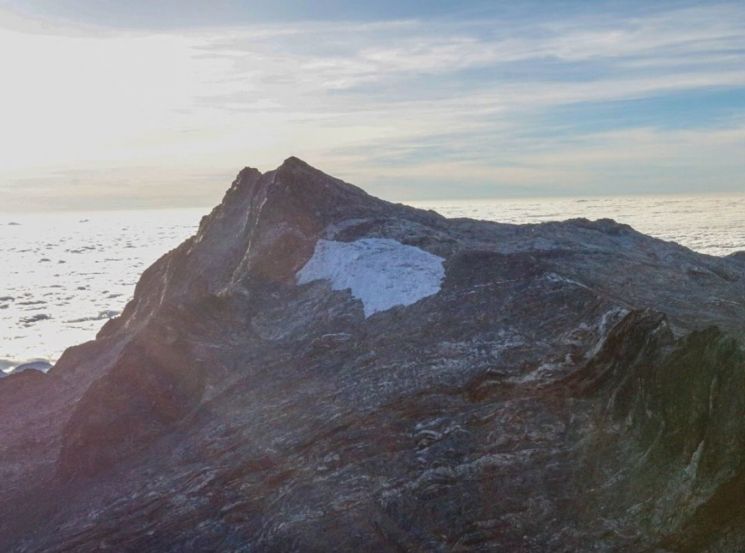 The 'Humboldt Glacier' located at the summit of the Andes in Venezuela, South America. [Image source=Captured from Heison Guzman, Governor of Merida Province's Instagram]
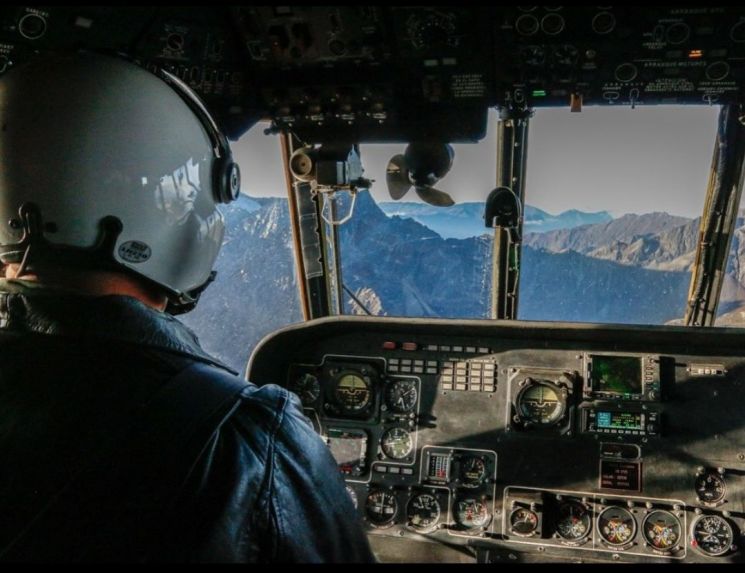
According to recent posts on social media by Venezuela's Ministry of Ecosocialism and M?rida Governor Jehyson Guzm?n, the cover, composed of 35 pieces, was designed to prevent the glacier from being exposed to strong sunlight. Authorities deployed two air force helicopters and over 100 personnel to transport the covers, each weighing 80 kg, to near the summit at an altitude of 4,900 meters. Governor Guzm?n posted on his social media, stating, “The goal is to reduce the sunlight hitting the rocks surrounding the glacier to prevent it from melting,” and added, “I am proud to be contributing to the protection of Venezuela’s last glacier.”
Venezuela is under urgent pressure to avoid becoming the first country where mountain glaciers completely disappear. Last year, the United Nations World Meteorological Organization (WMO) warned that “mountain glaciers in the northern Andes are rapidly melting due to climate change,” and predicted that “Venezuela will be the first country where glaciers completely melt and disappear permanently.” According to a research team from the University of Los Andes (ULA) in Venezuela, over the past century, glaciers covering an area larger than Yeouido (8.4 km²) have vanished, totaling 10 km². The 'Humboldt Glacier' has shrunk from a maximum area of 4.5 km² in the past to just 0.02 km² (0.4%) currently. In terms of floor space, an area that was more than half the size of Yeouido has reduced to about 6,000 pyeong (approximately 19,800 m²).
However, among experts, there is an assessment that an area of this size is hardly considered a glacier. Julio C?sar Centeno, an advisor to the United Nations Conference on Environment and Development (UNCED), told AFP, “It should be considered that there are no glaciers left in Venezuela,” and pointed out, “What remains here are just pieces of ice.” In the scientific community, the minimum area guideline for an ice mass to be classified as a glacier is generally set at 0.1 km². Researchers predict that the 'Humboldt Glacier' will completely disappear within the next 2 to 5 years.
There are also concerns about the environmental impact of the cover itself. If the cover decomposes in the future, microplastics could spread to nearby crops, lagoons, and the air, potentially affecting humans, animals, and plants. Ecologist Enrique La Marca criticized, telling AFP, “It could pose a serious threat to rare species such as mosses and hummingbirds. It may interfere with the proper oxygen supply for some living organisms.”
© The Asia Business Daily(www.asiae.co.kr). All rights reserved.
![Clutching a Stolen Dior Bag, Saying "I Hate Being Poor but Real"... The Grotesque Con of a "Human Knockoff" [Slate]](https://cwcontent.asiae.co.kr/asiaresize/183/2026021902243444107_1771435474.jpg)












