'Biosecurity Law' Passes US Senate Committee
Pressuring Chinese Bioindustry via Genomic Data Leak Concerns
Impact on BGI and Wuxi... Samsung Biologics and ST Pharm Expected to Benefit
U.S. efforts to curb China, which initially targeted information technology (IT) and semiconductors, are now expanding to the bioindustry. A regulatory bill openly targeting Chinese bio companies over concerns of U.S. citizens' genomic data leakage is reaching its final approval stage in the U.S. Congress. There are expectations that this will act as a positive factor for Korean bio companies, classified as U.S. allies.
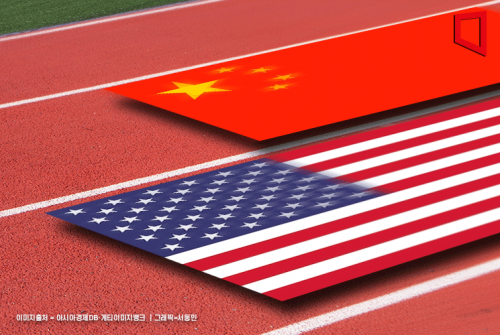
According to the bioindustry on the 9th, on the 6th (local time), the U.S. Senate Homeland Security Committee passed the Biosecurity Act, which prohibits U.S. government agencies from contracting with certain biotechnology companies. The bill, introduced in January, has rapidly progressed after passing the Senate committee within two months. It will become law once it passes the Senate floor, the House of Representatives, and is signed by the President. A similar bill has already been introduced in the House, and with bipartisan support from both Democratic and Republican lawmakers, its passage is highly likely.
This bill directly targets Chinese companies such as Beijing Genomics Institute (BGI, Huada) and Wuxi AppTec. BGI's subsidiary Huada Zizhao (MGI), as well as its U.S. subsidiary Complete Genomics, are also explicitly named. Since the bill covers not only these four companies but also their subsidiaries, parent companies, or successor entities, contract development and manufacturing organizations (CDMOs) under the Wuxi AppTec Group, such as Wuxi Biologics, are also affected.
The U.S. views Chinese companies as spies for the government and the People's Liberation Army, escalating threats to U.S. national security.
BGI, a genetic data analysis company, is suspected of siphoning off genomic information of U.S. citizens to China. BGI has developed prenatal testing methods for Down syndrome and supplies them to over 50 countries worldwide, including the U.S. and South Korea. The U.S. believes that genomic data collected during testing could be provided to the Chinese government. These suspicions intensified after BGI acquired the U.S. company Complete Genomics in 2013.
Wuxi AppTec's investment sources and the military-related background of its subsidiary's CEO have also raised concerns. China pursues a 'military-civil fusion' policy that applies civilian technology to military advancements. Funds related to military-civil fusion flowed into Wuxi AppTec, and the CEO of Wuxi Biologics served as a professor in the People's Liberation Army, which contributed to the regulatory reasons. Additionally, there is a perspective that the U.S. government aims to cut off the growth of China's bioindustry by targeting Wuxi Biologics, a rising global CDMO powerhouse, through this bill.
If BGI or Wuxi are barred from contracting with U.S. government agencies under the Biosecurity Act, pharmaceuticals and medical devices involving these companies will be unable to enter U.S. public health insurance programs such as Medicare and Medicaid. This would mean losing half of the world's largest pharmaceutical market, the U.S. market, immediately. Furthermore, companies receiving U.S. government support would be prohibited from dealing with BGI and Wuxi. In the long term, the Biosecurity Act may also apply to U.S. private companies.
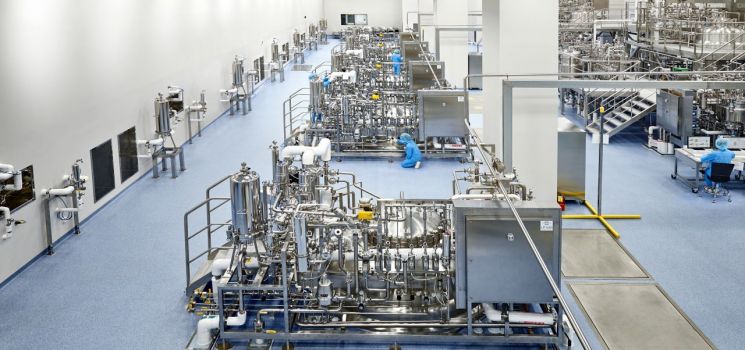
Domestic CDMO companies like Samsung Biologics are expected to benefit if Wuxi Biologics' U.S. operations are hindered. Seungmin Kim, a researcher at Mirae Asset Securities, predicted, "Since Samsung Biologics is trying to expand its business area from commercial-stage contract manufacturing (CMO) to early-stage CDMO, regulations on Wuxi Biologics will improve Samsung Biologics' long-term corporate value."
ST Pharm is also considered a beneficiary. This is because it competes with Wuxi AppTec's subsidiaries, Wuxi STA and Oligo CDMO. A representative from ST Pharm said, "Wuxi STA is engaged in early-stage oligo CDMO. Our company plans to expand into early-stage CDMO by operating a second oligo building next year, so the enactment of the Biosecurity Act will be helpful."
© The Asia Business Daily(www.asiae.co.kr). All rights reserved.


















