Indoor Air Quality Survey of Subway Lines 1-4 in August and December Last Year
Ventilation Equipment, Air Purification Devices... Operation, Maintenance, and Repair Are Crucial
The Busan Metropolitan City Health and Environment Research Institute reported that, based on measurements of indoor air quality inside urban railway vehicles last year, ultrafine dust and carbon dioxide levels on all four lines are being managed within the "Recommended Indoor Air Quality Standards for Public Transportation Vehicles."
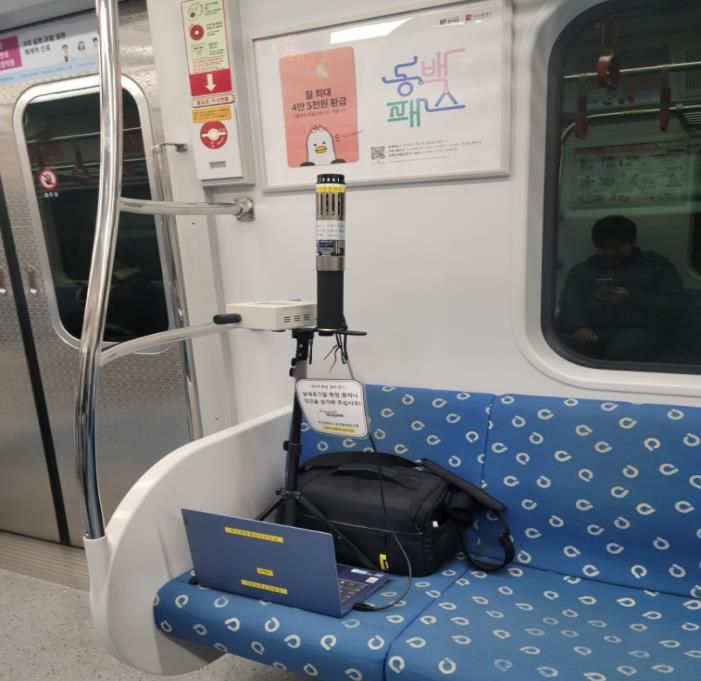
To protect the health of citizens using the Busan urban railway and to create a safe indoor environment inside urban railway vehicles, the institute conducted indoor air quality surveys twice last year during the summer season (August) and winter season (December). The surveys were conducted twice each during peak and off-peak hours from the vehicle's departure point to its destination.
Peak hours were defined as 7:30 AM to 9:30 AM or 6:00 PM to 8:00 PM on weekdays, while off-peak hours were conducted outside of these times.
The indoor air quality measurement items were ultrafine dust (PM-2.5) and carbon dioxide (CO2).
The test results showed that ▲during peak hours, ultrafine dust was 8.3 ㎍/㎥ (standard: 50 ㎍/㎥ or below), carbon dioxide was 1065 ppm (standard: 2500 ppm or below), and ▲during off-peak hours, ultrafine dust was 7.5 ㎍/㎥ (standard: 50 ㎍/㎥ or below), carbon dioxide was 934 ppm (standard: 2000 ppm or below), all within the recommended indoor air quality standards.
Ultrafine dust (PM-2.5) concentrations ranged from 2.4 to 15.4 μg/㎥ during peak hours and from 3.3 to 12.6 μg/㎥ during off-peak hours, remaining within the recommended indoor air quality standard (50 μg/㎥). Regardless of peak or off-peak times, the concentration inside the train tended to fluctuate according to the outdoor air quality and platform concentration levels on the day of measurement.
Additionally, due to the influence of air purification devices inside the passenger compartments, indoor air quality inside the compartments was found to be better than that on the platforms across all lines.
Carbon dioxide (CO2) concentrations ranged from 739 to 1349 ppm during peak hours and from 698 to 1198 ppm during off-peak hours, all within the recommended indoor air quality standards (peak: 2500 ppm, off-peak: 2000 ppm). Although concentrations were generally higher during peak hours, higher levels were also observed during off-peak hours when passenger numbers were high (4 PM to 6 PM), indicating a correlation between passenger density (number of passengers) and carbon dioxide concentration inside the compartments.
Jung Seung-yoon, Director of the Busan Health and Environment Research Institute, stated, “Indoor air quality inside urban railway vehicles is maintained at a safe level,” and added, “To create a pleasant and safe indoor air environment inside urban railway vehicles, it is important to improve air conditioning facilities to reduce fine dust in the outside air entering through ventilation ducts, properly operate and maintain ventilation and air purification equipment in underground stations, and air purification devices inside the compartments.”
Indoor air quality inside urban railway vehicles is maintained and managed according to the "Management and Operation Recommended Standards for Public Transportation Vehicles (Enforcement Rules of the Indoor Air Quality Management Act)."
© The Asia Business Daily(www.asiae.co.kr). All rights reserved.

















