'Maeryeok Garden·Donghaeng Garden Project' Announced... Over 300 Sites Annually Starting This Year
Utilizing Idle Spaces Including Roads, Plazas, Traffic Islands, and Building Rooftops to Elevated Roads
Creating 'Signature' Gardens Using Existing Large Parks Like Seoul Botanical Garden
Gardens for Socially Vulnerable Groups Such as Children, Seniors, and Disabled... Supporting Healing and Care
Seoul City plans to create 1,007 gardens by 2026 by utilizing idle spaces within the city center. This includes not only areas near roads and plazas but also small leftover spaces in residential neighborhoods. This initiative is part of the 'Garden City Seoul' project announced last year by Mayor Oh Se-hoon, aiming to cultivate garden culture and enhance the city's competitiveness.
On the 7th, Seoul City announced the 'Attractive Garden & Companion Garden Project,' which outlines the plan to create about 300 gardens annually from this year through 2026.
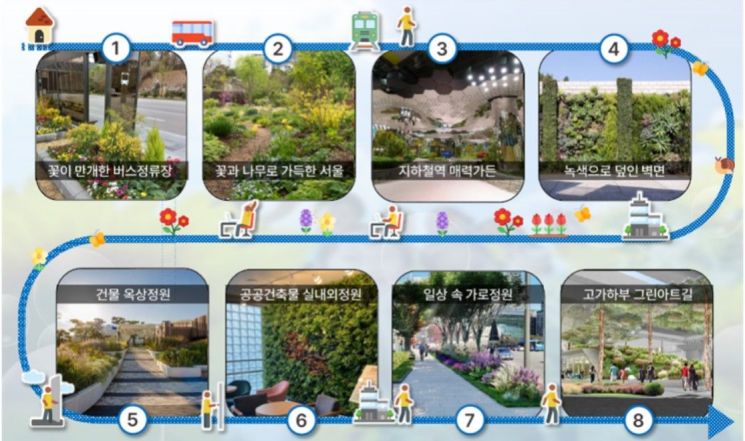
Earlier, in May last year, Mayor Oh presented the vision of 'Garden City Seoul' with four core strategies?emptiness, connection, ecology, and emotion?and key projects. The announcement made by Seoul City this time details the implementation plan for 'Garden City Seoul,' depicting a concrete vision where gardens permeate daily life and citizens can tangibly experience a garden city.
This plan reflects criticism that, despite efforts to increase green indicators such as urban park area per capita and park ratio, the expansion of green spaces in living areas has been insufficient. Attention was also paid to advanced cities like the UK, Germany, and Singapore, which have adopted gardens as a theme to cultivate urban appeal and thereby boost city competitiveness. A Seoul City official elaborated, "Suncheon City, which started with an eco-belt to preserve Suncheon Bay and became Korea's first national garden in 2015, attracting 9 million tourists annually; and Ulsan City, which restored the polluted Taehwa River and developed the entire city into a garden with experiential facilities, achieving the status of the second national garden in 2019, are representative examples."
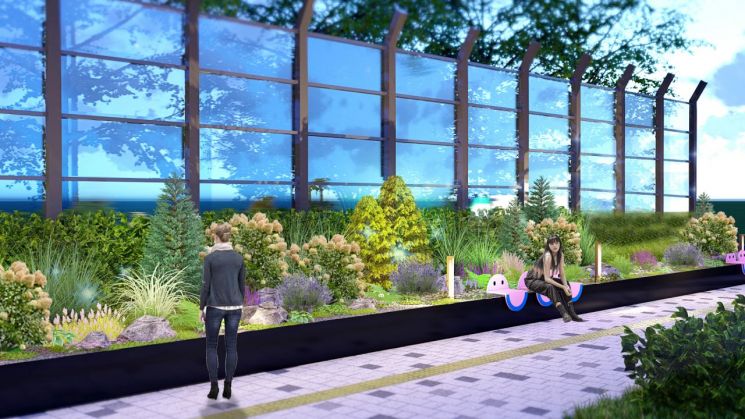
First, Seoul City will actively utilize idle spaces within the city center. The 25 autonomous districts will create 'Attractive Gardens' by utilizing idle spaces such as roads, plazas, and traffic islands in connection with the Seoul International Garden Expo. Project sites have been designated including Jongno-gu - in front of Jongno Tower Plaza, Dobong-gu - under the elevated tracks at Chang-dong Station, Mapo-gu - Hongdae Red Road, and Yeongdeungpo-gu - Munrae-dong public open spaces. Major roadsides, building rooftops, and elevated roads are also included. A total of 279 sites have been designated to create gardens named Four-Season Flower Path Gardens, Street Gardens, Rooftop Gardens, and Forest Paths Under Seoul.
At key locations such as the Magok cultural facility site, four flower gardens specializing in flowers will be created, and starting with two street green spaces this year, a total of ten will be developed as 'Shared Gardens.' Small leftover spaces such as curves in low-rise residential areas, spaces where roads meet residential areas, and areas near markets will be transformed into 'Village Gardens.'
Gardens utilizing existing large parks will also be created. Plans include establishing signature gardens that reflect the characteristics of each region within major representative parks of Seoul such as Seoul Botanic Park, Maehun Citizen's Forest, Boramae Park in Dongjak, Yulhyeon Park in Gangnam, and World Cup Park in Mapo.
'Theme spaces' combining parks and cultural elements will also be introduced. Currently, nine project sites have been designated, including 'Haechi Gardens' using the newly designed Haechi, which will be created in Children's Grand Park, Ttukseom Hangang Park, and Buk Seoul Dream Forest. At Open Songhyeon Plaza, Ttukseom Hangang Park, and Buk Seoul Dream Forest, visitors can experience sculpture gardens exhibiting artworks this year.
Gardens for pet owners are also planned. 'Pet Gardens' where dogs can run and play will be created at three locations including Noeul Camping Site and Nanji Hangang Park to promote proper pet etiquette and spread animal protection culture.
Additionally, gardens for socially vulnerable groups such as infants, the elderly, and people with disabilities are notable. Starting with the creation of 'Companion Gardens' that aid healing and recuperation at a senior welfare center in the first half of this year and a municipal hospital in the second half, the plan is to expand to 12 medical institutions and 91 municipal senior welfare centers under the city. Gardens will also be created at facilities frequently used by people with disabilities, such as disability learning support centers and rehabilitation self-reliance workshops. Programs will be provided where people with developmental disabilities, mild cognitive impairment, early-stage dementia patients, and their families create and maintain gardens together.
Based on this, Seoul City will hold the 'Seoul International Garden Expo' at Ttukseom Hangang Park for five months starting in May this year. The goal is to grow it into a cultural and garden festival representing Seoul, allowing people to experience world-class garden culture, similar to the UK Chelsea Flower Show and the France Chaumont International Garden Festival. Lee Soo-yeon, Director of Seoul City's Green City Leisure Bureau, said, "Through this project, we will fill various parts of Seoul with diverse gardens, providing citizens with happiness and healing in their daily lives and conveying Seoul's unique charm to visitors. We will create high-quality gardens throughout Seoul and spread garden culture so that Seoul can rise as a 'world-class garden city.'"
© The Asia Business Daily(www.asiae.co.kr). All rights reserved.


















