"Strengthening Compensation for Essential Medical Health Insurance"
Introduction of Differential Public Policy Fees
Enhanced Compensation for Surgical Medical Staff
The government will invest approximately 120 billion KRW of health insurance funds into areas such as maternity, newborns, and severe diseases to strengthen compensation in essential medical fields starting this month.
On the 6th, the Ministry of Health and Welfare announced that it held a meeting of the "Central Disaster and Safety Countermeasures Headquarters (CDSCH) for Responding to Doctors' Collective Actions," presided over by the President. This meeting was the first chaired by the President since the CDSCH was activated on the 23rd of last month in response to doctors' collective actions.
At the meeting, the CDSCH stated, "We confirmed that increasing the number of doctors by 2,000 is a constitutional duty to protect the lives and health of the people, and decided to promptly advance the four major medical reform tasks to overcome the crisis in regional and essential medical care." It also reported the plan to strengthen health insurance compensation in essential medical fields to swiftly implement fairness in the compensation system.
Amid ongoing collective actions by doctors, including mass resignations of residents, the government intends to proceed with compensation in essential medical fields as demanded by the doctors. To this end, the government will actively compensate through health insurance to ensure that the "High-risk Maternity and Neonatal Integrated Treatment Centers" can operate without concerns about losses, thereby establishing a safe foundation for pregnancy and childbirth.
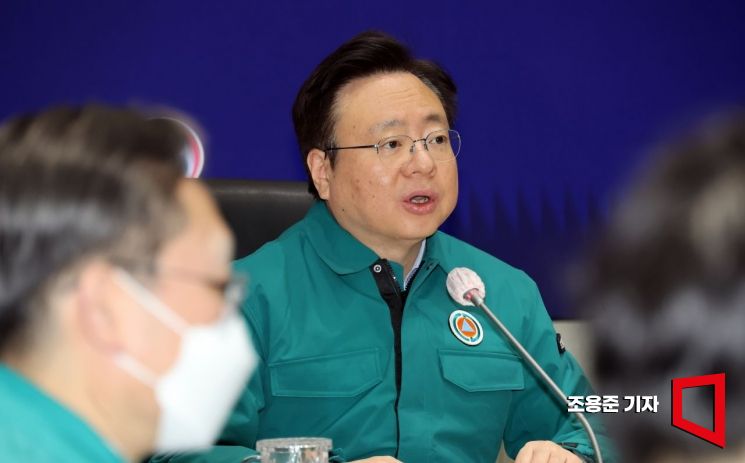 On the 4th, the first working day after the deadline for residents to return set by the government, Cho Kyu-hong, Minister of Health and Welfare, spoke at a video conference of the Central Disaster and Safety Countermeasures Headquarters regarding the doctors' collective action held at the Seoul Government Complex. Photo by Jo Yong-jun jun21@
The government will introduce differentiated public policy fees for dedicated specialists by region, focusing support on areas where providing medical services is difficult.
Additionally, to strengthen pediatric surgery infrastructure, the government will significantly increase pediatric surcharges for pediatric surgical procedures and anesthesia, thereby enhancing compensation for medical staff in pediatric surgical specialties.
Furthermore, the government will promote fair compensation for acute myocardial infarction, which involves high difficulty and frequent emergency procedures. By expanding the scope of emergency procedures and raising recognition standards, sufficient compensation will be ensured for medical personnel responsible for severe cardiac diseases.
To achieve this, the government plans to invest about 120 billion KRW of health insurance funds into fields such as maternity, newborns, and severe diseases, and the tasks reported on this day will be implemented immediately starting this month.
© The Asia Business Daily(www.asiae.co.kr). All rights reserved.

















