Genome&Company announced on the 6th that it will present four preclinical results of the new target immuno-oncology drug GENA-104 as posters at the American Association for Cancer Research (AACR), held from the 5th to the 10th of next month (local time) in San Diego, California, USA.
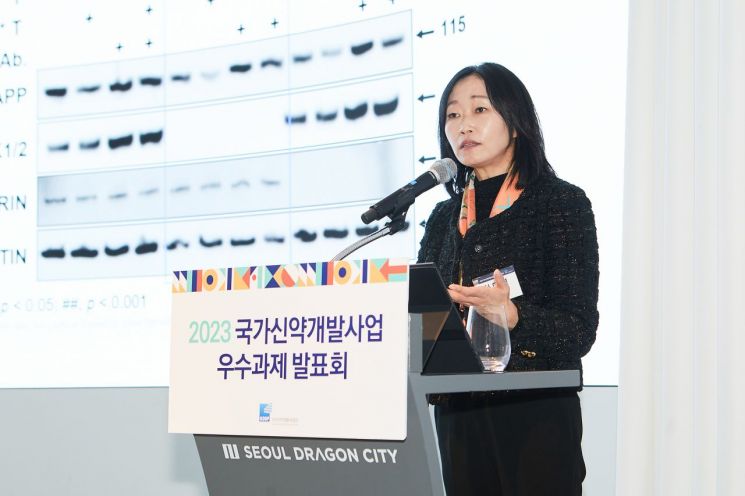
At this AACR, GENA-104 will present ▲ exploration of CNTN4 expression rates in 18 cancer types and its correlation with PD-L1 expression through artificial intelligence (AI)-based immunohistochemistry (IHC) analysis ▲ in-depth analysis of CNTN4 expression in gastric cancer patients treated with Keytruda ▲ the T-cell expression mechanism of the new target APP, a CNTN4 binding partner, and expression analysis in patients non-responsive to existing immuno-oncology drugs ▲ confirmation of CNTN4's potential as a new target for antibody-drug conjugates (ADC). Among these, two studies were conducted in collaboration with the medical AI company Lunit.
GENA-104, discovered through Genome&Company's new drug development platform Ginocle, is a novel target anticancer drug conceived by reversing the 'programmed cell death protein (PD)-(L)1 inhibitors' series, which currently holds a dominant position in the immune checkpoint inhibitor field. GENA-104 received approval from the Ministry of Food and Drug Safety in January for a Phase 1 clinical trial targeting solid tumors.
PD-(L)1 class anticancer drugs, represented by MSD's Keytruda, have shown rapid growth, with Keytruda achieving sales of $25 billion (approximately 33 trillion KRW) last year, becoming the top-selling drug globally. However, PD-(L)1 inhibitors also have limitations, as about 80-90% of patients with high expression of this biomarker do not respond to treatment. In analyzing the characteristics of these non-responsive patients, it was found that even if PD-(L)1 expression is high, if CNTN4 is also highly expressed simultaneously, the efficacy of PD-(L)1 inhibitors is limited.
Notably, this AACR will reveal preclinical data validated using AI technology analysis. Genome&Company previously presented research at the 2022 AACR showing that CNTN4 is expressed at higher levels than PD-(L)1 in patient groups non-responsive to existing immuno-oncology drugs, and AI technology analysis has confirmed data consistent with this finding. Additionally, the potential of CNTN4 as a new target for ADC therapeutics has been confirmed.
Cha Mi-young, head of the new drug research institute at Genome&Company, who will present at the conference, stated, “We plan to present in-depth analysis results on CNTN4 at this AACR,” adding, “With extensive experience in discovering new targets through the Ginocle platform and strong capabilities in antibody research and development, we will strive to achieve results in the preclinical stage going forward.”
© The Asia Business Daily(www.asiae.co.kr). All rights reserved.
!["The Woman Who Threw Herself into the Water Clutching a Stolen Dior Bag"...A Grotesque Success Story That Shakes the Korean Psyche [Slate]](https://cwcontent.asiae.co.kr/asiaresize/183/2026021902243444107_1771435474.jpg)
















