Gwanak-gu Senior Population About 17.6%, Expanding Senior Welfare Policies in Health, Medical Care, Culture, and More
‘Gwanak-gu Public Senior Welfare Town (Tentative Name)’ Aiming for Completion in 2026 as a Central Hub for Senior Space Welfare and Comprehensive Services
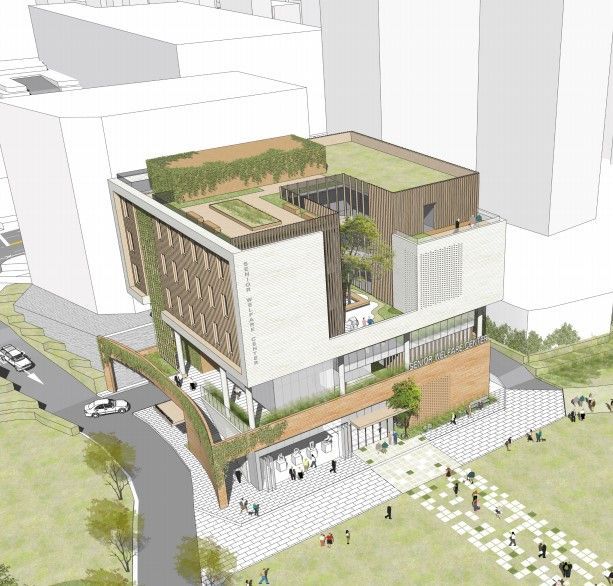
Recently, as the elderly population has increased, the need for senior welfare has grown.
▲Senior health welfare ▲Social isolation ▲Economic issues ▲Senior-friendly infrastructure?demand for administrative services has risen in various areas.
According to the Korea Housing Institute, the domestic elderly population aged 65 and over has increased by an average of 4.6% annually, accounting for 27.2% of the total population as of the end of last year, marking South Korea's entry into a super-aged society.
The elderly population in Gwanak-gu, Seoul (District Mayor Park Junhee) accounted for 17.6% of the total population as of the end of last month, a higher proportion compared to other local governments. Accordingly, the district is proactively implementing policies to address not only issues of medical care, food, and housing but also the diverse demands arising from the improved living standards of seniors.
First, the district operates the welfare human resource network “Annyeong Salpimi” in all neighborhoods to check on households at risk of solitary death, aiming to prevent lonely deaths among elderly living alone.
Additionally, to innovatively enhance 24-hour welfare accessibility, the district is distributing the “Smart Check-in Service” using Internet of Things (IoT) devices and the artificial intelligence (AI) care robot “Kimi” to families in crisis.
Starting this year, the district has newly launched the “Crisis Household Reporting Reward” project to strengthen resident-led welfare communities, encouraging the discovery of households in crisis and preventing solitary deaths.
Moreover, to ensure healthy aging for seniors, the district operates the “Senior Health Companion Project.” Fourteen public health centers and private medical institutions collaborate to provide customized health management services to seniors with chronic diseases and connect them to medical welfare services through an integrated health management program.
Furthermore, to help seniors adapt to the rapidly changing digital society, the district operates 10 “Smart Senior Centers,” the first of their kind in Seoul. Based on facial recognition and accumulated health data, these centers offer personalized health management services, leisure welfare programs using video platforms, kiosk experiences, and various other activities. Last year, the district held an “Online Video Singing Contest” with the district mayor, which received great enthusiasm from seniors.
In particular, the district is accelerating efforts to establish the “District-Run Senior Comprehensive Welfare Town (tentative name)” to enhance spatial welfare for seniors.
The “District-Run Senior Comprehensive Welfare Town (tentative name)” is planned to be established within the Sillim 2 Redevelopment Promotion Zone. On the 5th, a design competition was held, and the winning design was selected and contracted for design services. The total project cost is approximately 31.4 billion KRW, with construction scheduled to begin in 2025 and completion targeted for 2026.
The district plans to build a structure with two basement levels and five above-ground floors. From the first basement floor to the second floor above ground, the “District-Run Senior Comprehensive Welfare Center” will be located, and from the third to the fifth floors, the “District-Run Senior Nursing Home” will be housed.
The district expects the “District-Run Senior Comprehensive Welfare Town (tentative name)” to serve as a central space providing “comprehensive senior welfare services” that meet diverse welfare needs such as ▲health ▲leisure ▲education ▲care for seniors.
Park Junhee, Mayor of Gwanak-gu, stated, “We will ensure the smooth progress of the construction project for the District-Run Senior Comprehensive Welfare Town (tentative name) so that seniors can enjoy various benefits and improve their quality of life in a comfortable and pleasant space.” He added, “As a mayor who respects filial piety, I will continue to promote various policies to make Gwanak-gu a happy place for seniors.”
© The Asia Business Daily(www.asiae.co.kr). All rights reserved.

















