Office worker Mr. A recently received a diagnosis of duodenitis based on the results of an upper gastrointestinal endoscopy during a health checkup. Mr. A thought the endoscopy only examined the esophagus or stomach, but he was anxious upon hearing the unfamiliar term "duodenum" and that inflammation had occurred, worrying it might be a serious illness.
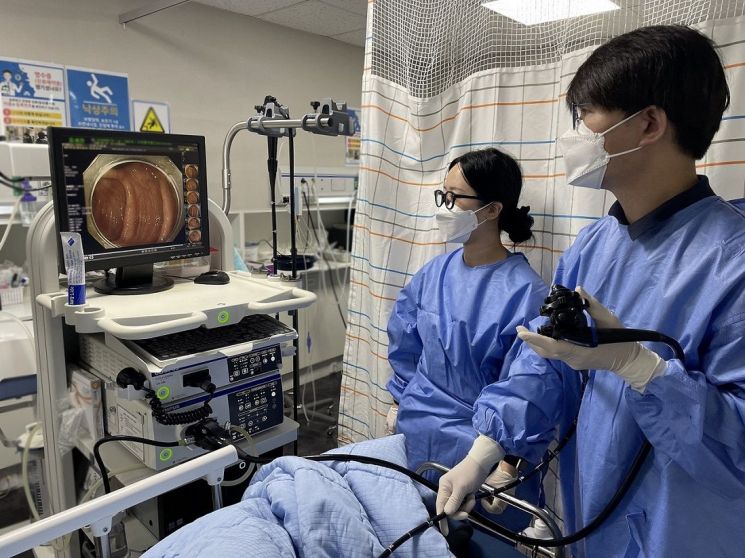 Dr. Kim Joo-hoon, Chief of the Gastrointestinal Endoscopy Center at Daedong Hospital, undergoing an upper endoscopy examination (Gastroenterology Specialist).
Like Mr. A, many people commonly think of an upper endoscopy as a procedure that checks the esophagus or stomach. However, the more accurate term for an upper endoscopy is upper gastrointestinal endoscopy. The upper gastrointestinal tract refers to the esophagus, stomach, and duodenum. During the procedure, an endoscope is inserted to directly observe the internal condition of the upper gastrointestinal tract on a monitor for diagnosis.
Radiographic examinations using contrast agents injected into the body can indirectly detect lesions, but endoscopy allows direct observation of lesions. Additionally, tissue biopsies can be performed immediately upon lesion detection, aiding in determining diagnosis and treatment plans.
The duodenum, which may be somewhat unfamiliar, is a C-shaped digestive organ connecting the stomach and small intestine. It plays a role in digesting food through enzymes secreted by the pancreas and gallbladder. Although its name means "twelve fingers" because its length is roughly equivalent to the width of twelve fingers placed side by side, the actual length of the duodenum is longer.
The stomach is a representative digestive organ that stores ingested food and partially digests it through gastric juice secreted by gastric glands before passing the remainder to the small intestine. The gastric juice that aids digestion contains gastric acid, an acidic substance involved in protein digestion and sterilization.
When gastric acid is excessively secreted due to stress, irregular eating habits, or other reasons, it can irritate the gastrointestinal tract and cause various digestive symptoms such as heartburn.
Duodenitis occurs when inflammation develops in the duodenum due to factors such as Helicobacter pylori infection, nonsteroidal anti-inflammatory drugs, smoking, alcohol consumption, or poor eating habits in a state of excessive gastric acid secretion.
Most cases do not present specific symptoms, but some may experience digestive symptoms such as abdominal bloating, heartburn, nausea, belching, indigestion, and upper abdominal pain.
Duodenitis is diagnosed by observing abnormalities through an upper gastrointestinal endoscopy. If necessary, a biopsy for Helicobacter pylori is also performed. Depending on symptoms, drug therapy such as acid secretion inhibitors and antacids is administered, and since eating habits significantly affect the condition, improving diet along with medication is necessary.
Dr. Juhun Kim, Head of the Gastrointestinal Endoscopy Center at Daedong Hospital (specialist in gastroenterology), advised, “With proper management, duodenitis inflammation can be healed in about 4 to 6 weeks, so patients should actively follow medical instructions regarding medication and dietary improvements. If left untreated, it can lead to ulcers or complications such as bleeding and perforation, so caution is required.”
Consumption of excessively hot or cold foods, strongly sour foods, hard foods, and spicy seasonings should be avoided as they stimulate gastric acid secretion and gastric motility. Meals should be taken regularly, and if duodenitis is severe, it is recommended to eat small portions 5 to 6 times a day to reduce the burden on the stomach.
Coffee, alcohol, and cigarettes, which stimulate gastric juice secretion, should be avoided, and intake of high-quality vitamins, proteins, and minerals can help restore gastric mucosal function.
© The Asia Business Daily(www.asiae.co.kr). All rights reserved.

![A Woman with 50 Million Won Debt Clutches a Stolen Dior Bag and Jumps... A Monster Is Born [Slate]](https://cwcontent.asiae.co.kr/asiaresize/183/2026021902243444107_1771435474.jpg)















