Lei Jun, chairman of Xiaomi and a representative of the National People's Congress, has called for the implementation of artificial intelligence (AI) education starting from the compulsory education stage ahead of the opening of the NPC.
China Central Television (CCTV) reported on the 4th that Chairman Lei proposed that "AI literacy education should be popularized from the compulsory education stage." He stated, "AI is an important driving force behind the new technological revolution and industrial transformation," and argued that "accelerating the development of next-generation AI is a strategic issue for China to seize the opportunities of the new technological revolution and achieve industrial transformation."
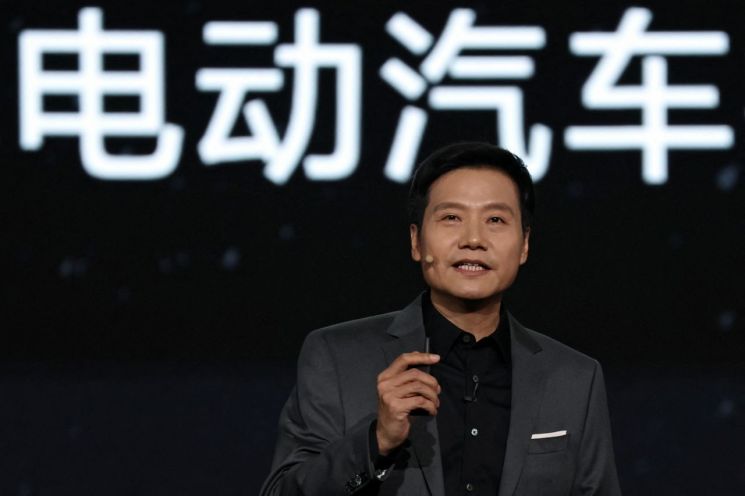
He pointed out, "However, considering the actual technological level of domestic generative AI, especially in terms of the number of top AI talents, there are still obvious shortcomings," and added, "The shortage of AI compound talents is even more serious." Chairman Lei emphasized, "In addition to popularizing AI literacy at the compulsory education stage, universities should actively establish AI-related majors, and large technology companies and educational training institutions should be supported to cultivate AI application talents."
According to the "China Artificial Intelligence Talent Development Report (2022)" published by the China Academy of Labor and Social Security Sciences, the effective talent gap in China's AI industry reaches 300,000. There is a shortage of technical positions such as AI chips, machine learning, and natural language processing, as well as functional positions including algorithm research, application development, practical skills, and advanced technologies.
Regarding the automotive industry, Chairman Lei proposed that regulations on the application of functions such as driver assistance and autonomous parking, as well as data utilization regulations, should be further standardized to ensure the safe application of smart driving products. He stressed that to further strengthen the competitive advantage of Chinese automobile brands in the smart driving field, relevant regulations, standards, product supervision, and management measures must be implemented as soon as possible. Xiaomi unveiled its first electric vehicle, the SU7, at the end of last year and is preparing for mass production next month.
© The Asia Business Daily(www.asiae.co.kr). All rights reserved.

















