Increasing Care Service Workforce Shortage, Projected to Reach 1.55 Million by 2042
Social Losses Due to Rising Care Costs Expected to Hit 77 Trillion Won in 2042, Equivalent to 3.6% of GDP
Active Introduction of Foreign Workers Paid Below Minimum Wage Needed, Like in Hong Kong and Singapore
Bank of Korea Releases Report on 'Measures to Alleviate Care Service Workforce Shortage and Cost Burden'
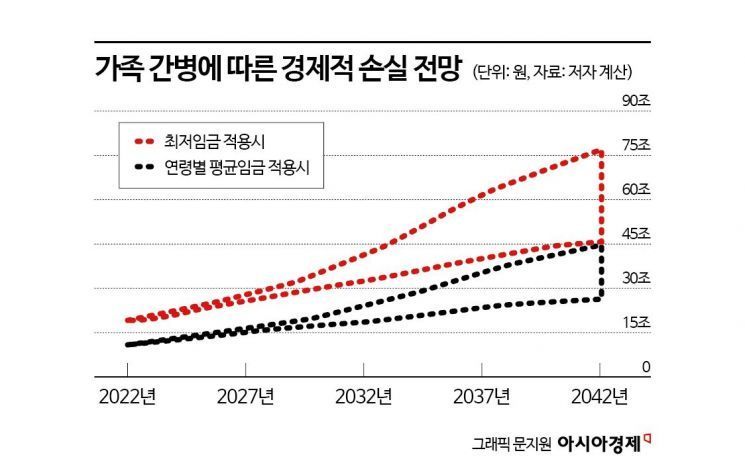
As the manpower shortage and cost burden of care services continue to grow, an analysis has projected that social losses could reach 77 trillion won by 2042.
To address this increasingly serious issue, there have been calls for South Korea to actively consider introducing foreign caregivers and childcare helpers who can be paid wages lower than the minimum wage, similar to Hong Kong and Singapore.
Care Service Manpower Shortage Expected to Reach Up to 1.55 Million by 2042
On the 5th, the Bank of Korea forecasted in its 'BOK Issue Note: Measures to Alleviate Care Service Manpower Shortage and Cost Burden' report that due to the rapid aging of society, the shortage of care service personnel will deepen, with the supply shortage expected to expand from 190,000 in 2022 to up to 1.55 million by 2042. While labor supply (job seekers) for care service jobs remains stagnant, labor demand (job openings) is rapidly increasing, intensifying the manpower shortage.
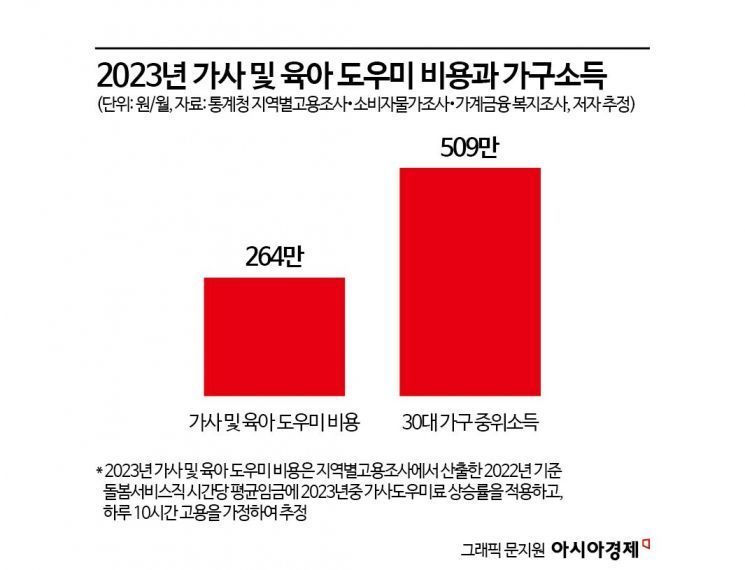
The cost burden of care services is also severe. When hiring a private caregiver at nursing hospitals, the required cost reaches an average of 3.7 million won per month, which is close to 1.7 times the median income of elderly households (aged 65 and over). For households with children in their 40s and 50s who bear the cost of parental care, this exceeds 60% of their median income. The cost of childcare helpers also averages 2.64 million won, surpassing 50% of the median income of households in their 30s, placing a significant burden on families raising children.
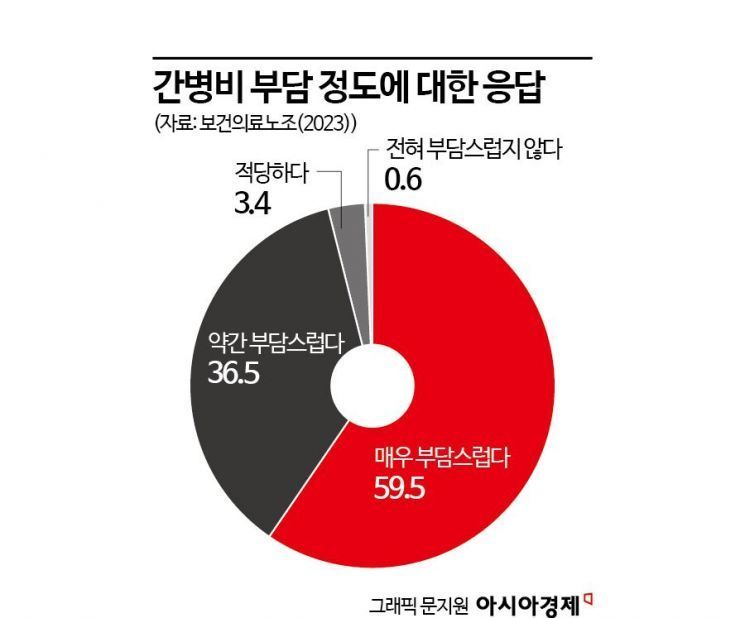
The social problems caused by rising care costs are also growing. Due to manpower shortages and cost burdens, the quality of services in most nursing homes is declining, while facilities that provide high-quality services are extremely limited in number or charge high fees, making them accessible only to a very small number of people.
The report explains that the rising costs of domestic and childcare helpers increase the opportunity cost of women's economic activities, leading to young women quitting jobs and experiencing career interruptions, which can be a major cause of low birth rates. In particular, among women in their 20s and 30s, who have high childcare demands, 81.9% earn monthly wages less than 120% of the cost of domestic and childcare helpers (approximately 3 million won in 2022), making it highly likely that they consider quitting their jobs to focus on childcare.
Such constraints also result in significant social losses when families give up work to provide direct family care. The report estimates that the increase in family caregiving could cause economic losses amounting to up to 3.6% of South Korea's GDP (77 trillion won) by 2042.
Chae Min-seok, head of the Bank of Korea research team who authored the report, argued, "We need to actively consider utilizing foreign workers to alleviate the manpower shortage in the care service sector." He emphasized, "It is impossible to meet the rapidly increasing demand with domestic workers alone, and increasing wages to attract more domestic workers leads to high cost burdens and inefficient resource allocation."
Lowering Costs of Introducing Foreign Workers Like Hong Kong and Singapore Is Key
Reducing the cost burden in the process of utilizing foreign workers is identified as a key consideration. The current care service manpower shortage largely stems from excessive costs.
The report proposes two measures to lower the introduction costs of foreign workers. The first is a method where individual households directly hire foreign workers. Since this is a private contract, the minimum wage does not have to be applied, which can reduce cost burdens.
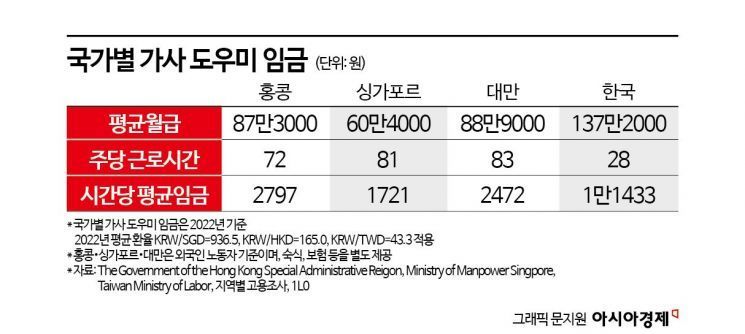
In fact, the wages of foreign domestic helpers in places like Hong Kong, Singapore, and Taiwan, which use this method, are significantly lower than those in South Korea. For cases where living on-site is difficult due to housing conditions, a user cooperative (co-op) could provide shared accommodations. However, depending on how the shared accommodations are operated, there may be claims that these foreign workers should be recognized as employees and thus subject to minimum wage laws, creating some uncertainty.
The second measure is to include care services in the employment permit system for foreigners and to set relatively lower minimum wages for this sector to ease cost burdens.
Foreign workers introduced through this method can be utilized in both home care and facility care, and concerns about management and supervision are relatively low. Additionally, applying minimum wages that reflect the lower productivity of the care service sector compared to other industries could improve overall economic efficiency. However, there is a realistic challenge in reaching social consensus due to sharply divided opinions among stakeholders regarding differentiated minimum wage application.
The report noted that countries that have already implemented such systems have seen significant effects. In Hong Kong, after wages for foreign domestic helpers were sufficiently lowered, employment increased, greatly improving labor market participation rates among native women with young children. In Austria, the increase in hiring relatively low-wage foreign private caregivers has largely alleviated the economic activity constraints on children caring for their parents.
Concerns about the quality of foreign workers are also expected to be minimal. Lee Jung-ik, head of the Price and Employment Department at the Bank of Korea's Research Bureau, said, "Looking at the case of Hong Kong, which employs many domestic helpers from the Philippines, about 70% of Filipinas coming to Hong Kong are college-educated women," adding, "They earn about three to four times more in Hong Kong compared to their home country, so their job satisfaction is quite high."
© The Asia Business Daily(www.asiae.co.kr). All rights reserved.
![From Bar Hostess to Organ Seller to High Society... The Grotesque Con of a "Human Counterfeit" [Slate]](https://cwcontent.asiae.co.kr/asiaresize/183/2026021902243444107_1771435474.jpg)


















