The Gyeonggi-do Agricultural Research and Extension Services is conducting the ‘Crop Residue Shredding Support Project’ in 16 cities and counties across the province to prevent the generation of fine dust.
On the 5th, the Gyeonggi-do Agricultural Research and Extension Services announced that, to assist with the labor shortage in rural areas and to promote the recycling of crop residues as compost resources, it will invest 1.682 billion KRW in farmland covering 1,300 hectares (including orchards, rice paddies, and fields) within the province to carry out the crop residue shredding support project for the first time this year.
To this end, crop residue shredding teams will be organized at the agricultural technology centers of the 16 cities and counties, and shredding will be conducted by appointment.
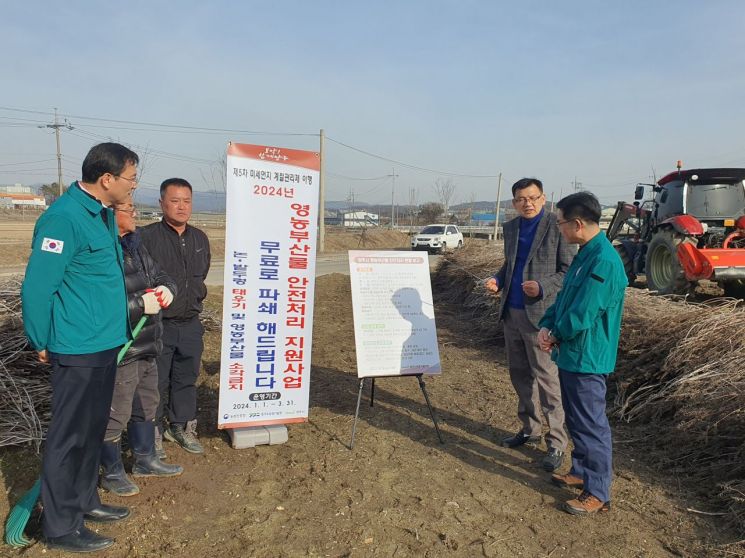
The residues shredded by the crop residue shredding teams include plant remains such as chili pepper stalks and orchard prunings. These are processed through large shredders, and the shredded materials are recycled as village compost.
Seong Je-hoon, Director of the Gyeonggi-do Agricultural Research and Extension Services, stated, "Burning crop residues on farms increases the risk of fine dust generation and forest fires, and also emits fine dust and harmful gases, which negatively impact the environment. The crop residue processing support helps resolve difficulties in shredding work caused by aging farmers, and through the use of compost, it prevents the occurrence of pests and diseases and promotes resource circulation. The response on site has been positive. We plan to continue expanding this project."
© The Asia Business Daily(www.asiae.co.kr). All rights reserved.
!["I'd Rather Live as a Glamorous Fake Than as a Poor Real Me"...A Grotesque Success Story Shaking the Korean Psyche [Slate]](https://cwcontent.asiae.co.kr/asiaresize/183/2026021902243444107_1771435474.jpg)
















