Rising Monthly Rent Increases Burden on Youth
Higher Rent Increase Trend Near Universities
Even Semi-basements in Mapo Are Difficult at 500,000 Won Rent
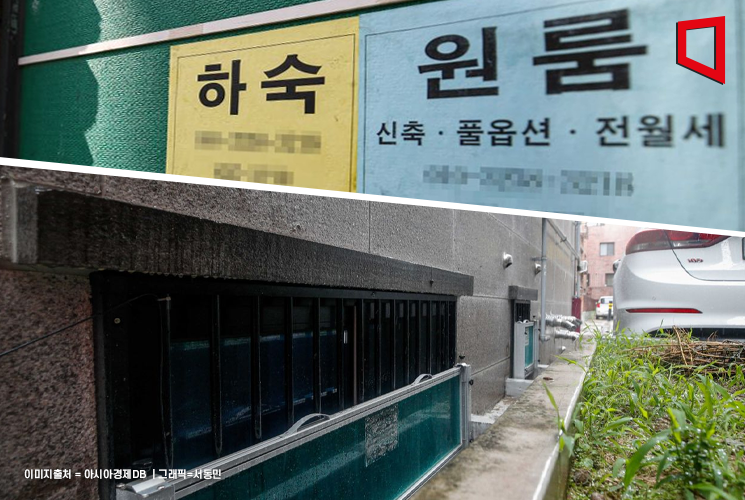
# Office worker Mr. A headed to Ahyeon-dong, Mapo-gu on the 1st to find a monthly rental house during the holiday. His goal was to find a suitable room with a deposit of 10 million won and a monthly rent of 500,000 won. It was a trip without much greed. However, he soon felt a heavy burden. With his budget, he could only get a semi-basement room. Even though it was daytime, the semi-basement room had the fluorescent lights on, and dehumidifiers were placed in the corners of the room. A representative of a real estate agency near Ahyeon-dong said, "To move into a ground-floor unit, you need to consider at least 600,000 to 700,000 won in monthly rent."
The next place he visited was a ground-floor studio in Nogosan-dong, Mapo-gu. There were more older buildings than in Ahyeon-dong. Still, to live on the ground floor, you had to be able to pay a deposit of 10 million won and a monthly rent of 700,000 won. While contemplating whether to sign the contract, looking at the bathroom door with peeling paint and the crying vinyl flooring, the real estate agent said, "It seems this unit was already rented through another agency, so let's look at other properties."
As monthly rents rise, the housing cost burden on young people is increasing. This is the result of increased demand for monthly rentals due to jeonse fraud and high interest rates. In particular, with seasonal demand such as school admissions added, the housing cost burden has grown even more, especially around university areas where monthly rents were relatively low.
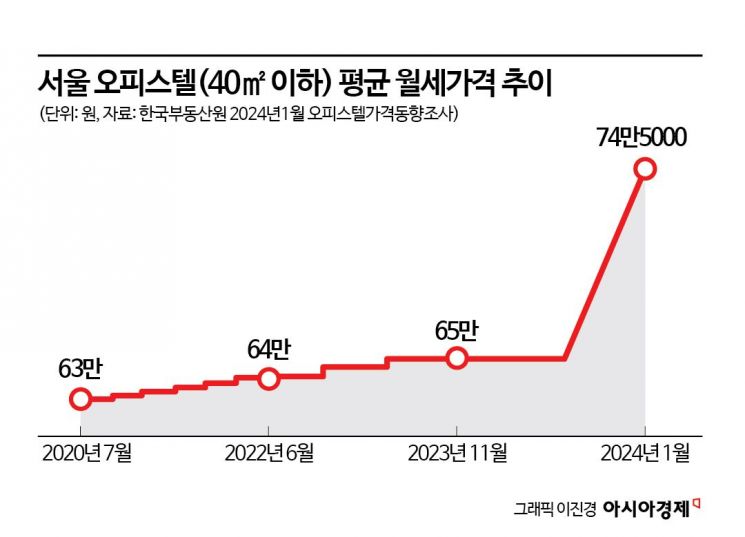
According to the Korea Real Estate Board's 'Officetel Price Trend Survey,' the average monthly rent for officetels (exclusive area under 40㎡) in Seoul surpassed 700,000 won for the first time in January, reaching 745,000 won. Officetel monthly rents have been on the rise since July 2020, when they first exceeded 600,000 won at 630,000 won.
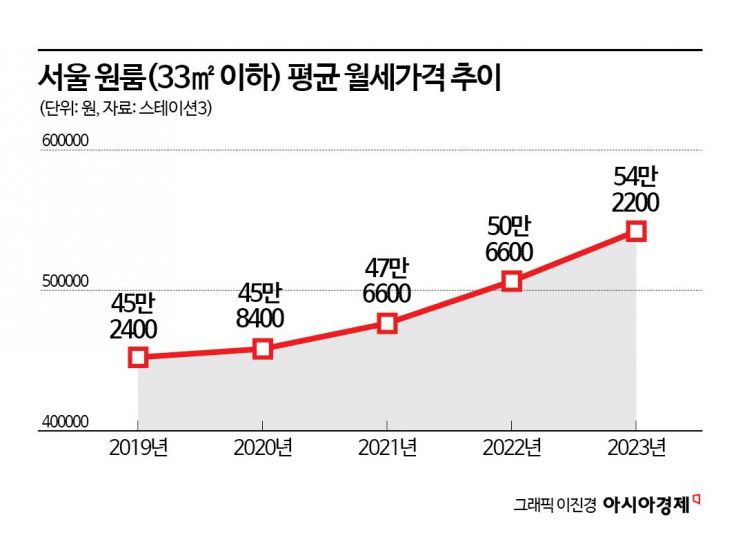
Station3, the operator of the real estate information platform Dabang, also reported that last year, the average monthly rent for studios (under 33㎡, excluding officetels, row houses, and multi-family houses) in Seoul was 542,200 won. This has steadily increased from 452,400 won in 2019.
The rise in monthly rents in university areas, known to be relatively affordable, has been even steeper. Station3 reported that as of the 7th of last month, the monthly rent for studios (under 33㎡) near 10 major universities in Seoul with a deposit of 10 million won was 574,000 won. This is about a 100,000 won increase from 469,000 won in January 2019.
The actual rise in monthly rents is perceived to be even greater than the figures suggest. Mr. Lee, who lives near Kyung Hee University, said that the monthly rent, which was 500,000 won in 2021, rose to 600,000 won last year and increased further to 650,000 won this year, adding, "Now, if you want to pay 500,000 won in monthly rent, you can only get a semi-basement room." A representative of a real estate agency near Hoegi Station also explained, "Because it is close to City Hall Station via subway, it is an area where office worker demand is concentrated, making prices prone to rise," and "Now, with about 500,000 won in monthly rent, you can only get a semi-basement."
Experts cite the aftermath of jeonse fraud and high interest rates as causes of this monthly rent increase. Won-gap Park, Senior Real Estate Specialist at KB Kookmin Bank, said, "Along with demand due to concerns about jeonse fraud, there is demand to switch from jeonse to monthly rent considering the current interest rate situation." Young-sun Kwon, a real estate analyst at Shinhan Bank, explained, "Monthly rent has a nature similar to the interest on jeonse deposits. When jeonse prices rise, monthly rents inevitably rise as well," adding, "Monthly rents have increased along with jeonse prices after the pandemic."
It is analyzed that the university areas are affected by overlapping fixed demand from students and office workers. Jaehyun Jang, Head of Research at RealToday, said, "In university areas, demand surges during admission seasons, which causes monthly rents to rise accordingly," and "Since the commercial districts are good and subway stations are nearby, there is fixed demand from students as well as young office workers, making it a structure where monthly rents tend to rise."
© The Asia Business Daily(www.asiae.co.kr). All rights reserved.
![From Bar Hostess to Organ Seller to High Society... The Grotesque Con of a "Human Counterfeit" [Slate]](https://cwcontent.asiae.co.kr/asiaresize/183/2026021902243444107_1771435474.jpg)


















