Seong Tae-yoon, Chief of Policy at the Presidential Office, emphasized on the 3rd that there is no change in the policy to increase medical school admissions by 2,000 students.
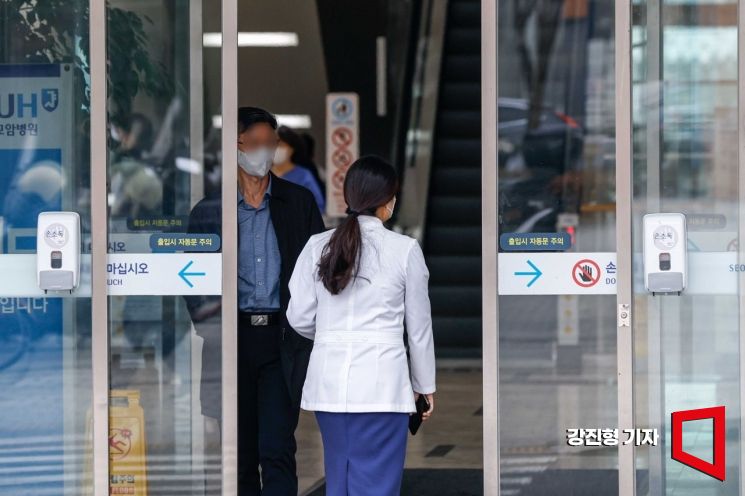 Amid the ongoing strong confrontation between the government and the medical community over the increase in medical school admissions, medical staff are moving at a large hospital in Seoul on the 29th, the government's deadline for residents who left hospitals to return. Photo by Kang Jin-hyung aymsdream@
On the same day, Seong Tae-yoon appeared on MBN’s ‘Sisa Special’ and said, “I believe the plan to supplement the current medical workforce is inevitable,” adding, “The government’s stance on increasing medical school admissions by 2,000 students has not changed at all.”
Regarding the scale of the increase, Seong explained that considering demographic changes by 2035, an additional 10,000 medical personnel will be needed, and to raise the level of healthcare in medically underserved areas to the national average, an additional 5,000 personnel are required. He stated, “We are in a situation where about 3,000 personnel need to be trained annually.”
He added, “If this is delayed further at this point, the annual increase will inevitably have to be larger. Considering various conditions, the current figure is about 2,000.”
He explained that after the application deadline for medical school quotas at 40 universities nationwide closes on the 4th, the quotas for each medical school will be determined comprehensively based on the number of applicants, the regional healthcare status, the number of doctors in the area, and the degree of aging in the region.
Seong said, “We especially intend to allocate quotas intensively to medical schools outside the metropolitan area,” adding, “There are 17 medical schools with fewer than 50 students, and it is difficult to provide smooth education in various fields such as internal medicine and surgery with fewer than 50 students.”
He emphasized, “The government is not trying to solve the problem by simply increasing numbers,” and said they are approaching the issue by changing the fees for essential medical services and ensuring smooth medical school education.
Addressing residents who do not return to the medical field, Seong appealed, “We inevitably have to follow procedures according to laws and principles,” and asked for the public’s support, saying, “Please stand with the people.”
© The Asia Business Daily(www.asiae.co.kr). All rights reserved.












