The New York Times (NYT) reported on the 2nd (local time) that although South Korea's dependence on foreign workers continues to increase due to population decline and aging, workers from underdeveloped countries are not being properly protected.
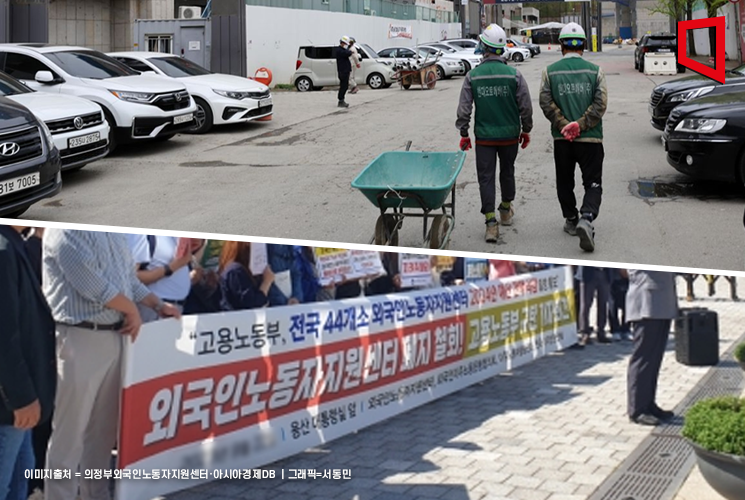
The New York Times pointed out that hundreds of thousands of workers from underdeveloped countries such as Vietnam, Cambodia, and Nepal work in small factories, remote farms, and fishing vessels in South Korea, stating, "Foreign workers endure exploitative employers, inhumane living conditions, discrimination, and abuse."
Chandra Das Hari Narayan from Bangladesh told the NYT in an interview that he was assigned to logging work without even being provided a safety helmet and suffered a skull fracture, but his employer reported the industrial accident compensation paperwork as a "minor injury."
He criticized, "If I were Korean, they would not have treated me like this," adding, "They treat migrant workers like disposable items."
Sammer Tshetri, who works in a vinyl greenhouse and sends about 2 million won out of his roughly 2.3 million won monthly salary back to his hometown in Nepal, said he only realized after arriving to work that the "accommodation" promised in his employment contract was actually an old container inside the vinyl greenhouse.
The NYT pointed out that as South Korea's population crisis deepens and society increasingly avoids "dirty and dangerous low-wage" jobs, dependence on foreign workers is higher than ever, but measures to protect and support workers have not kept pace.
Although the government has announced plans to increase inspectors and interpreters and strengthen punishment for employers who commit illegal acts, policies have been scaled back, including the suspension of funding for migrant support centers.
The NYT especially highlighted ongoing serious rights violations due to the Employment Permit System introduced in 2004. The system allows small and medium-sized businesses facing labor shortages to legally hire foreign workers through government mediation, but fundamentally, workers cannot choose their workplaces.
Pastor Kim Dalseong, who runs the Pocheon Migrant Workers Center, explained that when foreign workers encounter abusive employers, they endure the suffering hoping for visa extensions or renewals, or they have no choice but to work illegally at other workplaces while living in fear of crackdowns.
© The Asia Business Daily(www.asiae.co.kr). All rights reserved.

















