The food industry is selecting bio as its next growth engine. Following Samyang Group, which is based on 'sugar,' Samyang Round Square (formerly Samyang Food Group), known for 'ramen,' has joined in, setting the stage for a competition between the two companies not only in food but also in bio. Other food companies are also exploring ways to enter the bio sector.
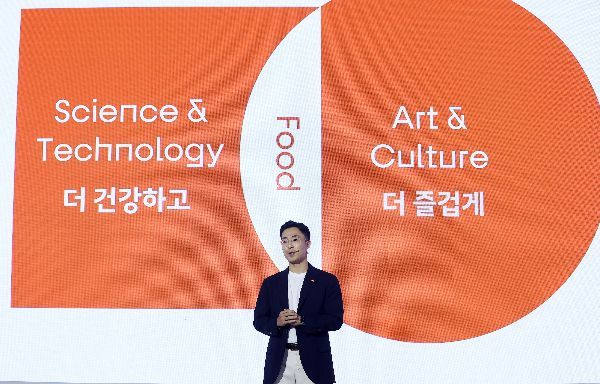 Jeon Byeong-woo, Chief Strategy Officer (CSO) and third-generation owner of Samyang Round Square, is presenting at the vision declaration ceremony last September. On that day, Samyang Round Square presented its vision, including the development of customized foods through microbiome research.
 [Photo by Samyang Round Square]
According to the industry on the 1st, Samyang Round Square, famous for ramen businesses such as Samyang Ramen and Buldak Bokkeum Myun, has recently started recruiting talent to enter the bio business, including new drug development. They chose bio as the next growth engine to continue their achievements, such as reaching their first 1 trillion KRW in sales last year through the success of Buldak Bokkeum Myun.
Centered around the group’s research institute, Samyang Square Lab, they have established an Aging Research Center and a Digital Health Research Center aiming to develop new drug candidates for degenerative brain diseases such as dementia and elderly diseases like sarcopenia, following the development of disease-preventive foods based on gut microbiota (microbiome). For the head of the Aging Research Center, they are seeking talent with over 12 years of full-cycle development experience in pharmaceuticals and bio, preparing for full-scale new drug development. The Digital Healthcare Research Center plans to conduct research on medical and health data collection and software medical device validation.
Another Samyang Group, rooted in the sugar business, has been continuing its bio business for 30 years since establishing the Pharmaceutical Bio Research Institute in 1992. They have built a portfolio covering anticancer drugs, surgical threads, fillers, and more, achieving results such as holding the number one market share.
The biodegradable suture thread, a surgical absorbable thread, holds the number one market share worldwide. In June last year, they completed a suture thread factory in Hungary capable of producing 100,000 km of thread annually. Their anticancer drug Genexol boasts over 50% market share in the domestic market. Recently, they expanded their Daejeon plant to increase anticancer drug production capacity to 5 million vials annually, actively entering the Contract Development and Manufacturing Organization (CDMO) business, while also diversifying by developing an in vivo drug delivery system using messenger ribonucleic acid (mRNA) technology.
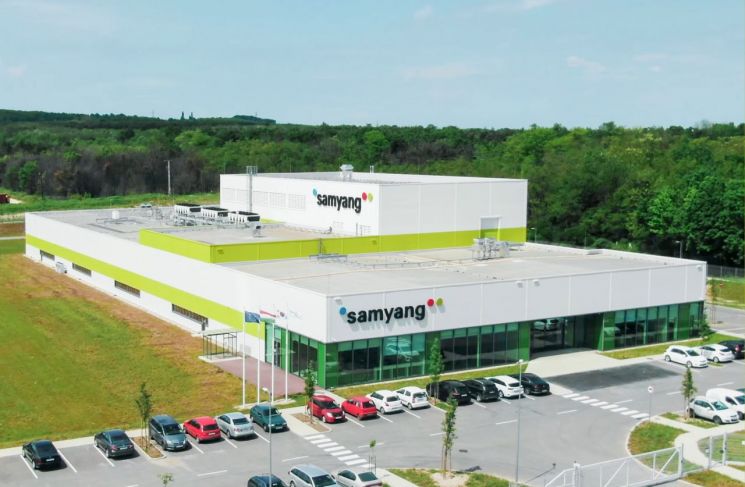 Samyang Holdings BioPharm Group completed a suture production plant in Hungary in June last year.
 [Photo by Samyang Holdings]
In addition, various food companies have been attempting to enter the bio industry. Orion selected pharmaceuticals and bio as one of its three new core businesses in 2020 and has made numerous investments, including establishing Orion Biologics in 2022. Then, in January, they made a surprise acquisition of LegoChem Biosciences, globally recognized for its technology in the antibody-drug conjugate (ADC) field, instantly emerging as a major player in the bio industry.
CJ CheilJedang, which seemed to be withdrawing from the bio industry by selling CJ Healthcare (now HK Innoen), has accelerated new drug development again by acquiring 10x Genomics (now CJ Bioscience) in 2021. They are conducting clinical phases 1 and 2 of the microbiome-based immuno-oncology drug CJRB-101.
An industry insider said, "The food industry shares many similarities with the bio industry, such as having regulatory agencies like the Ministry of Food and Drug Safety in Korea and the FDA in the U.S., and conducting clinical trials to certify functionality. However, the bio business requires long-term investment for new drug development that takes 10 to 15 years, and the approval process is even more stringent. Therefore, rather than focusing solely on how to create synergy with the food business, a wiser approach is needed."
© The Asia Business Daily(www.asiae.co.kr). All rights reserved.


















