Total Fertility Rate in Q4 Falls Below 0.7 for the First Time at 0.6 Level
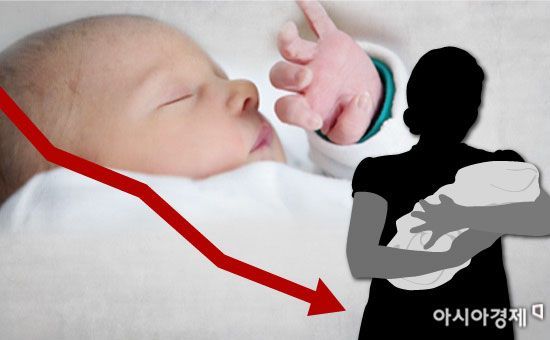
Last year, the total fertility rate once again hit an all-time low. In most local governments, it decreased more sharply than the previous year, leading to analyses that the crisis of regional extinction is imminent. On the 29th, Lee Cheol-woo, governor of Gyeongbuk Province, which recently declared a war against ultra-low birth rates, warned, “Population policy must be the top priority of all policies,” adding, “If we lose more time, the country could be on the path to extinction.”
On the same day, Governor Lee appeared on CBS’s ‘Kim Hyun-jung’s News Show’ and stated that the key issues in the low birth and low fertility problem are resolving housing and childcare issues. He pointed out that the biggest problem in South Korea’s long-term policy is the so-called ‘capital region syndrome.’ He said, “Young people in their 20s and 30s tend to flock more to the capital region than to local areas, so even if they find a job, it is difficult to find housing. As a result, they settle in the outskirts, leading to long commuting times, and everyone becomes exhausted,” adding, “Because they are exhausted, they don’t even think about getting married, so they neither marry much nor dare to have many children.”
He continued, “The biggest issue is decentralization and opening an era of local regions, but since that is difficult to do immediately, we need to solve the housing problem and provide ‘complete care,’ meaning raising children in the community spirit within neighborhoods.” He explained, “My policy is to purchase all the first floors of apartment buildings to create yards where children can come down and play after school, just dropping their bags at home. These yards are managed by provinces or cities/counties, and experts oversee the policy.”
According to the ‘2023 Population Trends Survey Birth and Death Statistics’ released by Statistics Korea the day before, the total fertility rate in the fourth quarter of last year fell below 0.7 for the first time, reaching the 0.6 range. The total fertility rate for the entire last year was 0.72. It has been steadily declining since recording 1.24 in 2015. As of 2021, the average total fertility rate among OECD (Organisation for Economic Co-operation and Development) member countries was 1.58.
Among local governments nationwide excluding Seoul, Busan has the lowest total fertility rate. Last year, Busan’s total fertility rate was 0.66, falling below 0.7 for the first time.
"Risk of Problems Arising from Decreasing Tax Base and Increasing Government Debt"
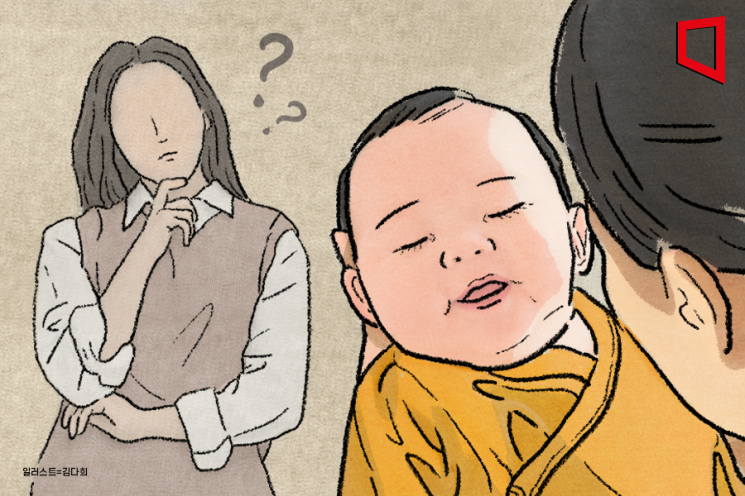
On the same day, Lee Jung-hwan, a professor at Hanyang University’s College of Economics and Finance, expressed concern on YTN’s ‘Good Morning Economy’ that not only low birth rates but also aging are progressing simultaneously, resulting in an overall aging population structure. He pointed out, “Ultimately, the economic growth rate fundamentally declines, and fiscal expenditures for welfare increase,” adding, “As the working population decreases, the tax base shrinks, and problems such as a significant increase in government debt will arise.”
He cited the burden of living expenses as a cause of the declining birth rate. He said, “Looking at life as a whole, education costs, dining out expenses, food costs, medical expenses, and everything else are expensive, leading to high spending,” adding, “It becomes difficult to prepare for old age, making it hard to have children.” Since income struggles to keep pace with rising costs, having many children increases the burden of support more quickly.
He analyzed, “Especially in South Korea, the burden of education expenses has become unbearable,” and “Recent generations still bear the responsibility of supporting their parents, so supporting both parents and children is an enormous burden, leading to tendencies to avoid marriage and having children.”
© The Asia Business Daily(www.asiae.co.kr). All rights reserved.

















