Prolonged Medical Service Gaps in Tertiary Hospitals
Available Beds for Emergency Patients Less Than Half
Frequent Ambulance Transport Delays
Rural Areas Facing Regional Roundabout Issues
The collective resignation crisis of medical residents has prolonged for over a week, causing frequent delays in ambulance transfers due to a shortage of medical staff. In regions with fewer tertiary hospitals, cases of emergency patients moving to other areas in search of hospital beds are increasing, raising concerns about the expanding scale of damage caused by medical service gaps.
According to the Central Emergency Medical Center's Emergency Medical Portal (E-Gen) comprehensive dashboard as of 11 a.m. on the 28th, the general beds in emergency rooms (excluding isolation beds) at major hospitals in Seoul were confirmed to be less than 50% available for patient admission.
At Seoul St. Mary's Hospital, only 3 out of 27 total beds were available for patients. Gangnam Severance Hospital had no available beds among its 15 beds. The hospital is currently unable to provide any plastic surgery treatments, including facial trauma and fractures, due to the absence of medical staff.
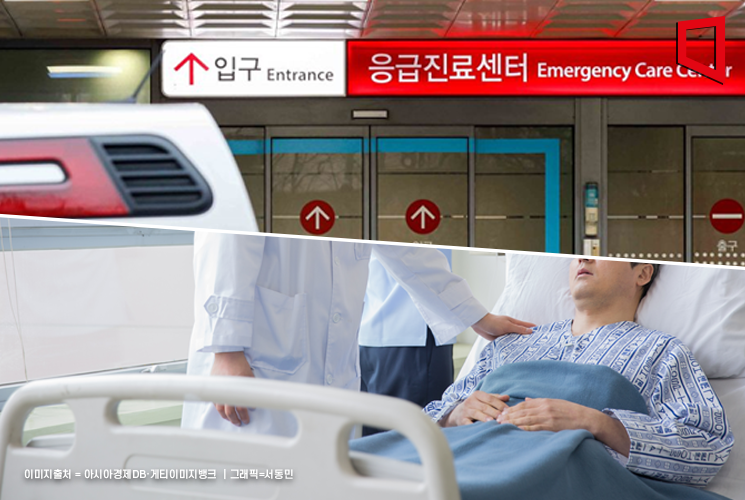
Samsung Medical Center had only 25 available beds out of 59 total beds, less than half. Seoul National University Hospital was also found to be unable to accommodate patients.
With the shortage of medical staff making emergency room treatment extremely difficult, ambulance crews are also struggling. As the number of available beds falls below 50%, they are forced to wait endlessly in front of hospitals until a patient can be admitted.
A staff member A (42) from a private ambulance company said, "Yesterday, I waited two hours to transfer a mild patient to Seoul Asan Medical Center. That was quite lucky. Before this crisis, mild patients waited less than an hour, but nowadays, medical staff sometimes tell us to wait indefinitely after assessing the patient's condition."
Due to the prolonged waiting times, some private ambulance companies have stopped transferring patients to tertiary hospital emergency rooms. B (48), a representative of a private ambulance company in Seoul, said, "Since waiting times have extended to several hours, we plan not to accept transfers to tertiary hospital emergency rooms until this crisis ends. Patients seem to know that it is difficult to go to the emergency rooms of the Big 5 hospitals, so we are receiving requests to transfer to general hospitals."
Compared to Seoul, regions with fewer tertiary hospitals are crossing regional boundaries to transfer emergency patients. Because local hospitals cannot accommodate patients, ambulances are circulating to emergency rooms in other areas.
The situation is particularly severe in Gangwon Province, which has only two tertiary hospitals. C (30), a firefighter working in Gangwon Province, said, "Hospitals in the Gangneung area are unable to sufficiently accommodate patients, so some are being transferred to Wonju. Moreover, Chuncheon City, which has no tertiary hospitals, sometimes cannot accommodate patients at its two secondary hospitals, Gangwon National University Hospital and Hallym University Chuncheon Sacred Heart Hospital, causing mild patients to be pushed to hospitals in Hongcheon County." In Busan and Daejeon, a lack of available beds led to 42 and 23 cases of ambulance transfer delays, respectively, between the 20th and 26th.
As the emergency room overload continues for a long time, the number of times ambulance crews request the Emergency Situation Management Center to decide which hospital to transfer patients to is also increasing. The Emergency Situation Management Center assesses the severity of patients and guides ambulance crews to transfer them to large hospitals, regional emergency medical institutions, or clinics. According to the Fire Agency, the average daily number of hospital selections by the Emergency Situation Management Center from the 16th to the 26th of this month was 66, a 73.7% increase compared to the average daily 38 cases in February last year.
The fire authorities plan to strengthen monitoring to detect any unusual trends in the nationwide emergency patient transfer system for the time being. A Fire Agency official explained, "We have increased the personnel of the Emergency Situation Management Centers in the situation rooms of each city and province according to local circumstances. We are monitoring the entire country to manage the situation and check if there are any areas needing support."
© The Asia Business Daily(www.asiae.co.kr). All rights reserved.
!["The Woman Who Threw Herself into the Water Clutching a Stolen Dior Bag"...A Grotesque Success Story That Shakes the Korean Psyche [Slate]](https://cwcontent.asiae.co.kr/asiaresize/183/2026021902243444107_1771435474.jpg)
















