Designated as Treasure for About 21 Years, Elevated to National Treasure
Suncheon City, Jeollanam-do (Mayor Noh Gwan-gyu) announced that the Cultural Heritage Administration on the 27th officially announced the designation of "Suncheon Songgwangsa Yeongsan Hoesangdo and Palsangdo" as National Treasures.
This marks the promotion to National Treasure about 21 years after being designated as Treasures in 2003.
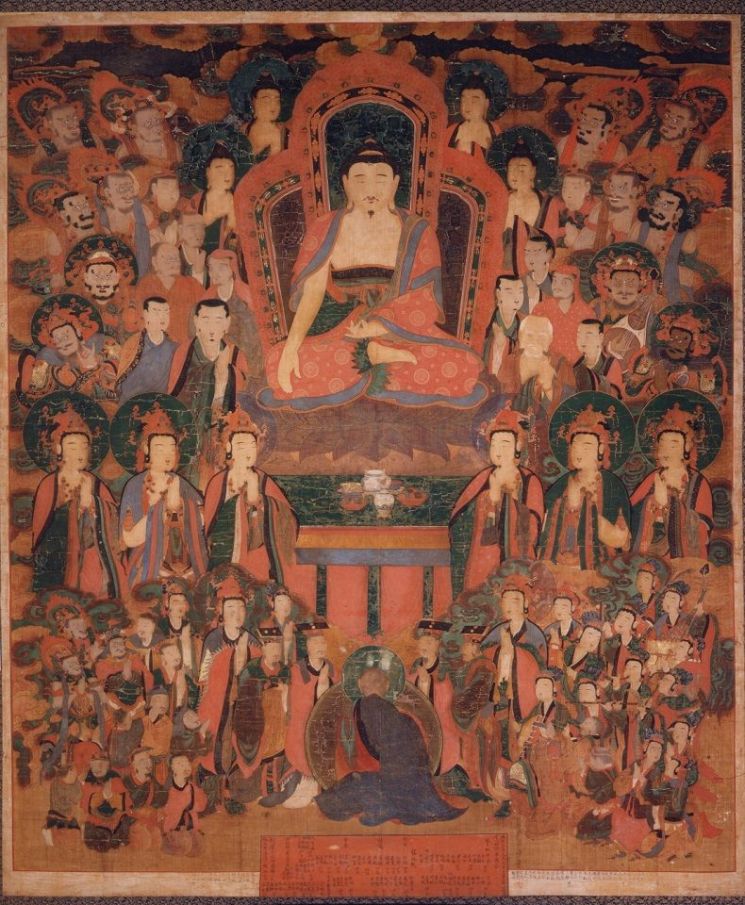
The "Suncheon Songgwangsa Yeongsan Hoesangdo" and Palsangdo are Buddhist paintings created as a set to be enshrined in the Yeongsan Hall of Songgwangsa Temple, consisting of one Yeongsan Hoesangdo and eight Palsangdo paintings.
The Yeongsan Hoesangdo depicts the scene of Shakyamuni delivering a sermon on Mount Yeongchwisan, while the Palsangdo illustrates eight historical events from Shakyamuni's life as eight thematic paintings.
Currently preserved at the Songgwangsa Seongbo Museum, the production date of 1725 (the first year of King Yeongjo of the Joseon Dynasty) and the painters including Uigyeom (義謙) are clearly known through the colophons related to the creation of the paintings.
It is confirmed as the earliest work where Yeongsan Hoesangdo and Palsangdo were created and enshrined simultaneously in one hall, and it is a complete set of Buddhist paintings produced under a single concept using the iconography of the "Seokssi Wonryu Eunghwasajeok," not only for Palsangdo but also for Yeongsan Hoesangdo.
Moreover, it is significant in that it presented diversity in Yeongsan Hoesangdo and a new prototype of Palsangdo during the late Joseon period.
A city official stated, "As a representative work of late Joseon Palsangdo, it is a cultural heritage of outstanding artistic value, delicately depicting the figures of the eight scenes with fine brushwork and naturally expressing the transitions of time and space according to the events."
© The Asia Business Daily(www.asiae.co.kr). All rights reserved.
![Clutching a Stolen Dior Bag, Saying "I Hate Being Poor but Real"... The Grotesque Con of a "Human Knockoff" [Slate]](https://cwcontent.asiae.co.kr/asiaresize/183/2026021902243444107_1771435474.jpg)











