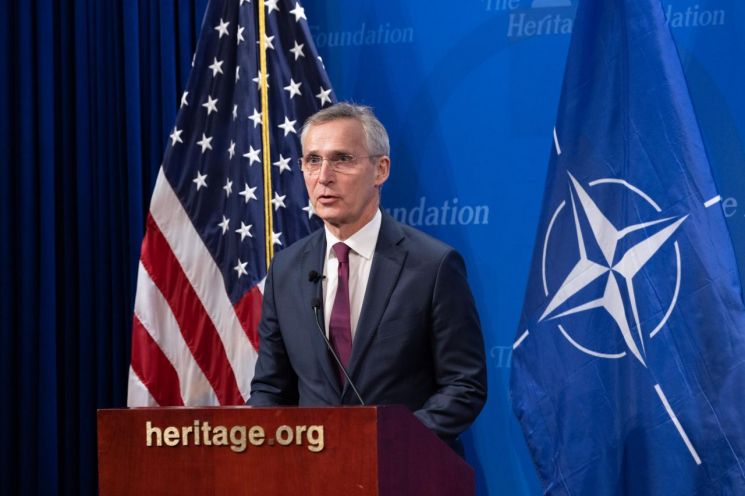
On the 27th (local time), Jens Stoltenberg, Secretary General of the North Atlantic Treaty Organization (NATO), stated that "there are no plans to deploy NATO combat troops to Ukraine." This was a dismissal of claims that some Western countries were considering sending ground troops to Ukraine.
He reaffirmed the existing position, excluding the possibility of direct military intervention, saying, "According to international law, Ukraine has the right to defend itself, and we have the right to support that right."
This is interpreted as a swift effort to quell concerns that the remarks made by Robert Fico, Prime Minister of Slovakia, the day before regarding ground troop deployment, might spark widespread speculation that Western countries would send troops to Ukraine.
Before departing for the "International Conference on Support for Ukraine" held in Paris, France, the previous day, Prime Minister Fico referred to the conference as a "combat meeting" in a speech on his country's TV. He expressed concerns that if European countries actually decide to deploy troops, it would lead to a significant escalation of tensions. Slovakia is a member of both NATO and the EU. However, Fico, who took office last year, is known to be classified as a pro-Russian figure.
Major NATO countries, including the United States, have provided weapons and economic support to Ukraine while avoiding direct military confrontation with Russia. Any decision regarding the deployment of combat troops requires unanimous approval from all NATO member countries.
© The Asia Business Daily(www.asiae.co.kr). All rights reserved.

















