Fusion of Jeonnam Renewable Energy Resources and Gwangju Human Resources
Establishment of Gwangju-Jeonnam Green Energy Economic Community
Member of the National Assembly Kang Eun-mi of the Green Justice Party, who announced her candidacy for the 22nd general election in the Gwangju Metropolitan City Seo-gu (Eul) electoral district, unveiled pledges to overcome the climate crisis and promote the growth of new industries in Gwangju.
The pledges include the formation of the Gwangju-Jeonnam Green Energy Economic Community, establishment of RE100 industrial complexes, expansion of public procurement to foster the climate tech industry, and designation of Gwangju-Jeonnam as a specialized region for cooperative distributed energy.
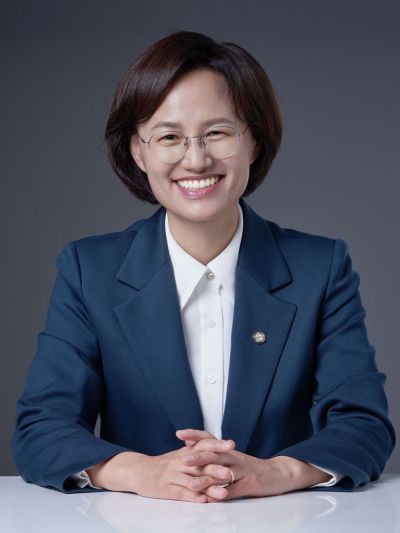
Assemblywoman Kang explained that according to the United Nations Framework Convention on Climate Change (UNFCCC) Conference of the Parties (COP 28) commitments, renewable energy capacity must be tripled by 2030.
Currently, South Korea’s renewable energy capacity stands at 29.1GW, but based on the commitment, it should be expanded to 87GW. However, Kang pointed out that Korea’s plan outlined in the 10th Basic Plan for Electricity Supply and Demand is only 69.8GW, failing to meet international agreements.
Kang emphasized that expanding renewable energy and achieving RE100 are not optional but essential for companies.
She stated, “The renewable energy supply has lost its way as the policy direction changed,” adding, “Renewable energy expansion cannot be achieved by supply alone without demand.”
Furthermore, she stressed, “Expanding renewable energy facility capacity without regional distribution plans does not contribute to power supply and demand,” and emphasized, “Renewable energy generation and demand must be planned together.”
Additionally, she declared, “To minimize the long-term issues involved in building transmission and distribution networks, Gwangju and Jeonnam will be united as one renewable energy economic community to jointly establish renewable energy generation plans, transmission and distribution facility plans, and renewable energy demand plans.”
To ensure the renewable energy economic community fulfills its role, the ‘Gwangju-Jeonnam short-distance renewable energy transmission and distribution network,’ which requires a long construction period, will be prioritized. Kang’s plan includes creating a Gwangju renewable energy industrial special zone to build infrastructure that enables renewable energy demand companies to reliably achieve RE100.
Using the renewable energy infrastructure thus established, the plan is to attract competitive manufacturing industries such as semiconductors and automobile parts to the RE100 industrial complex, creating quality jobs and laying the foundation for regional development.
She also proposed pledges to expand the scale of public procurement related to climate tech to support the establishment of an investment attraction base, aiming to elevate Gwangju as a ‘climate tech industry hub city.’
Kang promised, “By designating Gwangju and Jeonnam as a cooperative distributed energy specialized region and utilizing energy storage systems (ESS) and virtual power plants (VPP), we will build a stable power supply infrastructure, attract RE100 demand businesses, and create 100,000 jobs.”
She added, “By leveraging Jeonnam’s abundant renewable energy resources and combining Gwangju’s human resources and technological capabilities, we will make the Gwangju-Jeonnam Green Energy Economic Community a success,” and concluded, “We will help Gwangju and Jeonnam grow into global green future industrial cities.”
© The Asia Business Daily(www.asiae.co.kr). All rights reserved.
![Clutching a Stolen Dior Bag, Saying "I Hate Being Poor but Real"... The Grotesque Con of a "Human Knockoff" [Slate]](https://cwcontent.asiae.co.kr/asiaresize/183/2026021902243444107_1771435474.jpg)
















