Direct Speech Style and Reinforcement of Fixed Gender Roles... Parents' Backlash
"Rude" vs. "Typical Behavior of 4-Year-Olds" Divided Opinions
The British children's animation 'Peppa Pig,' which is also popular in South Korea, has recently sparked backlash among American parents. The reason is that the cartoon's main character is excessively mischievous, which is believed to negatively affect children's education.
On the 25th (local time), The Wall Street Journal (WSJ) reported that a public opinion has begun to form among American parents that Peppa Pig may have a harmful influence on children's upbringing.
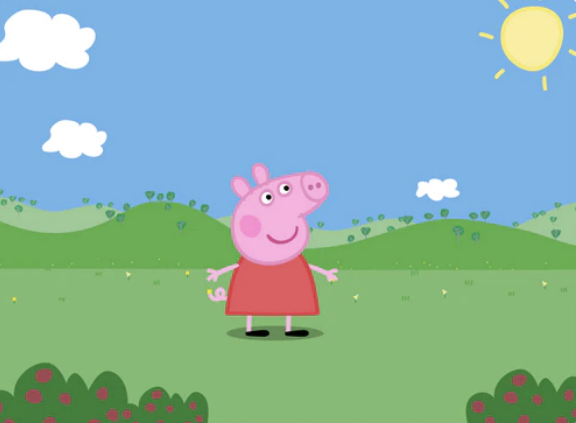
Peppa Pig is an animation released in 2004, featuring the main character Peppa, her parents, and her younger brother as a family. Produced in the UK, the cartoon initially gained tremendous popularity to the extent that children started calling 'cookies' by the British English term 'biscuits' and imitated British behavior. The franchise expanded its business from toys to pajamas and theme parks, recording sales of $1.7 billion (2.2644 trillion KRW) in 2022 alone.
However, the side effects of this craze have gradually started to emerge. WSJ cited the case of Armita Asgari, who is raising a 5-year-old son, saying, "When my child is offered new food, he responds with 'yuck,' or when annoyed, he shouts, 'You're not my friend anymore.'" Asgari questioned her child's behavior and realized that her son was influenced by Peppa Pig when he said verbatim, "Look, David has a big belly!" upon seeing a large neighbor passing by.
This is because the main character Peppa is closer to being mischievous rather than quiet. WSJ explained that when Peppa's younger brother George is flustered because he cannot remember where he put his beloved dinosaur toy, Peppa responds, "Well, maybe Mr. Dinosaur is lost forever." She also bluntly tells her dad, who is trying to play with the kids, "Daddy, you're too big to go down the slide."
Moreover, WSJ reported that stereotypes such as the mother being strict and firm as the primary caregiver, and the father being portrayed merely as someone who plays with the children in a comical way, are also problematic.
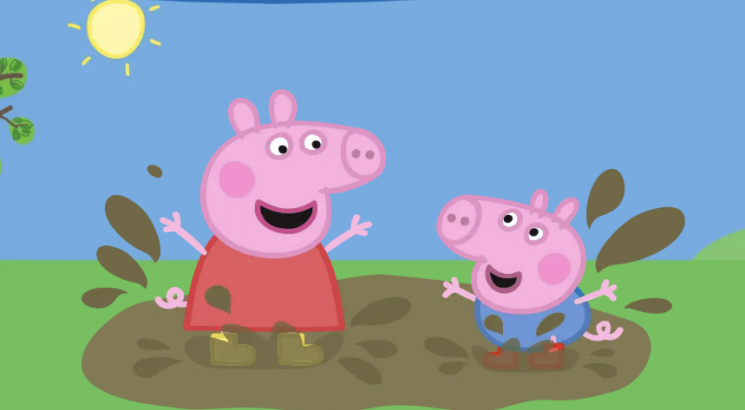
This style of discipline has recently been evaluated as out of touch with the parenting philosophies of millennial parents. WSJ analyzed, "The new generation of parents focuses on gentle and polite child-rearing techniques, so more parents are opposing Peppa Pig, believing it has a bad influence."
Earlier, BuzzFeed published a listicle titled "17 Reasons Why Peppa Pig Is Naughty." On the TV program review site Common Sense Media, negative reviews have surged in recent months, ranging from "The main characters do not respect their parents in every episode" to "It teaches children that it is okay to cry and be mean."
Parenting expert Kayla Tysen stated, "Peppa Pig is rude and impatient, and this animation teaches children that the cartoon character is themselves and that it is okay to behave that way."
In response, Hasbro, the American toy company that owns the Peppa Pig business, rebutted, saying, "The characters are gradually evolving to show dads cooking meals and reading books to children."
Experts also countered that rather than being naughty, children can become confident. Ezra Keiper, Senior Vice President of the Hasbro franchise, pointed out, "Peppa's reactions are natural, and she can be seen as a child who has the ability to express her emotions. Some parents judge this as blunt and rude, but we see it as assertive and confident."
Polly Conway, editor at Common Sense Media, also emphasized, "Peppa is not the first children's character that parents worry about. Elmo from Sesame Street and SpongeBob were the same. Peppa is cheeky and not always kind, but that accurately reflects what a 4-year-old child is like."
© The Asia Business Daily(www.asiae.co.kr). All rights reserved.













