'Dual Pricing System' Discussed in Japan as Well
Price Discrimination Applied Between Domestic and Foreigners
A bowl of ramen ordered at a famous tourist spot in Japan. What if, as a tourist, I have to pay twice the price compared to the Japanese family sitting next to me?
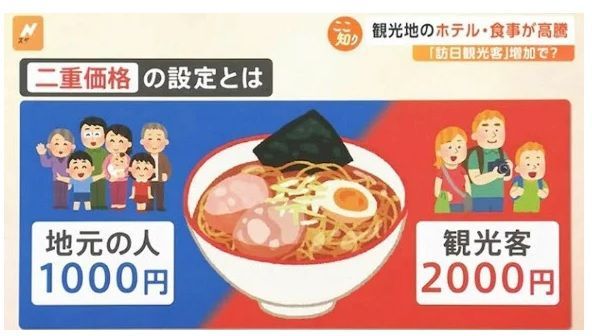 1000 yen for one bowl of ramen for locals, 2000 yen for Korean tourists? [Image source=Online capture]
As the so-called 'double-pricing' system is being discussed within Japan, domestic consumers, who have emerged as major players in Japan's tourism industry, are also paying attention. Double pricing refers to the price discrimination between locals and foreigners for services and goods, a policy mainly found in countries with developed tourism industries.
Already Introduced in Major Tourist Countries like Singapore and Europe
Although it may seem like an unfair policy at first glance, some tourist cities have long implemented double pricing. Singapore, Italy, and Spain are examples. These countries’ famous tourist destinations face chaos every year due to millions of tourists flooding in from overseas. Tourists are appreciated for helping to revitalize the local economy, but at the same time, they put a strain on urban infrastructure.
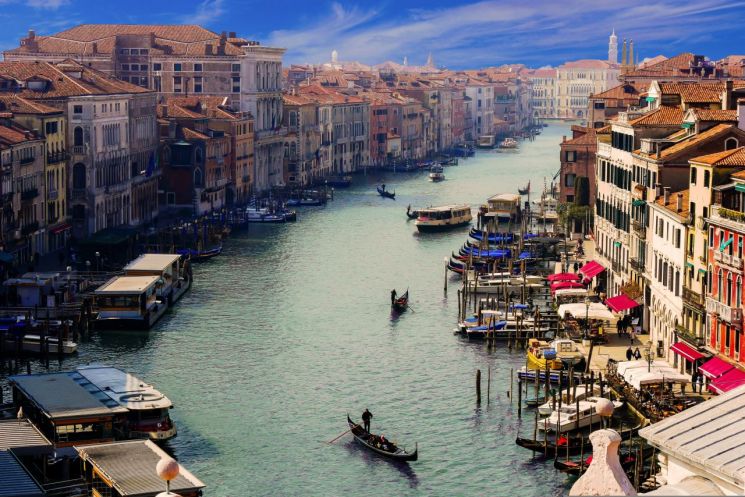
For this reason, places like Singapore and Venice have different public transportation fares for locals and foreigners. Tourists pay higher public fees to help fund the operation of infrastructure. Because of this, double pricing is more commonly referred to as 'pricing discrimination' overseas.
In Southeast Asia, Double Pricing is Entrenched in an 'Involuntary' Form
There is also price discrimination formed in an involuntary manner. Thailand, Vietnam, and other Southeast Asian tourist countries are representative cases. Generally, tourists tend to be wealthier than locals and are more likely to spend more money at once. In other words, there is a large difference in 'purchasing power.' Especially in developing Southeast Asian countries, the purchasing power gap between tourists and locals is much greater than in European countries.
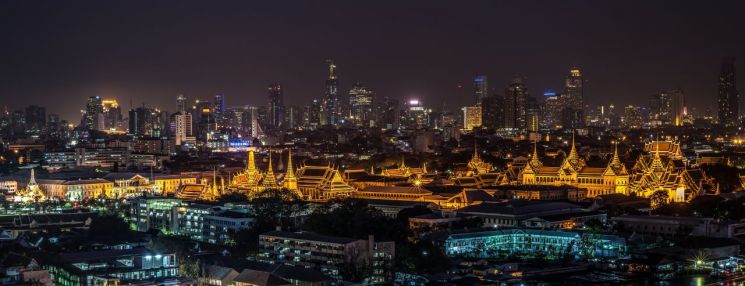
For these reasons, implicit double pricing is introduced at tourist attractions in these countries. Merchants sell at cheaper prices to locals but often overcharge foreigners who have difficulty communicating. This everyday overcharging leads to the entrenchment of double pricing.
Should Prices be Suppressed or Should Local Economies be Revitalized?
The double pricing discussed in some parts of Japan is presumed to be closer to the voluntary form seen in Europe and Singapore rather than the involuntary form in Southeast Asia. In this regard, recently, Hisanori Nagayama, Vice Chairman of the Japan Ryokan Association, said, "Singapore also operates double pricing by offering discounts to locals at theme parks, supermarkets, and restaurants."
Also, the JR Group, which operates Japan’s railways, recently raised the price of the JK Rail Pass 7-day ticket sold to foreign tourists from 29,650 yen to 50,000 yen, a 69% increase. This measure was to compensate for the sharply depreciated yen, but it can also be interpreted as a sign that price discrimination has already begun in Japan.
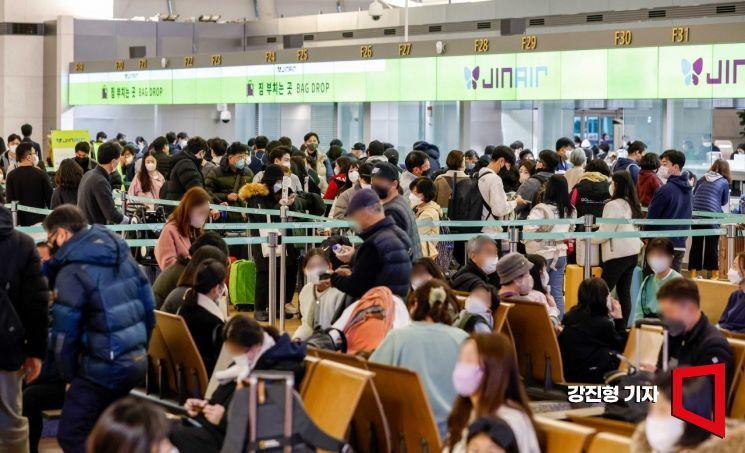 On the 20th, ahead of the Lunar New Year holiday, Incheon International Airport Terminal 1 was crowded with travelers preparing to depart. Photo by Jinhyung Kang aymsdream@
However, double pricing and price discrimination are essentially policies to protect locals at the expense of the tourism industry to some extent.
Regiondo, a German tourism analysis company, analyzed cases of price discrimination in Europe and warned, "Sustainable tourism revitalizes the local economy. However, price discrimination hinders sustainable tourism," adding, "There is no evidence that the additional charges imposed on tourists are returned to the local economy through the government." This means that the widespread introduction of double pricing could potentially harm not only Japan’s tourism industry but also the local economy.
Meanwhile, Japan’s tourism industry has gained momentum thanks to the weak yen. Currently, the exchange rate is only 885.1 won per 100 yen. There are claims that traveling to Japan is cheaper than traveling to Korea. According to the Japan National Tourism Organization, 25,066,100 foreigners visited Japan last year alone, and one-quarter of all tourists were Koreans.
© The Asia Business Daily(www.asiae.co.kr). All rights reserved.
![Clutching a Stolen Dior Bag, Saying "I Hate Being Poor but Real"... The Grotesque Con of a "Human Knockoff" [Slate]](https://cwcontent.asiae.co.kr/asiaresize/183/2026021902243444107_1771435474.jpg)


















