Establishment of Waste Reduction Plan in 3 Areas: Resident Participation, Waste Reduction, and Recycling Rate Improvement
Seongdong-gu's Household Waste Decreasing Annually, Targeting 3,004 Tons Reduction Compared to 2020 This Year
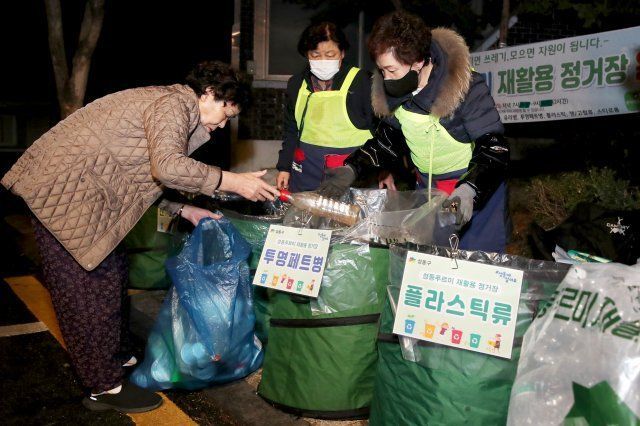
Seongdong-gu, Seoul (Mayor Jung Won-oh) announced that it has established a 2024 plan to reduce household waste to prevent a waste crisis following the 2025 suspension of the Metropolitan Landfill Site and to realize a carbon-neutral city.
As a pledge project of the 8th local government administration, Seongdong-gu has set a goal to reduce household waste (general and food waste) by 20% by 2027 compared to 2020 and has been making efforts to reduce household waste generation. The total amount of household waste in Seongdong-gu was 65,799 tons in 2020, but it turned to a decreasing trend afterward, recording 65,128 tons in 2021, 64,131 tons in 2022, and 61,401 tons in 2023. This represents a 6.42% decrease compared to 2020 as of 2023.
This year, the goal is to reduce household waste by 11% compared to 2020, planning to reduce 3,004 tons of household waste compared to last year.
To achieve this, a total of 25 projects will be promoted in three areas: ▲ Resident participation ? inducing empathy and participation ▲ Waste reduction ? suppressing waste generation ▲ Increasing recycling rate ? promoting resource circulation.
Since voluntary participation of residents is most important to reduce household waste, the ‘300,000 Waste Reduction Challenge’ based on resident participation will be launched for the first time this year. This is a resident awareness improvement project covering the entire household waste reduction initiative, aiming to encourage resident participation through challenges such as the multi-family housing food waste reduction challenge, recycling station challenge, single-person household waste diet challenge, and the 300,000 Da·Bi·Pae challenge. The Da·Bi·Pae challenge refers to the use of reusable containers, recycling of waste vinyl, and separate disposal of transparent PET bottles.
Additionally, the mobile separation disposal box ‘Seongdong Purumi Recycling Station,’ staffed by resource managers to guide residents in proper waste separation, will be operated. Other initiatives include upcycling education at the Eco-friendly Industry Experience Learning Center, resource circulation education for elementary school students in the district, green apartment creation projects, and hosting the ‘One and Only Earth’ event to participate in carbon neutrality efforts.
Efforts will also be made to reduce waste generation itself to suppress household waste. Projects such as reducing food waste using RFID volume-based waste bins in multi-family housing, reducing waste in single-person households, and strengthening business waste discharge management will be promoted, while continuously monitoring household waste discharge to maintain the decreasing trend.
Furthermore, to ensure valuable resources are not discarded as waste but recycled, a waste metal resource recycling project will be promoted. Various recycling promotion projects will also be implemented, including a pilot project to establish a waste fabric scrap recycling system through an agreement with the Ministry of Environment and the Korea Textile Resource Circulation Association, the Seongdong-style coffee grounds recycling project, and operation of unmanned collection machines for transparent PET bottles and ice packs. The operation of the Seongdong Resource Recovery Center (111 Garam-gil, Seongdong-gu) will be further activated to increase the sorting rate of recyclables.
Jung Won-oh, Mayor of Seongdong-gu, said, “In preparation for the suspension of the Metropolitan Landfill Site, we plan to actively promote household waste reduction again this year,” and added, “In particular, I hope residents actively participate in the household waste reduction challenges that Seongdong-gu is proactively implementing to create a resource-circulating city.”
© The Asia Business Daily(www.asiae.co.kr). All rights reserved.

















