Alteogen has disclosed the contract for its drug formulation change platform technology with global big pharma MSD. Although this is not a new contract but a modification of a past agreement, it is the first time the contracting party has been specifically identified as MSD.
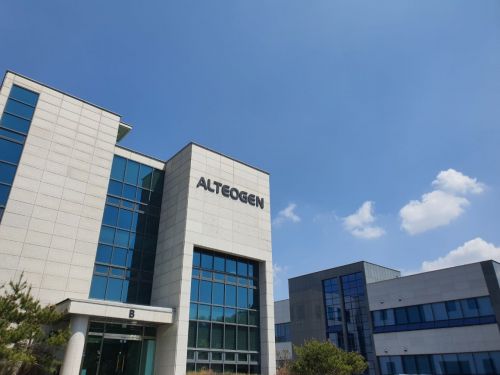
Alteogen announced on the 22nd that it has amended and re-concluded the non-exclusive license agreement related to Keytruda, originally signed with MSD in 2020.
In 2020, Alteogen exported its human hyaluronidase technology ALT-B4, which converts existing intravenous biologics into subcutaneous formulations, to MSD. The structure of the contract included an upfront payment of $16 million (approximately 19.4 billion KRW) plus additional milestone royalties. In addition to the original contract, Alteogen will receive an additional $20 million (approximately 26.7 billion KRW) in contract fees. This amount is expected to be received before the 25th of next month. Furthermore, both parties agreed to increase the milestone royalties by up to $432 million (approximately 570 billion KRW), and after product launch, Alteogen will receive a certain percentage of net sales as royalties.
At the time of the original contract, the counterparty was only disclosed as a "top 10 global pharmaceutical company." Since then, as MSD accelerated the development of the subcutaneous formulation of Keytruda, the industry has speculated that the counterparty was MSD, but Alteogen had never confirmed this until now. The company explained, "According to the original contract, the identity of the counterparty and information related to new drug development were agreed to be trade secrets under the contract," adding, "Upon signing this amended contract, the name of the counterparty and the current development product name have been disclosed."
Keytruda is an immuno-oncology drug developed by MSD. It is a mega blockbuster drug that generated global sales of $25 billion (approximately 33 trillion KRW) last year alone. This accounts for nearly 41.6% of MSD's total sales of $60.1 billion last year. It also became the world's top-selling drug as a single product, surpassing Humira ($14 billion), a treatment for autoimmune diseases. Starting with lung cancer, Keytruda has secured indications for 13 types of cancer domestically, including melanoma, head and neck cancer, breast cancer, and cervical cancer, and continues to expand its indications.
With its core patent expected to expire around 2028, MSD is exploring various ways to extend the product's lifecycle. Developing a subcutaneous formulation is one of the promising methods. The related patent has already been filed, and if granted, the patent protection period is expected to be extended until 2036.
© The Asia Business Daily(www.asiae.co.kr). All rights reserved.
![Clutching a Stolen Dior Bag, Saying "I Hate Being Poor but Real"... The Grotesque Con of a "Human Knockoff" [Slate]](https://cwcontent.asiae.co.kr/asiaresize/183/2026021902243444107_1771435474.jpg)
















