Cultural Heritage Administration Announces Major Policy Plans for This Year
Establishing Preservation and Transmission Framework Following Revised Classification System
Reducing Public Burden Imposed on National Heritage Protection
Initiatives to Revitalize Regions Using Historical and Cultural Resources
The Cultural Heritage Administration is transforming into a national heritage system. It will change its name to the 'National Heritage Administration' and reorganize its structure and system.
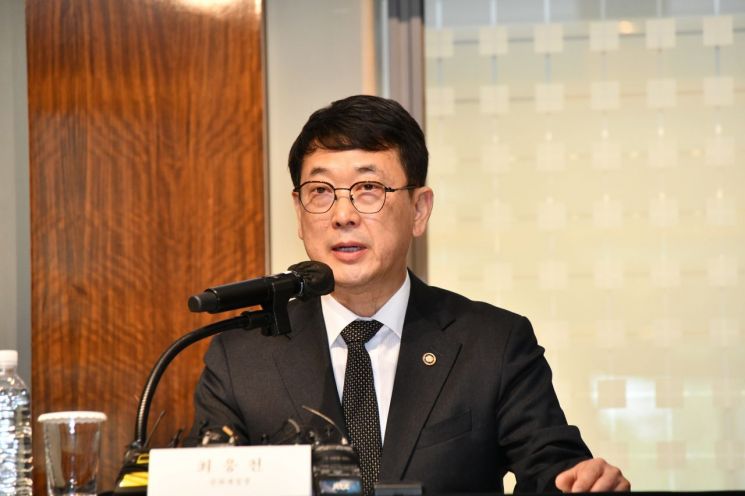
On the 22nd, the Cultural Heritage Administration announced this year's major policy implementation plan containing these details. It pledged to discover various policies and inform about the changing system to realize the basic principles of the 'National Heritage Basic Act.' These include ▲ protection and transmission of national heritage values ▲ creation of new future values ▲ active participation and enjoyment by the public ▲ promotion of sustainability ▲ revitalization of communities and regional development. Choi Eung-cheon, head of the Cultural Heritage Administration, emphasized, "The Cultural Heritage Administration will newly start as the National Heritage Administration on May 17," adding, "We will focus all our capabilities on creating new values for national heritage and promoting public benefits."
Since the enactment of the Cultural Heritage Protection Act in 1962, the Cultural Heritage Administration has maintained the cultural heritage system for over 60 years. The changes being pushed to overcome policy limitations have already been somewhat structured. Last year, the National Heritage Basic Act as well as legal systems related to cultural, natural, and intangible heritage were completed. Director Choi said, "We will shift policy directions to align with the changing policy environment and UNESCO international standards to establish new roles and values for national heritage."
According to the reorganized national heritage classification system, the Cultural Heritage Administration will establish preservation and transmission frameworks suited to each type's characteristics. In the cultural heritage sector, by September, a 'National Heritage Repair Materials Center (tentative name)' will be established in Bonghwa, Gyeongbuk, to stably manage the supply and quality of traditional materials, and a traditional materials certification system will be implemented. In the natural heritage sector, the establishment of the 'National Institute of Natural Heritage' is being promoted for comprehensive and specialized preservation, research, and utilization. Additionally, management standards such as traditional landscaping standard unit prices will be set, and contests and exhibitions will be organized to promote the excellence of Korean traditional landscaping. In the intangible heritage sector, the transmission base will be expanded based on diversity and inclusiveness. Director Choi explained, "We plan to broaden the recognition survey for transmission educators to include general transmitters and designate intangible heritage items transmitted by national institutions." Stable conditions for transmission activities will also be created. A representative example is the newly established incentive fund this year, which provides annual support of 1.6 billion KRW to about 270 outstanding national intangible heritage practitioners.
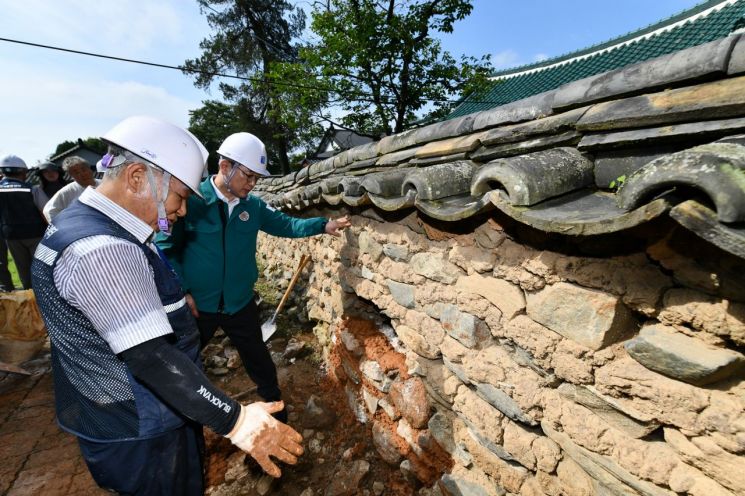
The Cultural Heritage Administration will also ease the public burden imposed on national heritage protection. It will first improve the deteriorated residential infrastructure near national heritage sites where residents live. Landscape improvement projects promoting coexistence and mutual prosperity will be carried out, and the cost of diagnostic surveys (sampling and trial excavation) supporting construction projects closely related to daily life (detached houses, type 1 and 2 neighborhood living facilities, sports facilities, warehouses, factories) will be expanded from 3 billion KRW last year to 5 billion KRW. The export and removal regulations for modern art heritage will be reduced from 50 years or older to works created before 1946. Procedures will also be simplified to help promote the excellence of Korean art heritage and secure competitiveness.
The Cultural Heritage Administration is pursuing several policies to enhance the value of national heritage. It is promoting the enactment of the 'National Heritage Industry Promotion Act (tentative name)' and collaborating with advanced science and technology companies and research institutes to research and develop smart preservation and utilization technologies for national heritage. Furthermore, it will strengthen the 'World National Heritage Industry Exhibition,' the only national heritage industry exhibition and exchange event in Korea, to revitalize the related industrial ecosystem, and promote utilization in various fields by expanding 3D precision recording data and building an integrated database (DB).
Revitalizing regions using historical and cultural resources is also one of this year's key projects. A budget of 17.2 billion KRW will be invested in the 'Our Local National Heritage Utilization Project' to help local governments conduct experiences, tours, and performances centered on national heritage. 'Historical and Cultural City Revitalization Projects' will be promoted in ancient capitals (Gyeongju, Gongju, Buyeo, Iksan), modern historical and cultural spaces (Gunsan, Tongyeong, etc.), and historical cultural zones (Naju, Haman, etc.) to drive regional tourism growth. Director Choi said, "We plan to intensively discover night-specialized content that induces domestic and international tourists to stay in the regions," adding, "We will also present new utilization models such as operating the 'Year of Visiting National Heritage by Region' every two years by selecting one metropolitan local government."
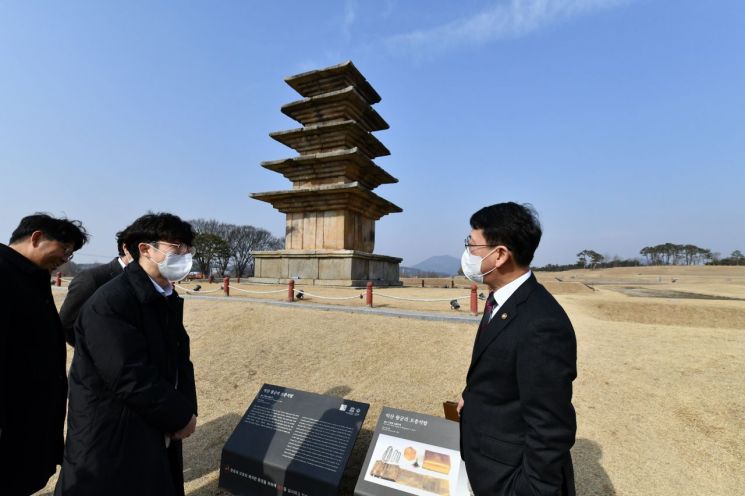
The Cultural Heritage Administration will also reorganize the system to protect national heritage from crises such as climate change. Over the next five years starting this year, 23.1 billion KRW will be invested in 'Climate Change Response National Heritage Preservation and Management Technology Development (R&D),' and 1.5 billion KRW will be supported this year for research on damage recovery and adaptive management of national heritage by industry, academia, and research institutes. Additionally, emergency repair funds will be expanded from 3.7 billion KRW last year to 4.1 billion KRW, and specific measures will be developed to preemptively protect national heritage located in natural disaster-prone areas such as mountains and valleys. Director Choi stated, "We plan to survey the status of about 360 national heritage sites by next year and prepare protection measures."
Global cooperation through national heritage and enhancement of national brand value are also noteworthy. The biggest change is the scale of cultural heritage international development cooperation (ODA), which increased by 178% to 13.1 billion KRW compared to the previous year (4.8 billion KRW). This year, restoration of the gate of the Ramesseum Temple in Egypt and the establishment of a Digital Heritage Center will be actively pursued, and participation in the restoration and maintenance of Angkor Wat in Cambodia will continue. Meanwhile, following Japan and the United States, a base will be established in Europe, which has many overseas cultural heritage sites, for preservation, utilization, and repatriation. Director Choi said, "We will provide various information on overseas cultural heritage and stimulate public interest in repatriation through active utilization such as exhibitions."
The trend of UNESCO heritage registration is also expected to continue. This year, 'Korea's Jangdangkgi Culture' will challenge inscription on the Intangible Cultural Heritage of Humanity. 'Bangudae Petroglyphs' and 'Traditional Knowledge, Techniques, and Cultural Practices of Hanji Production' are also undergoing application procedures for World Heritage and Intangible Cultural Heritage of Humanity, respectively. Director Choi pledged, "We will concentrate domestic and international capabilities for successful inscription."
© The Asia Business Daily(www.asiae.co.kr). All rights reserved.



















