Partial Victory in Lawsuit, Partial Overturning of Judgment
Not Only the Representative Company but Also the Construction Company Responsible for Refund
The Supreme Court has ruled that the representative companies and contractors of the consortium involved in bid-rigging for the Four Major Rivers Project construction bids must return the design compensation fees they received.
Previously, the appellate court recognized liability for damages amounting to hundreds of billions of won only for the representative companies, but the Supreme Court held that the contractors also bear responsibility for returning the design compensation fees.
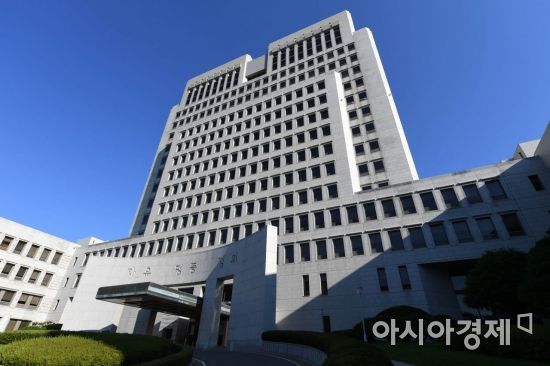
According to the legal community on the 20th, the Supreme Court's Third Division (Presiding Justice Noh Jeong-hee) partially overturned the appellate court's ruling that partially upheld the plaintiff's claim in the appeal trial of the Korea Water Resources Corporation (hereinafter referred to as the Corporation) against 121 companies including construction firms and architectural offices, and remanded the case to the Seoul High Court.
The Supreme Court overturned the part of the second trial's ruling that dismissed the Corporation's claim for the return of design compensation fees against some contractors who participated in certain projects and dismissed the remaining appeals.
The defendants in this lawsuit included many of South Korea's leading construction companies such as Gyeryong Construction Industry, Goryeo Development, Daelim Industrial, Daemyung Construction, Daewoo Engineering & Construction, Samsung C&T, Seohee Construction, Seongwon Construction, Ssangyong Construction, CJ Construction, SK Construction, GS Construction, Hanjin Heavy Industries, Hanwha Construction, Hyundai Engineering & Construction, and Hyundai Development Company.
The court stated, "If the entity issuing the bid announcement stipulated at the time of the bid announcement that 'those not selected as the successful bidder may receive partial compensation for design fees,' and the bidders participated in the bid in response to this, and then the entity issuing the bid announcement selected the successful bidder, it can be presumed that a contract regarding the payment of design compensation fees, as stipulated in the prior announcement, was concluded between the entity issuing the bid announcement and the unsuccessful bidders, unless there are special circumstances."
It added, "The specific content of that contract should be determined by the parts related to the payment of design compensation fees in the documents presented to the bidders at the time of bidding, such as the bid announcement and bid guidelines."
The court concluded, "Therefore, the provision in the special notice of this case stating that 'those whose bids are invalid or later found to be invalid are excluded from the design fee compensation recipients, and those who received compensation before the invalidity was discovered must immediately return it in cash' is also incorporated as part of the contract."
It further stated, "The defendants are jointly and severally obligated to return the design compensation fees to the plaintiff based on the contract regarding the payment of design compensation fees, and whether or not the defendants directly participated in the collusive acts does not affect the existence of their liability."
The defendant companies formed a joint consortium to participate in the first turnkey (design and construction integrated bidding) bids related to the maintenance projects of the Four Major Rivers (Han River, Geum River, Nakdong River, Yeongsan River) during the Lee Myung-bak administration but were unsuccessful in the bids. At that time, the Corporation requested the Public Procurement Service to conduct bids for each project between July and October 2009, entrusting the Seoul Regional Land Management Office of the Ministry of Land, Transport and Maritime Affairs, as well as the Busan and Daejeon Regional Land Management Offices.
Although a budget of 22 trillion won was invested in this project, suspicions arose that companies colluded on prices during the bidding process and that the companies that lost the bids deliberately submitted design documents to receive lower scores.
The Korea Fair Trade Commission confirmed the collusion from 2012 to 2015 and imposed corrective orders and fines on the companies. Some companies and their executives were prosecuted and convicted in criminal trials.
In response, the Corporation filed a lawsuit in April 2014 demanding the return of the design compensation fees received by the companies. The Corporation primarily claimed the return of design compensation fees based on the provisions in the bid guidelines attached to the bid announcement at the time of bidding (stating that bids involving collusion, obstruction of others' participation, or interference with public officials' duties are invalid), and alternatively claimed damages for illegal acts and unjust enrichment.
Design compensation fees refer to partial reimbursement of design costs by the government to companies that participated in the bid but were not awarded the contract. However, if invalidity such as collusion is confirmed during the bidding process, the compensation must be returned.
The first trial court mostly accepted the Korea Water Resources Corporation's claim and ordered the companies to return a total of 24.4 billion won.
On the other hand, the appellate court reduced the amount to 10.2 billion won, reasoning that the regional land management offices entrusted by the Corporation paid the design compensation fees, so it was not appropriate for the Corporation to claim them, and that some collusive acts were difficult to specifically recognize.
In the appeal trial, the key issue was whether the 'return of design compensation fees' clause in the bid announcement for projects directly ordered by the Corporation could be regarded as a contract between the Corporation and the companies.
The appellate court ruled that the return provision was not a contract and that it was appropriate for the companies to pay damages for illegal acts rather than return the fees.
However, the Supreme Court's judgment differed.
The Supreme Court held, "If the entity issuing the bid announcement established the provisions related to design compensation fees and the bidders participated in response, it can be presumed that a contract regarding the payment of design compensation fees was concluded between the entity issuing the bid announcement and the unsuccessful bidders, unless there are special circumstances."
Accordingly, the scope of responsibility for the payment of design compensation fees among the representative companies, contractors, and designers participating in the joint consortium also changed.
The appellate court ruled that the representative companies that led the collusion should bear the full burden, reasoning that companies that did not directly participate or only passively acquiesced could not be held liable for damages due to illegal acts.
In contrast, the Supreme Court held that both the representative companies and the contractors are responsible.
The Supreme Court stated, "A contract regarding the payment of design compensation fees was also established between the plaintiff and the contractors," and "the contractors are jointly and severally obligated to return the design compensation fees to the plaintiff, and whether or not they directly participated in the collusive acts does not affect the existence of their liability."
However, the court ruled that designers who contracted to perform specified services and receive compensation do not need to share responsibility.
© The Asia Business Daily(www.asiae.co.kr). All rights reserved.

















