For 3rd Year Middle School Students and Parents This Year
Total of 5 Regional Sessions Starting in April
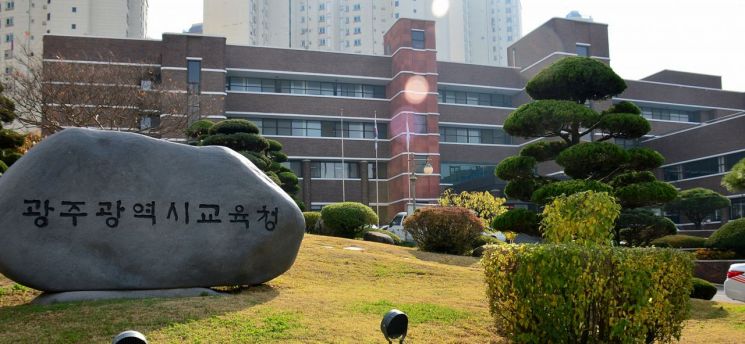
The Gwangju Metropolitan Office of Education announced on the 20th that it will hold focused briefing sessions for current 9th-grade students and their parents, to whom the 2028 academic year university entrance exam reform will apply.
The briefing sessions on the basic high school admission plan and selection guidelines are scheduled to be held five times by region starting in April.
The sessions will include understanding the new directions and policies of the 2028 university entrance exam system and preparation strategies. In particular, to provide detailed explanations, the metropolitan office plans to create and utilize a standardized lecture plan on the entrance exam reform.
The 2028 university entrance exam has been significantly revised in the CSAT and school record evaluation methods to allow students studying under the high school credit system, which will be implemented from 2025, to design customized career and academic paths.
First, an integrated and convergent CSAT subject system will be introduced. To eliminate advantages or disadvantages in subject selection, elective subjects have been abolished. The Korean language section has changed from 'Common (Reading, Literature) + Elective (choose one from Speech and Writing, Language and Media)' to 'Common subjects (Speech and Language, Reading and Writing, Literature)'.
The mathematics section has changed from 'Common (Mathematics I, Mathematics II) + Elective (choose one from Probability and Statistics, Calculus, Geometry)' to 'Common subjects (Algebra, Calculus I, Probability and Statistics)'.
Additionally, in the inquiry section, social common subjects (Integrated Social Studies for 10th grade) and science common subjects (Integrated Science for 10th grade) will be taken together. Previously, students selected up to two subjects from 17 total subjects: 9 social studies and 8 science inquiry subjects.
Second, the high school internal assessment will be reorganized into a 5-grade system. To ensure fairness in internal assessments, the same evaluation system will be applied for grades 10, 11, and 12. Along with this, the existing 9-grade relative evaluation system will be abolished and replaced with a 5-grade system.
Absolute evaluation will be implemented for all subjects, but relative evaluation will be concurrently applied as a safeguard against grade inflation. However, among high school convergent elective subjects in social studies and science (9 subjects: Travel Geography, Modern World Explored through History, Social Issues Inquiry, Finance and Economic Life, Ethics Issues Inquiry, Climate Change and Sustainable World, History and Culture of Science, Climate Change and Environmental Ecology, Convergent Science Inquiry), relative evaluation ranking grades will not be recorded.
The Career and Academic Guidance Team of the metropolitan office, responsible for high school and university admissions, will actively support 9th-grade students and their parents so that local students can enter high school and design various university entrance plans aligned with their career paths. To this end, they plan to provide sufficient prior guidance on the basic high school admission plan, selection guidelines, and preparation strategies in response to changes in the university entrance system.
Superintendent Lee Jeong-seon said, “We will provide detailed guidance on the 2028 university entrance exam reform to students and parents so they can choose diverse career paths stably,” and added, “Above all, we will systematically provide necessary admission information to support our students in achieving their desired dreams.”
© The Asia Business Daily(www.asiae.co.kr). All rights reserved.

















