'Strong-gye Chuhai' New Product Release Suspended
Health Authorities Strengthen Alcohol Guidelines
The alcoholic beverage known as "Strong-type Chuhai," famous among Korean tourists as a "must-buy item at Japanese convenience stores," is expected to disappear soon. This comes after Japanese health authorities expressed concerns that its high alcohol content and low price make it easy to get intoxicated, which is detrimental to health, leading major liquor companies to abandon plans for new product releases.
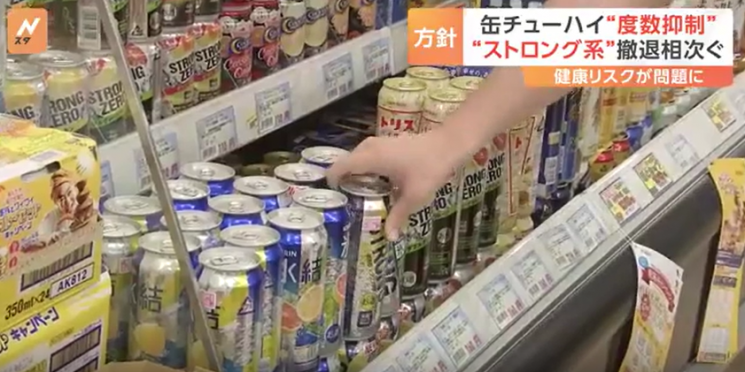
On the 20th, Sankei Shimbun reported that following the previous day's announcement of alcohol guidelines by the Ministry of Health, Labour and Welfare, major liquor companies are joining the suspension of new Strong-type Chuhai product launches. As early as January, Asahi Breweries and Sapporo Breweries announced they would no longer release new products, and Kirin began reviewing its sales policy immediately after the guideline announcement.
Strong-type Chuhai sold at convenience stores and supermarkets is a product that packages the Japanese alcoholic drink "Chuhai"?a distilled spirit mixed with carbonated soft drinks?in an easy-to-drink canned form. Representative products include Suntory's "Strong Zero" and "-196°C." These beverages are flavored with fruit and carbonation for easy drinking but are released with a high alcohol content of at least 8%, with 12% varieties not uncommon. Not only Suntory but also Asahi and Kirin participate in the Strong-type Chuhai market, with Kirin's "Hyoketsu" also being well-known.
Strong-type Chuhai became explosively popular around 2010 as a "cost-effective alcohol" that is cheaper than beer but has a high alcohol content, allowing for quick intoxication.
In Japan, Strong Zero has been subject to mixed evaluations, ranging from criticism as a "drug" or "alcohol created by poverty" due to its potential to increase alcohol dependence, to being described as "drinking welfare." On X (formerly Twitter), posts emotionally describing personal feelings while intoxicated on Strong Zero gained attention, leading to the emergence of "Strong Zero literature" as a genre, which prompted concerned media coverage.
However, since the COVID-19 pandemic, the "Sober curious" lifestyle?intentionally avoiding alcohol?has spread in Japan, significantly shrinking the Strong-type alcohol market. According to the research company Intage, sales of Strong-type products decreased from 177.6 billion yen (approximately 1.5817 trillion KRW) in 2020 to 136.5 billion yen (approximately 1.2156 trillion KRW) in 2023. Originally, Strong-type products with an alcohol content around 9% accounted for over 40% of the Chuhai market, but this share shrank to 23.7% as of last year.
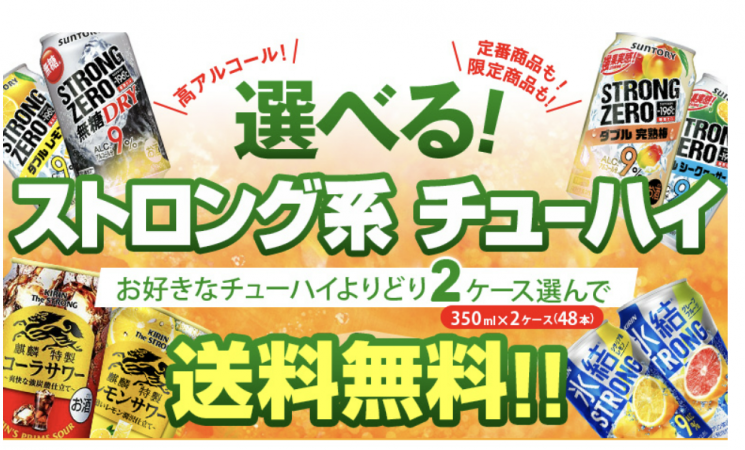 Poster for the "Strong Chuhai Collection" event held by Rakuten. It promotes the purchase of two boxes (48 cans) of various strong chuhai beverages with free shipping. (Photo by Rakuten)
Furthermore, with the government announcing drinking guidelines the day before, liquor companies appear to have concluded that incentives to develop the market have vanished. The Ministry of Health, Labour and Welfare released drinking guidelines indicating health risk levels based on the "pure alcohol amount" contained in drinks rather than alcohol content or number of glasses. The daily drinking amount that increases disease risk is 40g for men and 20g for women, equivalent to two 500ml cans of beer for men and one can for women.
Asahi has already consolidated its 79 Strong-type products into one, and Sapporo has reduced its Strong-type products from 20 in 2018 to one. Other companies are also expected to follow suit, suggesting that Strong-type alcoholic beverages will gradually disappear from the market.
Going forward, liquor companies plan to focus on lower-alcohol and non-alcoholic beverages instead of Strong-type Chuhai. Asahi has set a goal to have more than 20% of its alcoholic products at 3.5% alcohol content or lower by 2025.
© The Asia Business Daily(www.asiae.co.kr). All rights reserved.


















