"Large Japanese Stocks and the Yen Have an Inverse Correlation"
Investors' Currency Risk Hedge Strategies
As the Japanese stock market continues its rally toward record highs, Bloomberg reported on the 19th (local time) that asset management firms' short positions on the yen have increased by about 20% in eight months.
Analyzing data from the U.S. Commodity Futures Trading Commission, the report found that as of the 13th of this month, asset managers' short positions on the yen totaled approximately 122,000 contracts, up 20% from about 100,000 contracts on June 20 last year. Additionally, the correlation coefficient between the TOPIX 100 index and yen positions was recorded at -0.56. This is the highest level since 2020 and suggests that foreign investors, including asset managers, are employing currency risk hedging strategies when investing in Japan's large-cap stocks.
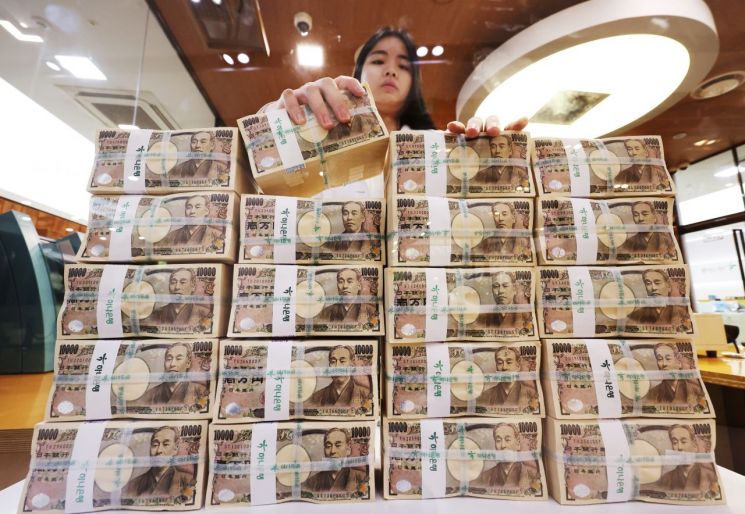
This currency risk hedging strategy appears to be effectively working at present. The TOPIX 100 index, which posted a 27% gain last year, has risen 14% this year alone, reaching its highest level since 1990. A senior official from the Japanese Cabinet Office also supported market optimism by stating that Japan is at the final corner before declaring victory over falling consumer prices.
Meanwhile, the yen's value has fallen about 6% against the dollar so far this year, showing a somewhat contrary movement to market expectations of a rebound in 2024. Regarding this, the report assessed that the market has abandoned hopes for an early interest rate cut by the U.S. Federal Reserve (Fed) and is anticipating the Bank of Japan (BOJ) to maintain its accommodative monetary policy stance.
Wei Li, Multi-Asset Quant Solutions Portfolio Manager at BNP Paribas Asset Management, explained, "We like Japanese stocks," adding, "Based on the outlook that the yen will remain weak, we are preserving the overall portfolio asset value through currency hedging of our equity positions."
Yukio Ishizuki, Chief Currency Strategist at Daiwa Securities, said, "When Japanese stock prices rise, demand from foreign investors to sell yen to hedge stock gains increases." He further explained, "The market is testing the yen's value bottom based on speculation that BOJ's rate hikes will be gradual and expectations that the Fed's rate cuts will be delayed beyond initial forecasts."
© The Asia Business Daily(www.asiae.co.kr). All rights reserved.
![A Woman with 50 Million Won Debt Clutches a Stolen Dior Bag and Jumps... A Monster Is Born [Slate]](https://cwcontent.asiae.co.kr/asiaresize/183/2026021902243444107_1771435474.jpg)
















