Over 2,000 Cases in 3 Months Since Last October
Seoul Housing Sales Consumer Sentiment Index Rises 4.7 Points
Last month, the volume of apartment transactions in Seoul exceeded 2,000 units for the first time in three months. This is analyzed as a result of gradually decreasing mortgage loan interest rates, the depletion of urgent sale properties, and the stimulation of buying sentiment due to policy fund injections such as the Newborn Special Loan. However, it is still considered too early to expect a trend reversal in the increase of transaction volume.
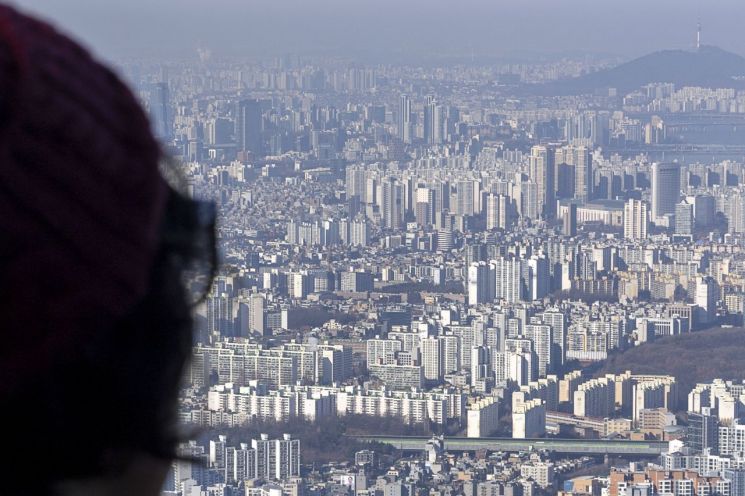 The appearance of an apartment in Seoul located in Namhansanseong, Gwangju-si, Gyeonggi Province / Photo by Yonhap News
According to the Seoul Real Estate Information Plaza on the 20th, the number of apartment transactions in Seoul in January (based on contract date) was 2,268 units, surpassing 2,000 units for the first time in three months since October last year (2,337 units). Since the January data will be compiled until the end of this month, the figure is expected to increase further.
Seoul apartment transaction volumes, which exceeded 3,000 units per month last year, fell below 2,000 units in November (1,843 units) and December (1,827 units). The prolonged real estate market slump amid high interest rates and the termination of the Special Bogeumjari Loan in September affected this. Since the implementation of the actual transaction reporting system in 2006, the average monthly transaction volume in Seoul apartments has been around 5,000 to 6,000 units.
The rebound in transaction volume last month compared to the previous two months is attributed to signs of a decline in mortgage loan interest rates. The Cost of Funds Index (COFIX), which is the basis for calculating variable mortgage loan interest rates, has fallen for two consecutive months recently. Fixed-rate mortgage loans are also forming interest rates in the low 3% range annually as the benchmark indicator, the 5-year bank bond yield, has decreased. There are optimistic forecasts that the U.S. Federal Reserve (Fed) or the Bank of Korea may lower the base interest rate in the second half of this year.
Additionally, the application for the Newborn Special Loan, which lends up to 500 million KRW at low interest rates of 1.6% to 3.3% to households without homes or one-home owners (for refinancing loans), is stimulating buying sentiment. The Newborn Special Loan began accepting applications on the 29th of last month, but loan disbursements have not yet been made. This means it is difficult to say that it has directly influenced the increase in transaction volume. However, it is possible that buyers first took other loans and then switched to the Newborn Special Loan, and considering that about 27 trillion KRW will be injected into the market in the future, expectations for transaction activation have increased.
Housing buying sentiment also slightly recovered after four months. According to the ‘Real Estate Market Consumer Sentiment Survey’ by the Korea Research Institute for Human Settlements, the housing purchase consumer sentiment index in Seoul last month was 104.3, up 4.7 points from the previous month. Nationwide, it rose 2.9 points to 103. Although sellers still outnumber buyers in the buyer-seller comparison, the Seoul buyer dominance index notably rose from 18.8 in December last year to 21.2 in January this year, marking a reversal after four months.
However, experts believe that this increase in transaction volume is unlikely to lead to a trend change. It is uncertain how much more the government will introduce deregulation policies, and the disbursement of the Newborn Special Loan may be carried out strictly. Ham Young-jin, head of the Zigbang Big Data Lab, said, "Compared to the Special Bogeumjari Loan, the Newborn Special Loan has stricter conditions and less impact, and the decrease in pre-sale supply will affect transaction volume. Along with the ripple effects of the government's housing supply expansion policy, we need to observe a bit longer whether rising transactions will continue when the volume decreases and asking prices rise from the current urgent sale-centered transactions."
© The Asia Business Daily(www.asiae.co.kr). All rights reserved.

















