As of January, Jeonse Price per Pyeong is 19.07 Million KRW
Jeonse Price Change Rate Rises for 6 Consecutive Months
High Increase Rates in Mapo, Yangcheon, and Dongjak Districts Over the Last 3 Months
Ahead of the spring moving season, Seoul's jeonse prices are showing an unusual upward trend. Due to high interest rates and a stagnant real estate market, many buyers are opting for jeonse rather than purchasing, leading to expectations that jeonse prices will continue to rise for the time being.
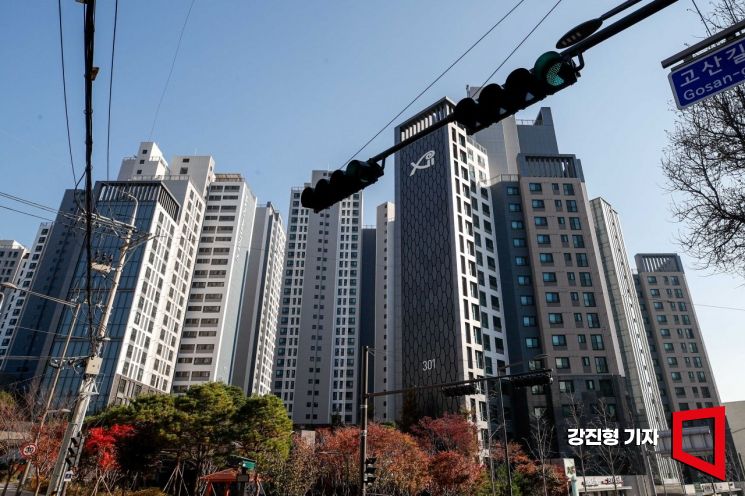 The government announced that it will freeze the actualization rate of publicly announced real estate prices at the 2020 level. The photo shows a newly built apartment complex in Seoul on the 21st. Photo by Jinhyung Kang aymsdream@
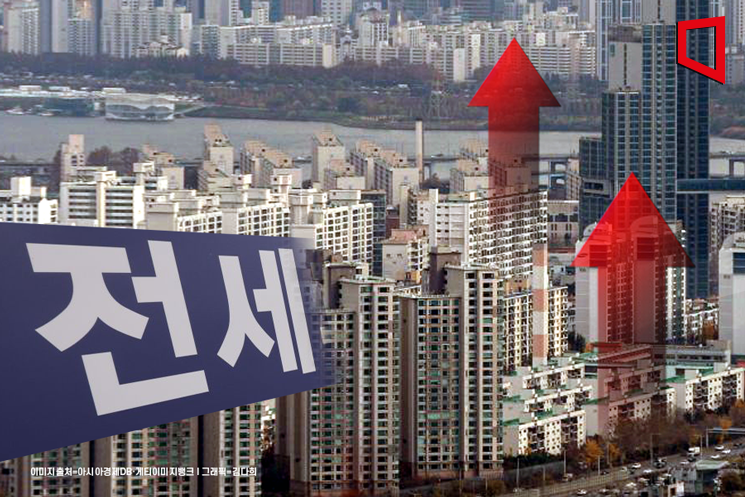
According to Real Estate R114 on the 16th, the jeonse price per 3.3㎡ (pyeong) in Seoul was 19.07 million KRW as of January this year, marking eight consecutive months of increase since May last year. The jeonse price change rate has also rebounded since August last year and has maintained an upward trend for six consecutive months. Looking at the nationwide jeonse price change rate, Seoul recorded 1.3%, higher than other regions.
Jeonse and monthly rental listings are also disappearing. According to the real estate big data platform Asil, the number of jeonse and monthly rental listings in Seoul decreased by 5.1%, from 54,946 three months ago to 52,069 as of this date. Jeonse listings dropped by 5.5%, from 35,305 to 33,392.
The seasonal factor of the upcoming new school term also appears to be influencing the rise in jeonse prices. In Seoul, jeonse prices have surged particularly in areas with many newly built apartments or good residential conditions such as school districts. The regions with the highest jeonse price change rates over the past three months were Mapo-gu and Yangcheon-gu, rising about 2.4%. They were followed by Dongjak-gu at 2.3%, Seodaemun-gu at 2.1%, and Jongno-gu at 2%.
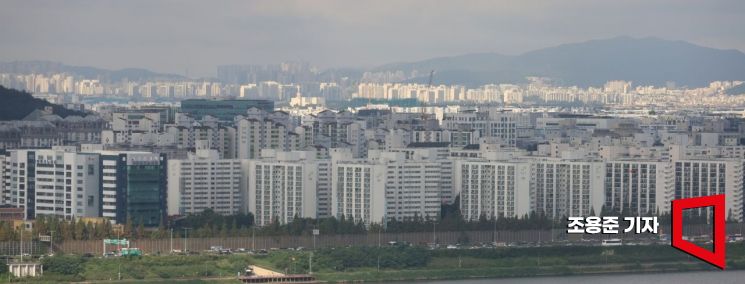
In Ahyeon-dong, Mapo-gu, at Mapo Raemian Prugio, a jeonse contract for an 85㎡ unit was signed on the 20th of last month for 1 billion KRW (19th floor). Until November last year, most jeonse contracts were in the mid-900 million KRW range, but the price surged to 1 billion KRW with the new year. When renewing contracts using the renewal right, prices increased by 30 to 40 million KRW.
At Acro River Heim in Heukseok-dong, Dongjak-gu, an 84㎡ jeonse contract was signed on the 16th of last month for 1.2 billion KRW (17th floor). Since December last year, there have been three jeonse transactions at 1.2 billion KRW. Compared to the same floor unit traded a month earlier, the contract was signed for 40 to 60 million KRW more. In Magok-dong, Gangseo-gu, Magok M Valley Phase 7 saw a 115㎡ jeonse transaction on the 7th for 970 million KRW (10th floor). Following the 900 million KRW (12th floor) recorded at the end of December, the tenant was secured at a price 70 million KRW higher.
Yeokyeonghee, Senior Researcher at Real Estate R114, explained, "Concerns about reverse jeonse have decreased, and as renewal demand has increased, jeonse listings have declined. There is also the effect that the amount of jeonse supply from older apartments is not substantial. Especially in Mapo, Dongjak, and Yangcheon, jeonse prices rose significantly due to moving demand before the school term, but the possibility of this leading to a jeonse shortage is low."
Ham Youngjin, Head of the Big Data Lab at Zigbang, said, "House prices have been declining since the fourth quarter of last year, and with uncertain prospects for future increases, buyers are staying in the rental market rather than purchasing apartments. In some areas of Seoul and the metropolitan area, the decrease in apartment move-in volumes this year compared to last year has also reduced rental supply. This year, the number of apartment move-ins in Seoul is only about one-third of last year's, at 10,000 units, and the decrease in new supply is linked to the rising jeonse prices."
© The Asia Business Daily(www.asiae.co.kr). All rights reserved.



















