The Nikkei 225 index, the representative stock index of the Japanese stock market, surpassed the 38,100 mark on the 15th, setting a new 34-year high. It is now very close to the all-time high of 38,915 recorded at the end of 1989.
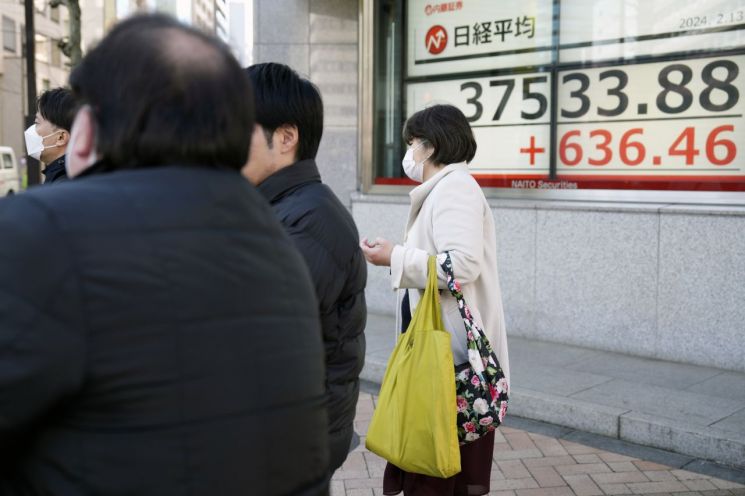
On that day, the Nikkei index closed at 38,157, up 454 points (1.2%) from the previous session, on the Tokyo Stock Exchange. This is the first time since January 11, 1990, that the closing price has exceeded the 38,100 level. During the session, the index rose as high as 38,188.
The strong performance of the New York stock market, boosted by a semiconductor rally the previous day, carried over to the Tokyo market, leading overall investor sentiment. Earnings announcements from major companies and corporate governance improvements also acted as buying factors. The Nikkei index had risen for three consecutive trading days through the 13th but closed lower the day before. Although the real GDP for the fourth quarter of last year, released that morning, showed contraction for two consecutive quarters, it did not significantly impact the stock market's upward trend.
Among individual stocks, non-life insurance shares showed notable gains. Tokio Marine Holdings and SOMPO Holdings rose by about 5% and 6%, respectively. MS&AD Insurance Group Holdings surged nearly 14%. Semiconductor-related stocks continued their strength, supported by optimism about artificial intelligence (AI). Tokyo Electron rose more than 5%.
Additionally, Rakuten Group, which released its earnings the previous day, soared more than 15%. On the other hand, Sony Group slipped over 6% despite raising its net profit forecast, as uncertainties in the gaming industry became prominent.
Attention is also focused on whether the Nikkei index will continue its rally and break its all-time high. The Nikkei's all-time high is 38,915, recorded at the end of 1989. Yasuhiko Kuramochi, a market strategist at Mizuho Securities, said, "Overall earnings are strong," and added, "The record high is approaching."
Currently, market optimists expect further gains, citing continued inflows of foreign investor funds supported by the weak yen and improvements in corporate export performance. However, concerns about a sluggish real economy are considered a downside risk.
© The Asia Business Daily(www.asiae.co.kr). All rights reserved.
![Clutching a Stolen Dior Bag, Saying "I Hate Being Poor but Real"... The Grotesque Con of a "Human Knockoff" [Slate]](https://cwcontent.asiae.co.kr/asiaresize/183/2026021902243444107_1771435474.jpg)
















