Samsung SDI 6 Trillion Won · SK On 7.5 Trillion Won
LG Ensol Injects 1.6 Trillion Won via Corporate Bonds
Challenges in Fundraising and Soundness Management
Battery companies, currently going through a period of stagnation, are embarking on "bold investments."
Despite struggling with poor performance due to the slowdown in electric vehicle growth and the sharp drop in raw material prices, they believe that missing the investment timing would prevent them from keeping up with the future electric vehicle growth trend. Securing funds and managing soundness have emerged as top priorities.
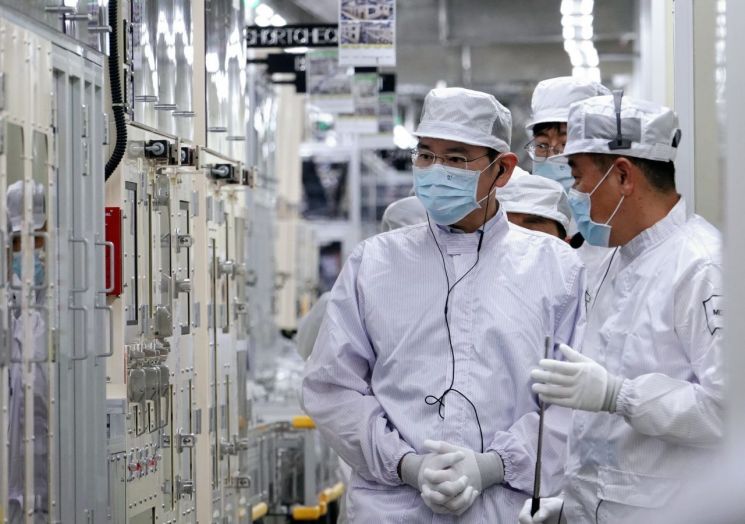
According to industry sources on the 14th, Samsung SDI's investment scale this year is estimated to reach a record high of 6 trillion won. In the first to third quarters of last year alone, it invested 2.4397 trillion won in facility investments (2.3967 trillion won in batteries and 43 billion won in electronic materials), and spent 836.4 billion won on research and development during the same period. Compared to last year's annual investment of 5 trillion won, this year's investment amount is expected to increase further.
Samsung SDI is currently constructing a joint factory with Stellantis in Indiana, USA, with an investment of 1.6313 trillion won. Following this, construction will begin on Stellantis's second plant and a joint factory with General Motors (GM). Samsung SDI's investment scale is expected to reach 2.6556 trillion won and 1.5 billion dollars (approximately 2 trillion won), respectively. Expansion of overseas factories in Hungary, Malaysia, and other locations is also planned.
On the 9th, Lee Jae-yong, Chairman of Samsung Electronics, who visited Samsung SDI's Malaysia plant, urged, "Do not shrink back because of difficulties; we must invest boldly," and added, "Let us lead change through daring challenges. Let us create new value and secure solid competitiveness." This has increased the likelihood of further expansion in mid- to long-term investment scale.
SK On has announced plans to invest about 7.5 trillion won. SK Innovation recently revealed at its earnings presentation that out of the 9 trillion won planned for facility investment (CAPEX) this year, about 7.5 trillion won will be invested in the battery business. Investment will be concentrated on joint ventures (JVs) with Ford and Hyundai in the key strategic market of North America.
Last year, SK On failed to turn a profit with annual sales of 12.8972 trillion won and an operating loss of 581.8 billion won. However, its order backlog reached 400 trillion won as of the end of last year. It plans to complete the expansion of its Hungary 3rd plant and China Yancheng plant in the first half of this year and start commercial production.
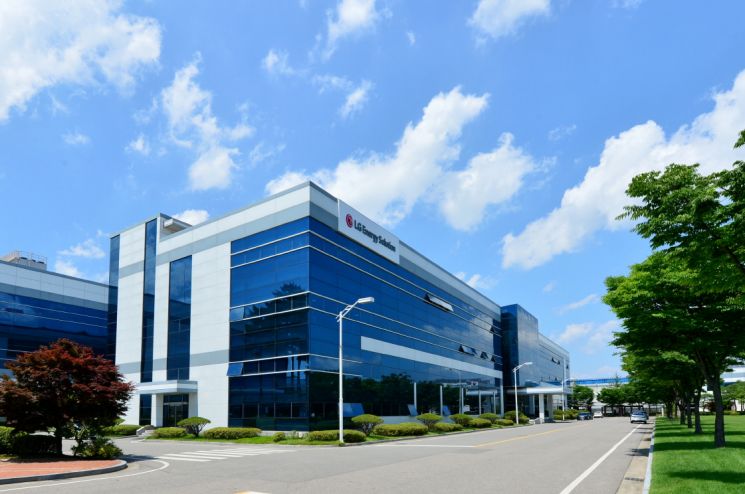
LG Energy Solution plans to invest in production facilities this year at a scale similar to the previous year (about 10.9 trillion won). Recently, it finalized the issuance of corporate bonds worth 1.6 trillion won, the largest single issuance in its history. LG Energy Solution plans to use these funds for global facility investments. It has allocated 320 billion won for cathode material purchases and 1.28 trillion won for joint venture investments.
The funds will be used for investments in production plants of joint ventures such as 'NextStar Energy,' established with Stellantis, 'L-H Battery Company,' a joint venture with Honda, and 'LGES-HMG Battery,' a joint venture with Hyundai Motor Group.
The aggressive investments by battery companies have led to a significant increase in borrowings, which is a concern. As of the end of the third quarter last year, the borrowings of the three major battery companies amounted to about 30 trillion won, an increase of more than 20% compared to the end of 2022 (24 trillion won).
In a recent report, Korea Ratings stated, "Due to the continued weak profitability trend caused by demand slowdown, the need to adjust the pace of investment in the short term has increased," but also pointed out, "If financial capacity is secured and used to improve production efficiency, diversify products, or develop next-generation batteries and materials, the downward pressure on credit ratings can be alleviated to some extent."
© The Asia Business Daily(www.asiae.co.kr). All rights reserved.



















