Korea Institute for Industrial Economics and Trade, Report Release
As the United States' measures to curb China become increasingly detailed in advanced semiconductors, artificial intelligence (AI), and quantum computing, it is anticipated that sanctions will expand to include the biotech, finance, and cloud service sectors.
The Korea Institute for Industrial Economics and Trade (KIET) released a report titled "Prospects and Implications of the Evolution of U.S. Economic Sanctions Against China." This report was prepared based on the results of an international seminar co-hosted by KIET and the U.S. think tank Information Technology and Innovation Foundation (ITIF) in Washington, D.C. in November last year, as well as expert opinions from within the United States.
The report expects that the U.S. stance and direction toward containing China will be maintained for the time being and recommends that domestic companies strengthen their capabilities to respond to geopolitical risks in preparation for continuously evolving containment measures.
The Biden administration expanded its containment of China’s advanced sectors into the financial and investment fields in the second half of 2023. In August last year, the Biden administration established financial and investment containment measures against China in advanced technology sectors such as semiconductors, AI, and quantum computing through an executive order on the management of overseas investments in China. In October, it supplemented existing physical-sector containment measures against China by revising export control regulations.
However, some in the U.S. remain concerned that the current measures alone may not be sufficient to deter China’s military expansion and threats to Taiwan or to secure an advantage in advanced industrial competition.
Accordingly, the U.S. is expected to strengthen existing measures while expanding new sanction areas and methods. The report predicts that biotech will be the next target sector for containment. Like the previously sanctioned sectors, biotech is identified as a technology that can serve both commercial and military technology development purposes. Since 2015, the U.S. technological superiority in biotech has gradually diminished.
The report stated, "Chinese biotech companies are rapidly growing based on domestic venture investments and are reducing their dependence on overseas technological capital from countries such as the U.S.," adding, "In the future, the U.S. is expected to strengthen financial sector containment to suppress the growth of Chinese technological capabilities in biotech."
Despite sanctions on advanced technologies, concerns have been raised that China could utilize U.S. companies’ quantum computing technologies through cloud services in neighboring countries. For example, Chinese companies might access Amazon Web Services (AWS) located in Singapore to leverage quantum computing, thereby circumventing existing economic sanctions. Consequently, there is a possibility that the U.S. will pursue restrictions on China’s access to cloud services in the future.
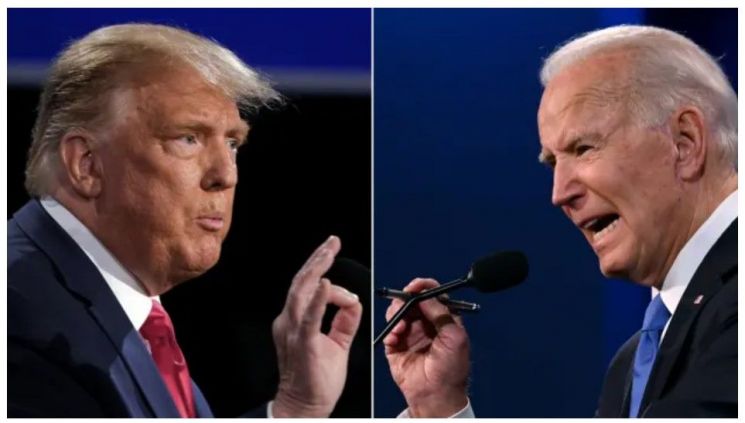
The report anticipates that the methods of containing China could change depending on the outcome of the U.S. presidential election in November.
If former President Donald Trump returns to power, it is expected that he will implement a more intense protectionist trade policy through tariffs than during his first term. He is likely to actively utilize Section 232 of the U.S. Trade Act, which restricts imports for U.S. national security, and Section 301 of the U.S. Trade Act, which imposes tariffs on countries that do not engage in fair trade.
The report pointed out, "Domestically, there remains a limitation in that economic security issues related to industrial supply chains are still focused on physical sectors such as semiconductors, secondary batteries, and materials and equipment trade," and recommended, "It is essential to comprehensively consider the expanded targets and methods expected in biotech, finance and investment services, and cloud service sectors, and to conduct an overall review of existing security-related advanced industries."
© The Asia Business Daily(www.asiae.co.kr). All rights reserved.

















