Sales of 17.89 trillion KRW, Operating Profit of 819.5 billion KRW
Bio and Livestock Slump Overshadow Food Sector's Strong Performance
Plan to Enhance Profitability with High-Margin Amino Acid Products
CJ CheilJedang did not smile despite the global K-food craze. While its food division, the core business, saw a significant improvement in performance by solidifying its No. 1 position in dumpling and pizza sales in the U.S. amid high inflation, the overall operating profit last year fell by more than 35% compared to the previous year due to continued sluggishness in the bio and livestock sectors caused by the global livestock recession.
CJ CheilJedang's Operating Profit Down 35% Year-on-Year... Bio and Livestock Sectors Slump Despite K-Food Popularity
CJ CheilJedang announced on the 13th that its operating profit excluding CJ Logistics was 819.5 billion KRW last year, down 35.4% from the previous year. During the same period, sales decreased by 4.7% to 17.89 trillion KRW. However, operating profit in the fourth quarter increased by 28% year-on-year to 157.9 billion KRW, marking a turnaround to growth after five quarters. Including CJ Logistics, consolidated annual sales were 29.02 trillion KRW, and operating profit was 1.29 trillion KRW.
By division, the food business improved its performance as K-food gained worldwide popularity. Sales of key products such as Bibigo dumplings and Hetbahn increased, resulting in sales of 11.26 trillion KRW, up 1.4% year-on-year, and operating profit of 654.6 billion KRW, up 4.9%. Notably, overseas food business sales in the fourth quarter reached 1.39 trillion KRW, surpassing domestic sales (1.38 trillion KRW) for the first time on a quarterly basis.
This growth was driven by seven major global strategic products including dumplings, chicken, P-Rice, K-sauce, kimchi, seaweed, and rolls, expanding in key regions such as North America, Europe, and Australia. In North America, Bibigo dumplings and Schwann’s flagship pizza brand ‘Red Baron’ further solidified their No. 1 positions. Additionally, frozen chicken and processed rice sales grew by 19% and 15% respectively compared to the previous year. Furthermore, sales in Europe and Australia, where CJ CheilJedang made a full-scale entry last year, exceeded 100 billion KRW, accelerating the expansion of new territories. In Europe, the business expanded beyond the UK and Germany to new countries such as France and Sweden, while in Australia, Bibigo products performed well centered around Woolworths, the largest supermarket chain.
A CJ CheilJedang official explained, "In addition to increased sales volume, strategic collaboration with distributors and efficiency improvements in selling and administrative expenses expanded the scope of profit improvement."
However, the strong performance in the food business was overshadowed by sluggishness in the bio and CJ Feed&Care divisions. The bio division recorded sales of 3.49 trillion KRW and operating profit of 68.9 billion KRW. Operating profit declined year-on-year due to the heavy burden of rising raw material prices, such as raw sugar, and continued underperformance of Selecta. However, excluding Selecta, which was decided to be sold in October last year, operating profit in the fourth quarter increased by 27.5 billion KRW compared to a year earlier. Selecta is an affiliate producing concentrated soy protein in Brazil. In terms of sales, growth in high-margin specialty amino acids such as tryptophan, valine, arginine, and histidine was notable.
Meanwhile, CJ Feed&Care, an independent feed and livestock corporation, posted an operating loss of 86.4 billion KRW due to weak feed and livestock demand in key markets such as Indonesia and Vietnam. Sales declined by more than 11% from 2.82 trillion KRW last year to 2.49 trillion KRW.
Additionally, the FNT (Food & Nutrition Tech) division, which focuses on seasoning materials, nutrition, and future food materials, recorded sales of 648.1 billion KRW and operating profit of 182.4 billion KRW. A CJ CheilJedang official said, "Through manufacturing cost innovation, we overcame the base effect from the previous year and price declines of key products due to the global market downturn, improving fourth-quarter operating profit by more than 37% compared to the previous quarter."
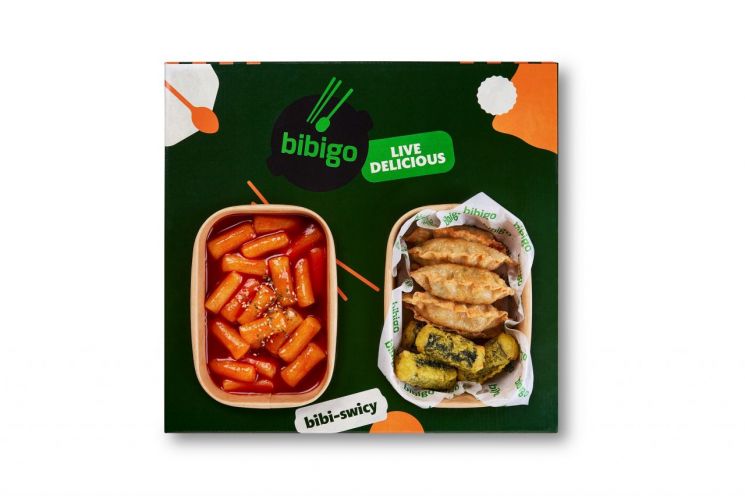
CJ CheilJedang to Increase Market Share of Dumplings and Chicken in North America... Also Targeting Halal Market
CJ CheilJedang plans to further strengthen its dominance in the North American market by leveraging its seven global strategic products and K-Street Food, which commercializes street foods. The company also aims to accelerate new territory expansion by entering halal markets in France, Northern Europe, and Southeast Asia.
Domestically, CJ CheilJedang will continue to launch differentiated products following Gourmet Sobaba Chicken and Bibigo Whole Shrimp Dumplings. It will also pursue efficient growth through a selection and concentration strategy by investing resources in key items and improving selling and administrative expenses.
The bio division plans to improve profitability by expanding sales of high value-added specialty items, while the FNT division will actively target the seasoning materials and global nutrition materials markets.
A CJ CheilJedang official stated, "We will continue to expand global new territories by accelerating entry into mainstream markets in key countries and untapped markets, while achieving qualitative growth through management efficiency."
Meanwhile, CJ CheilJedang’s decline contrasts with other food companies such as Nongshim and Samyang Foods, which recorded record-high sales thanks to the popularity of K-food. Nongshim’s operating profit increased by 89% year-on-year to 212 billion KRW last year. Samyang Foods’ operating profit exceeded 100 billion KRW for the first time, reaching 146.8 billion KRW.
Since CJ CheilJedang’s downturn is due to deteriorating performance outside the food business, there are views that it needs to improve its financial structure by selling non-core affiliates. Last year, CJ CheilJedang sold its stake in Jisangjwi, a food manufacturer in China, along with Selecta in July. Park Sang-jun, a researcher at Kiwoom Securities, pointed out, "In the mid-term, it is necessary to sell inefficient businesses or those with weak synergy with the core business to repay borrowings."
© The Asia Business Daily(www.asiae.co.kr). All rights reserved.

















