51 Sites Including Water and Wastewater Treatment Facilities Targeted
The Nakdong River Basin Environmental Office announced on the 13th that it plans to conduct a total of 132 inspections in 2024 targeting 51 environmental basic facilities (hereinafter referred to as 'allocated facilities') assigned pollution load quotas within its jurisdiction to improve the water quality of the Nakdong River.
Allocated facilities refer to wastewater treatment facilities with assigned pollutant discharge loads within the total maximum daily load management implementation plan area, including public wastewater treatment facilities and facilities for treating human and livestock waste.
According to the 4th phase (2021?2030) total maximum daily load management implementation plan, the Environmental Office allocated pollutant discharge loads to 51 environmental basic facilities in 2022 and conducts quarterly or semiannual inspections annually to verify compliance.
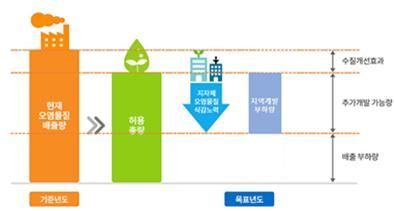 Schematic diagram of the total water pollution load management system. [Image provided by Nakdong River Authority]
The implementation plan area includes Busan Metropolitan City, Ulsan Metropolitan City, and Gyeongnam's Geochang-gun, Goseong-gun, Gimhae-si, Miryang-si, Sacheon-si, Sancheong-gun, Yangsan-si, Uiryeong-gun, Jinju-si, Changnyeong-gun, Hadong-gun, Haman-gun, Hamyang-gun, and Hapcheon-gun.
This year, regular inspections will also be conducted, and compliance with the allocated load will be confirmed through analysis of the discharge flow and effluent water quality of the allocated facilities. If exceeded, a penalty for exceeding the total maximum daily load will be imposed.
Last year, out of a total of 174 inspections of allocated facilities, one case exceeded the allocated load (T-P), resulting in a penalty, and the facility is currently operating normally after corrective measures were completed.
Total maximum daily load management is a system that sets target water quality for each unit watershed and manages the total amount of water pollutants discharged within each water system influence area to achieve these targets.
Metropolitan cities and provinces establish basic plans by determining pollutant load allocations for each unit watershed and basic local government. If the average water quality value of water quality measurement data over three years exceeds the target water quality twice consecutively in a unit watershed, the local government (metropolitan city, city, county) establishes and manages an implementation plan by allocating the assigned load by pollution source groups (domestic, livestock, industrial, land, aquaculture, landfill) within their jurisdiction.
The Nakdong River basin has been implementing the total maximum daily load management system since 2004, setting BOD (biochemical oxygen demand) and T-P (total phosphorus) as target pollutants for total maximum daily load management, and is currently implementing the 4th phase basic and implementation plans.
Director Choi Jong-won stated, “Local governments operating environmental basic facilities such as sewage treatment plants are requested to properly manage and operate their facilities to comply with total maximum daily load, and to make efforts to minimize pollution generation even during the development stage.”
© The Asia Business Daily(www.asiae.co.kr). All rights reserved.

















