The European Union (EU) has reached a provisional agreement to reform fiscal rules aimed at reducing national debt and securing capacity for investment in strategic areas such as green initiatives.
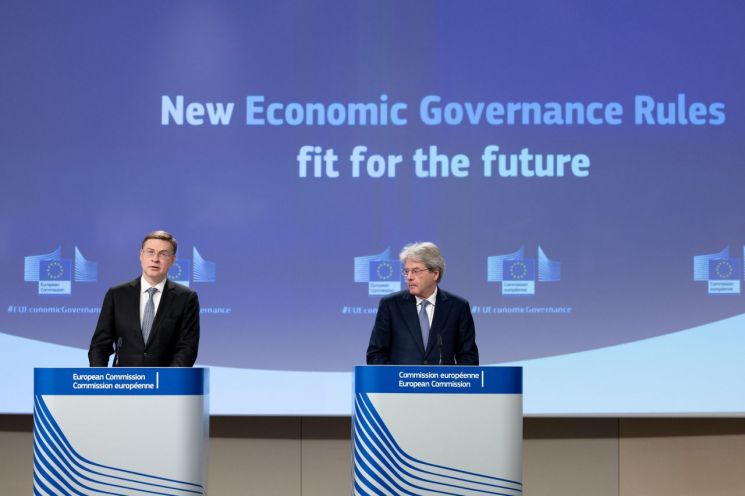
On the 10th (local time), the EU Council announced that it had reached a provisional agreement on the reform of fiscal rules during a meeting held the previous day in Brussels, Belgium.
The EU Council and the European Parliament have committed to maintaining the goal of gradually reducing debt ratios and deficits in a growth-friendly manner while ensuring investments in strategic sectors such as digital, green, and defense. The Belgian presidency of the rotating EU Council described the outcome of the 16-hour talks in Aix as a "Deal!"
The reform of the fiscal rules will subsequently undergo official approval by the governments of each member state and the European Parliament before being enacted into law. It could be applied starting in 2025.
Under the reformed fiscal rules, the existing limits remain in place: national debt capped at 60% of Gross Domestic Product (GDP) and fiscal deficits limited to 3% of GDP. However, if these limits are exceeded, sanctions will not be imposed immediately; instead, a debt reduction period will be granted to secure investment capacity. This change addresses the fact that the previous fiscal rules were too strict and often not properly followed. The rules were temporarily suspended due to the need for economic stimulus and support for Ukraine amid the COVID-19 pandemic and Russia’s invasion of Ukraine.
Subsequently, amendments to ease the debt reduction burden were proposed but faced difficulties due to differing positions among European countries. Germany criticized the proposals as too lenient, while France, Italy, and others insisted that investment activities should continue even if debt limits are exceeded. Ultimately, the disagreements were resolved by including minimum requirements related to debt reduction efforts.
Ursula von der Leyen, President of the European Commission, welcomed the political agreement on the ambitious reform of EU economic governance. She stated, "Under the new fiscal rules, EU member states will be able to strengthen public finances while investing in their respective strengths."
© The Asia Business Daily(www.asiae.co.kr). All rights reserved.

















