Korea Research Institute Announcement... "Urban Residents Feel More Discomfort"
"Immigration Policies Should Consider Regional Differences"
A study has revealed that cities in Korea tend to exclude foreign immigrants more strongly than rural areas. It was confirmed that the level of discomfort toward immigrants is high, and the willingness to interact with them is weak.
On the 10th, the Korea Research Institute for Human Settlements (KRHIS) released the results of a study titled "Are Cities Truly Tolerant?: A Comparison of Attitudes Toward Immigrants Between Urban and Rural Residents." The study was based on the 2021 "National Multicultural Acceptance Survey," which surveyed 5,000 people nationwide aged 19 to 74.
According to the study, the percentage of respondents who did not want foreign workers or immigrants as neighbors was 29.0% among urban residents and 26.4% among rural residents. Regarding international refugees, the proportion of those who did not want them as neighbors was also higher in cities at 48.6%, compared to 43.7% in rural areas.
In terms of forming social relationships with immigrants, urban residents also felt more discomfort than rural residents. When measuring the level of discomfort in having immigrants as coworkers, the score was 3.9 in cities and 3.7 in rural areas. The level of discomfort in having immigrants as friends was also higher among urban residents at 3.7 points, compared to 3.1 points in rural residents. A higher score indicates greater discomfort.
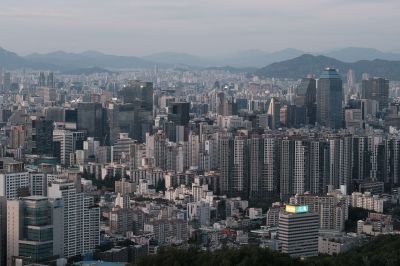
Urban residents showed a weaker willingness to interact with immigrants, while their rejection and avoidance sentiments were relatively stronger. Additionally, the tendency to expect unilateral conformity from immigrants was found to be stronger than that of rural residents.
Urban residents were more likely to anticipate negative changes in their local areas due to an increase in the number of immigrants and to evaluate national changes caused by immigrants negatively.
The percentage of respondents who did not want habitual drug users (urban 96.7%, rural 96.0%) and AIDS patients (urban 91.7%, rural 87.2%) as neighbors was also slightly higher in urban areas. However, in the case of homosexuals, the response rate was higher among rural residents (77.5%) than urban residents (75.8%).
The KRHIS pointed out that "policies aimed at improving perceptions of immigrants are being promoted without considering differentiated regional conditions, resulting in no substantial changes."
So-hyun Lee, a senior researcher at KRHIS, said, "For residents to have a positive perception of community changes caused by immigrant inflows, it may be necessary to improve the living environment in immigrant residential areas and promote mutual exchange activities."
© The Asia Business Daily(www.asiae.co.kr). All rights reserved.
![Clutching a Stolen Dior Bag, Saying "I Hate Being Poor but Real"... The Grotesque Con of a "Human Knockoff" [Slate]](https://cwcontent.asiae.co.kr/asiaresize/183/2026021902243444107_1771435474.jpg)











