11~12 Tons of Feces Annually... Environmental Pollution Causes Distress
Climbers Must Purchase Feces Bags from Now On
In the future, climbers aiming to scale Mount Everest, the world's highest peak, will be required to carry bags to collect their own waste.
On the 8th (local time), the British BBC reported that the Pasang Lhamu Autonomous Council, which oversees most of the Everest region, has implemented this measure.
Mingma Sherpa, chairman of the Pasang Lhamu Autonomous Council, stated, "Complaints have been received about foul odors on our mountain, human feces visible on the rocks, and some climbers falling ill. This damages our image and is unacceptable."
Mount Everest has a total of four camps. Starting with the base camp at an altitude of 5,300 meters, there are two more camps between the base camp and the summit camp at 8,850 meters. At the base camp, considered the starting point of the climb, blue drums are placed and used as temporary toilets, but the other three camps have no toilets.
When there are no toilets, climbers usually dig holes in lower altitude areas to use as toilets, but as the altitude increases, snow accumulates or the ground hardens, so they relieve themselves without digging.
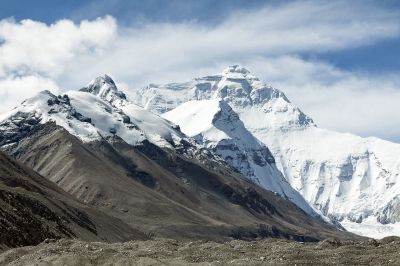
The problem is that as the number of climbers increases every year, the Everest vicinity is suffering from environmental pollution caused by human waste. According to data from the Sagarmatha Pollution Control Committee (SPCC), a local environmental NGO, about 11 to 12 tons of human waste are discarded near Everest annually. This is roughly equivalent to the weight of two fully grown elephants.
Moreover, even if the waste is brought down, there are no waste disposal facilities near Everest. The waste is dumped in the small village of Gorak Shep, located at an altitude of 5,163 meters. CNN reported in 2018 that "decades of accumulated waste in Gorak Shep have reached saturation."
Gary Porter, an American mountaineer and engineer who established the "Mount Everest Biogas Project" (MEBP) to find solutions to this problem, expressed concern that "these wastes could flow into rivers and contaminate drinking water sources."
In response, the Pasang Lhamu Autonomous Council is procuring about 8,000 waste bags for the climbing season starting in March. These bags contain chemicals and powders that solidify human waste and make it nearly odorless. Climbers ascending Mount Everest and nearby Lhotse must purchase these bags at the base camp and have them checked upon their return to the base camp.
Chairman Mingma said, "This is a method that climbers have used on Denali (the highest peak in North America) and in Antarctica," adding, "Now everything will change."
© The Asia Business Daily(www.asiae.co.kr). All rights reserved.

![Clutching a Stolen Dior Bag, Saying "I Hate Being Poor but Real"... The Grotesque Con of a "Human Knockoff" [Slate]](https://cwcontent.asiae.co.kr/asiaresize/183/2026021902243444107_1771435474.jpg)














