Fed Damps Early Rate Cut Expectations
Large-Scale Treasury Issuance Also Cools Investor Sentiment
Long-Term Rate Cut Outlook Remains Intact
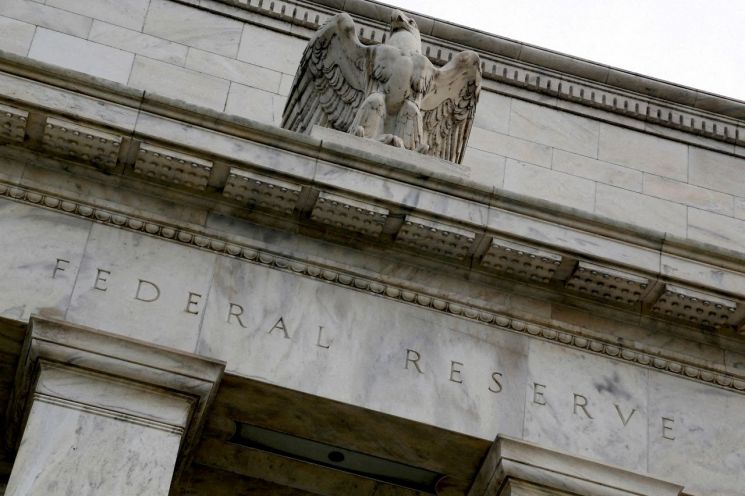
Recently, as the U.S. Federal Reserve (Fed) made consecutive remarks dampening expectations for an early interest rate cut, analysts have noted that the bond market enthusiasm, which had surged at the end of last year, is rapidly cooling down.
On the 7th (local time), major foreign media reported that investors are adjusting their bond investments in response to the Fed's concerns that lowering rates too quickly could trigger a rebound in inflation.
Government bond yields move inversely to prices, and looking at the 10-year yield, it has recently surged and is currently about 20 basis points higher than the lowest point in December last year. Although expectations remain that the Fed will cut rates several times this year, the timing of when borrowing costs will be lowered and how much rates will fall remain uncertain. Additionally, the U.S. Treasury plans to conduct record-high bond auctions over the next three months. The sharp increase in government bond supply is also an obstacle to bond strength.
Robert Tipp, Chief Investment Strategist and Global Head of Fixed Income at PGIM, said, "Potential outcomes have become fragmented due to employment data and Fed press conferences." Market expectations have been shattered, making economic forecasting difficult. He projected that the 10-year yield could reach as high as 5% this year.
The market, which had been heated by expectations of an early rate cut, has recently quieted down following the Fed's successive hawkish remarks. Fed Chair Jerome Powell dismissed expectations for a rate cut in March during the January monetary policy meeting, stating that greater confidence is needed that inflation is moving toward the 2% target. He reaffirmed this stance during an appearance on CBS's "60 Minutes."
Thomas Barkin, President of the Richmond Federal Reserve Bank, supported Powell's remarks during a speech at the Economic Club in Washington DC, saying, "I agree that patience is necessary to reach where we want to be." Adriana Kugler, a Fed Board member, also echoed this sentiment at a Brookings Institution event in Washington DC, stating, "Until there is confidence that inflation has stably returned to the 2% target, I will side with focusing on inflation among the two goals of price stability and employment." Recently, Loretta Mester, President of the Cleveland Fed, and Neel Kashkari, President of the Minneapolis Fed, also dismissed the possibility of an early rate cut.
Foreign media reported that the probability of a first rate cut in May rose from 33% last month to 55% this month. Investors had expected a total rate cut of about 150 basis points annually in mid-January but now anticipate a 122 basis point reduction.
Spencer Hakimian, CEO of Toloo Capital Management, has recently reduced his holdings in long-term government bonds and increased purchases of short-term bonds, anticipating that interest rates will remain higher for longer than the market expects. He said, "I increased the proportion of short-term bonds because I believe the interest rate risk is much lower." The risk of high rates affecting bond values is greater in long-term bonds.
The U.S. Treasury's planned large-scale bond issuance is also a factor cooling investor sentiment. Matt Egan, Portfolio Manager at Loomis Sayles & Company, forecasts the 10-year yield to reach 4.5% due to the U.S. government's bond issuance.
However, the current rise in bond yields does not seem to have a significant impact on the stock market. The S&P 500 index reached a record high of 4995.06 on the day. Although expectations for an early Fed rate cut have been dashed, it remains clear that as long as inflation continues to cool, policy will move toward lowering rates. Jason Fried, Chief Investment Strategist at Glenmede, said, "Strong economic data can change the timing of the Fed's rate cuts but not the direction," adding, "This does not mean the Fed cannot cut rates, just that the pace has slowed somewhat."
© The Asia Business Daily(www.asiae.co.kr). All rights reserved.

















