No Structural Measures Taken 'National Outrage'
Punishment Provisions Exist but Impact Limited
Penalties Within High Sentence Crime Range
Recent incidents such as the Mercedes-Benz and Rolls-Royce cases involving 'failure to take action after an accident' have become a source of public outrage. This is because they did not provide proper rescue measures immediately after the traffic accidents. Although there are penalty provisions for such acts, their impact on sentencing is limited if there are more serious crimes involved.
According to the police on the 7th, the Gangnam Police Station in Seoul is reviewing whether to apply additional charges such as failure to take action after an accident and obstruction of official duties against 20-year-old club DJ An, who fatally struck a motorcycle delivery worker while driving under the influence at around 4:30 a.m. on the 3rd.
An did not provide proper rescue measures immediately after the accident and was only holding his pet dog, and he did not cooperate properly with the police who tried to separate the dog. At the time, An's blood alcohol concentration was reported to be at the license cancellation level. On the 5th, Yoon Jaenam, the chief judge in charge of warrants at the Seoul Central District Court, issued an arrest warrant for An on charges of causing death by dangerous driving under the Act on the Aggravated Punishment of Specific Crimes, stating there was a "risk of flight."
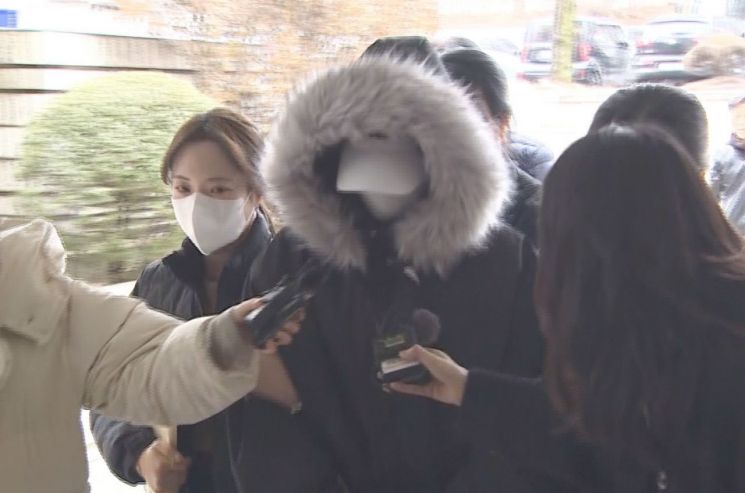 Mr. An, a Mercedes drunk driver, is attending the pre-arrest detention hearing at the Seoul Central District Court on the 5th.
 [Image source=Yonhap News]
In the so-called 'Rolls-Royce incident,' where a pedestrian was fatally struck while the driver was under the influence of psychotropic drugs, failure to take action after the accident also sparked controversy. Shin was accused of driving a Rolls-Royce near Apgujeong Station in Gangnam-gu, Seoul, in August last year, crashing onto the sidewalk, injuring Mr. B, and fleeing without providing rescue measures.
After the accident, Shin was seen using his mobile phone inside the vehicle and only partially clearing debris from the building before leaving the accident scene with the victim still there six minutes later. Mr. B fell into a brain death state and ultimately died in November last year. Shin appealed after being sentenced to 20 years in prison in the first trial on the 24th of last month.
According to crime statistics from the National Police Agency, the number of cases of failure to take action after a traffic accident under the Road Traffic Act was 15,206 in 2018, 12,191 in 2019, 11,701 in 2020, 8,964 in 2021, and 7,919 in 2022. Under current law, a person who fails to take action after a traffic accident can be sentenced to up to five years in prison or fined up to 15 million won.
However, unlike in the United States, where sentences are added by charge, in Korea, adding the charge of failure to take action after an accident does not carry much significance. In the case of the Mercedes-Benz incident, the sentence for causing death by dangerous driving is higher, so the judgment is made within that range. Oh Yoonseong, a professor of police administration at Soonchunhyang University, said, “The law is applied within the highest sentence among the charges,” adding, “From the general public’s perspective, it is only a subject of moral condemnation.”
© The Asia Business Daily(www.asiae.co.kr). All rights reserved.

















