One in Five University Students Does Not Want Children in Survey
Reasons Include Childcare Burden, Economic Issues, Time Waste, Multiple Responses
70% of Respondents Prefer Dual-Income Families
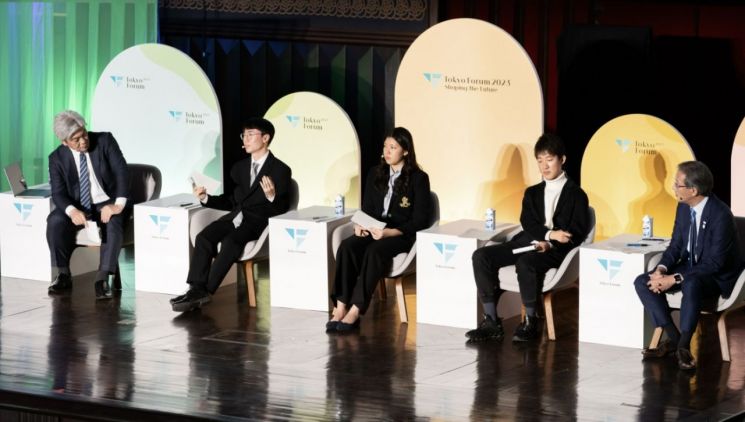
In Japan, which is facing a low birthrate problem, it was found that one in five university students does not want to have children.
On the 5th, Kyodo News cited the results of a survey by the employment website Mynavi, reporting that among university graduates expected in 2025, 19.2% responded that they do not want to have children. This is an increase of 13.1 percentage points compared to last year's survey results. The percentage of those who do not want to give birth was higher among women (23.5%) than men (12.1%).
Among respondents, 57.4% (multiple answers allowed) cited 'lack of confidence in child-rearing' as the reason for not wanting children. This was followed by 'concerns about wasting personal time (51.5%)' and 'economic worries (51.0%)'. A Mynavi representative analyzed that "economic concerns may have influenced the younger generation's perspective on life."
Additionally, 70.0% of students preferred dual-income households. This is the highest figure since related surveys began in 2016. This appears to reflect increased determination regarding career paths and concerns about future income. When asked why they preferred dual-income households, 14.8% of respondents answered "because one partner has to support the household," which was the most common response. This was followed by 12.5% who said "it is natural for each partner to have their own job."
Sakata Koya, a researcher at the NLI Research Institute, pointed out that if the decline in childbirth accelerates, "it will lead to a decrease in workers and consumers, slowing down the entire Japanese economy."
Japan hit a low point in 2005 with a total fertility rate of 1.26. However, after launching comprehensive childbirth and childcare support measures, it succeeded in raising the total fertility rate to 1.45 by 2015. Nevertheless, it fell back to 1.26 in 2022, prompting the government to take national measures.
The Japanese government has decided that from 2025, households with three or more children will be exempt from university tuition fees for all children without income restrictions. The government plans to secure about 3.6 trillion yen, approximately 32.9 trillion won, by 2028 as funding for low birthrate countermeasures.
© The Asia Business Daily(www.asiae.co.kr). All rights reserved.
![Clutching a Stolen Dior Bag, Saying "I Hate Being Poor but Real"... The Grotesque Con of a "Human Knockoff" [Slate]](https://cwcontent.asiae.co.kr/asiaresize/183/2026021902243444107_1771435474.jpg)
















