Boheomyeon 'Role and Challenges of Insurance in the AI Era' Report
"Advanced AI... Proper Establishment of Insurance Law, Liability Law, and Regulatory Law Needed"

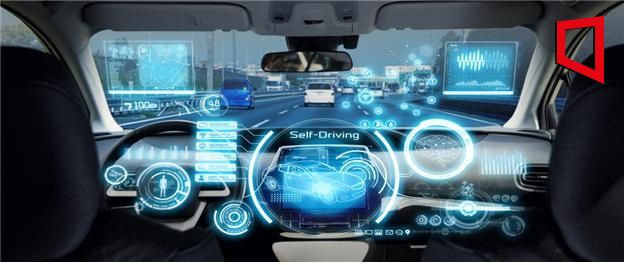
Who is responsible if an autonomous vehicle equipped with artificial intelligence (AI) causes an accident while driving? The responsible parties?car manufacturers, telecommunications companies, AI developers, or drivers?are still unclear. In South Korea, the Automobile Damage Compensation Guarantee Act was amended in 2020 to legislate liability for partial autonomous driving (Level 3), but liability legislation for conditional full autonomous driving (Level 4) and above is still in its infancy. Not only is the technology level of autonomous vehicles evolving, but the rapid advancement of AI technologies such as generative AI, combined with complex philosophical debates, makes legislation challenging.
AI is also a hot topic in the insurance industry. Insurance fundamentally involves entrusting and managing human anxieties and risks. While AI provides convenience across industries such as finance, healthcare, and transportation, it also generates new anxieties, making it a new market opportunity for insurers. A report titled "The Role and Challenges of Insurance in the AI Era," published on the 5th by the Korea Insurance Research Institute, emphasizes that the insurance industry must properly establish insurance law, liability law, and regulatory law to prepare for the AI era. It explains that as AI development advances, existing insurance theories and related legal principles may no longer apply, so both short- and long-term legal issues must be reviewed in advance.
A recently launched insurance product comparison and recommendation platform uses AI technology to find suitable insurance products for customers. As AI becomes more sophisticated, it is expected to offer hyper-personalized insurance products. However, in such cases, whether existing insurance legal principles?which assume group-based products?can be applied may become an issue. Insurance is a system where many people facing the same risk collectively prepare for that risk. Hwang Hyun-ah, a research fellow at the Korea Insurance Research Institute, said, "If insurers operate products by highly segmenting risk levels for each policyholder, there is a risk of creating insurance-excluded groups or causing customer discrimination." She added, "Since this affects the foundation of the insurance system, sufficient discussion and review are necessary."
When AI recruits insurance customers, issues arise regarding who is responsible if incomplete sales occur or if insurance claim reviews are conducted unfairly. Currently, South Korea is in the early stages of discussing what responsibilities AI developers and businesses using AI for sales should bear. There is also consideration of granting legal personhood to AI itself. Research fellow Hwang said, "Once matters regarding liability allocation in AI liability law are determined, the same content will be applied to the insurance industry." She added, "However, since insurers have traditionally borne liability for damages caused by illegal acts related to recruitment by employees, it is highly likely that insurers will be responsible if illegal recruitment acts occur due to AI."
Currently, regulations on sales activities under the Insurance Business Act and the Financial Consumer Protection Act are premised on human actions. If AI reaches a level that replaces human tasks, sales activity regulations will likely need to change. Regarding AI regulation, South Korea established financial sector AI guidelines in 2021, implementing a triple internal control system including AI ethical principles, dedicated AI organizations, and risk management policy establishment. Subsequent measures such as security guidelines and data library operations have also been implemented. However, measures addressing the rapid spread of generative AI remain insufficient. Research fellow Hwang said, "Current AI-related regulatory measures are being prepared at the general law level," adding, "There is a need to create separate regulatory laws that fully reflect the characteristics of finance and insurance."
In the United States, the National Association of Insurance Commissioners (NAIC) announced guidelines related to insurers' use of AI in December last year. The guidelines require the establishment of an Artificial Intelligence System (AIS) program, an internal control regulation for responsible AI use. The AIS program must be designed to minimize the possibility of consumer rights violations and assign responsibility for AI development, implementation, and supervision to senior management. The guidelines also propose management measures for insurers regarding third parties that provide data and AI systems. Considering that small and medium-sized insurers may find it difficult to effectively manage third-party AI system providers, the guidelines aim to establish complementary measures. Research fellow Hwang said, "The insurance industry in the AI era must actively utilize AI to enhance services while preventing consumer harm," adding, "In the future, during the enactment of general and individual laws, it is essential to thoroughly review management measures, liability attribution, and compensation plans for risks caused by AI."
© The Asia Business Daily(www.asiae.co.kr). All rights reserved.


















