Researchers: "Deaths Increase Even with Carbon Neutrality"
"2040 Is Dangerous, 2080 Beyond Imagination"
If climate change continues as it is, the number of summer deaths in Seoul could increase by up to 82% by the end of this century. Even if carbon neutrality is practiced from now on, the death rate could still rise by 23%.
Sanghyuk Kim (first author), a PhD candidate in the Cooperative Program in Landscape Architecture at Seoul National University Graduate School of Environmental Studies, and Donggeun Lee (corresponding author), a professor in the Department of Ecological Landscape Architecture and Regional Systems Engineering at Seoul National University College of Agriculture and Life Sciences, introduced this analysis in their paper titled “Prediction of Future Summer Deaths According to Climate Change Scenarios,” published in the Korean Journal of Insurance Studies at the end of last month.
The research team stated, “From 1997 to 2022, the average annual number of summer (June to August) deaths in Seoul and Busan was 8,706 and 4,229, respectively.” This figure includes deaths from all diseases except external causes such as suicide and accidents.

During this period, the annual number of deaths showed a continuous increasing trend, with a sharp rise especially after 2019. The research team explained, “When the human body is exposed to high temperatures, heat-related illnesses can occur or lead to death, and if there are underlying respiratory or cardiovascular diseases, these can worsen and result in death.”
Analyzing four scenarios of the Shared Socioeconomic Pathways (SSP) developed by the Intergovernmental Panel on Climate Change (IPCC), the team predicted that the summer annual Wet Bulb Globe Temperature (WBGT), calculated based on temperature and humidity, will increase until the end of this century. Accordingly, the highest number of summer deaths is expected to occur in Seoul and Busan between 2090 and 2099.
In Seoul, even if carbon neutrality is achieved, the number of deaths is projected to increase by 23% compared to the average summer deaths over the past 26 years (8,706). This corresponds to 10,707 deaths under the SSP1 scenario, which assumes a carbon-neutral society. If carbon emissions continue as they are now, this increase rate rises to 82%, with 15,860 deaths projected under the SSP5 scenario, which assumes a society that continues to emit greenhouse gases at current levels.
Professor Donggeun Lee said, “Even if we wake up now and achieve carbon neutrality, temperatures and humidity will rise, and excess deaths will occur. In a way, this moment may be the time when we can enjoy the best climate.”
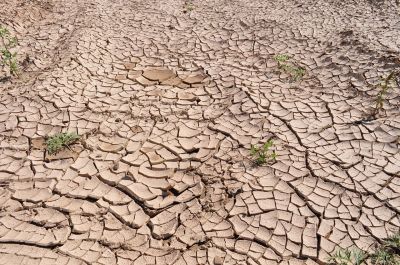
Meanwhile, in Busan, the number of summer deaths has also steadily increased, but the rate of increase was lower than in Seoul. This is analyzed to be due to the population difference between Seoul and Busan, as well as climatic characteristics.
The increase rates by scenario ranged from a minimum of 9% to 19%. The average number of summer deaths in this region is 4,229, and the projected summer deaths between 2090 and 2099 range from 4,617 to 5,028, indicating an increase of up to about 800 compared to the current figure.
The research team explained, “Busan already has an average annual humidity of 78%, and the limit of the possible increase in WBGT is low, resulting in a smaller increase in the number of deaths compared to Seoul.”
Professor Lee emphasized, “Climate change may not seem to cause major problems in the near future, such as 2030, but as 2040 or 2050 approaches, it could become very dangerous, and by around 2080, it will be beyond imagination.”
© The Asia Business Daily(www.asiae.co.kr). All rights reserved.
![User Who Sold Erroneously Deposited Bitcoins to Repay Debt and Fund Entertainment... What Did the Supreme Court Decide in 2021? [Legal Issue Check]](https://cwcontent.asiae.co.kr/asiaresize/183/2026020910431234020_1770601391.png)

















