40% of Prime Market Listed Companies Announce PBR Improvement Measures
ROE Target Disclosure and Specific Growth Strategies Presented
Shareholder Return Plans Also Specifically Revealed
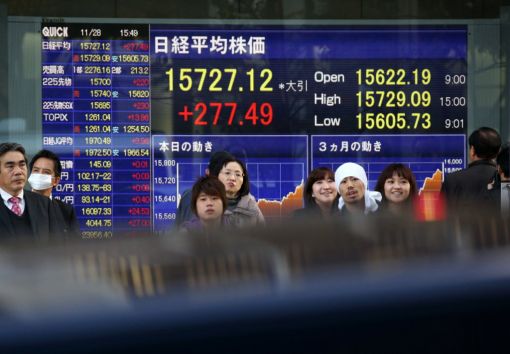 Nikkei 225 Index
After the Japanese government implemented the Japanese version of the 'Corporate Value Program,' it was found that about 40% of the companies listed on the Prime Market of the Tokyo Stock Exchange presented reform measures to improve their price-to-book ratio (PBR). Companies with improved PBR commonly disclosed ROE target announcements, shareholder return policies, and growth strategies in detail.
According to NH Investment & Securities on the 2nd, an analysis of companies with improved PBR after the implementation of the Japanese corporate value-up program revealed commonalities such as the announcement of return on equity (ROE) targets, initiation and execution of shareholder return policies, and the launch of growth strategies.
There is a reason why the announcement of ROE targets is the first commonality. When ROE exceeds 8%, the likelihood of PBR surpassing 1 increases significantly. The expected return required by shareholders (cost of equity) is generally around 8%.
Jinju Lee, a researcher at NH Investment & Securities, explained, "There is a correlation between ROE and PBR," adding, "When ROE is around or below 8%, PBR tends to hover around 1, but when ROE exceeds 8%, PBR trends upward."
Another common point is the concretization of shareholder return policies. In the past, Japanese companies held large amounts of cash deposits rather than investing in growth, which deteriorated capital efficiency. After the implementation of the Japanese corporate value-up program, companies are shifting towards improving ROE through share buybacks and dividend increases.
The initiation of specific growth strategies is also important because the basis for improving ROE is to grow the business and steadily increase profits. The researcher stated, "By publicly announcing growth plans and their feasibility to investors, companies can attract stable investment funds," and added, "The Tokyo Stock Exchange is challenging Japanese companies to delve into this area."
While implementing the Japanese corporate value-up program, the Tokyo Stock Exchange recommended short-term share buybacks or dividend increases using surplus funds. Specifically, companies were encouraged to present management goals mindful of capital costs and balance sheets (BS). The key was fundamental measures rather than one-time responses. Influenced by these policy efforts, the Japanese stock market is showing an upward trend, reaching its highest level in 34 years.
Meanwhile, the Financial Services Commission plans to announce a 'Corporate Value-Up Program' applicable to all KOSPI-listed companies and KOSDAQ150 firms by the end of this month. Following the announcement of the corporate value-up program policy by the Financial Services Commission, buying interest surged in low-PBR stocks such as Hyundai Department Store, Shinsegae, and Youngone Trading.
© The Asia Business Daily(www.asiae.co.kr). All rights reserved.
















