US Treasury Department Announces Bond Issuance Plan
10-Year Treasury Yield Falls to Around 3.9%
January Private Sector Employment Growth Slows
The three major indices of the U.S. New York stock market showed mixed trends in early trading on the 31st of last month (local time) ahead of this year's first Federal Open Market Committee (FOMC) meeting. The Nasdaq index fell more than 1% as it absorbed profit-taking from Microsoft (MS) and Alphabet, Google's parent company, which reported 'earnings surprises' the previous day. While investors cautiously awaited the FOMC results, data showed a slowdown in private employment for January. After the U.S. Treasury announced its plan for second-quarter bond issuance this year and stated it would not further increase issuance volume through next year, the yield on the 10-year U.S. Treasury note fell to around 3.9%.
As of 9:51 a.m. at the New York Stock Exchange (NYSE) on the day, the Dow Jones Industrial Average was trading at 38,504.41, up 0.1% from the previous trading day. The S&P 500, which focuses on large-cap stocks, was down 0.65% at 4,892.86, and the tech-heavy Nasdaq index was down 1.2% at 15,322.7.
Despite Microsoft and Alphabet achieving better-than-expected results in the fourth quarter of last year, fueled by the artificial intelligence (AI) boom, both stocks declined in early trading due to profit-taking. Microsoft was down 0.31%. Alphabet plunged 6.29% after its fourth-quarter advertising revenue fell short of market expectations. Sam Stovall, Chief Investment Strategist at CFRA Research, analyzed, "The decline in Alphabet and MS stock prices despite positive results is likely due to the short-term tendency to 'buy the rumor, sell the news.' Even though the results were better than expected, people may simply sell stocks to take profits."
The employment data released that morning confirmed signals of a slowdown in the U.S. labor market. According to U.S. employment data firm Automatic Data Processing (ADP), private sector employment in the U.S. increased by only 107,000 jobs in January compared to the previous month. This was a decrease of 51,000 from the previous month's increase of 158,000 and fell significantly short of the market experts' forecast of 150,000. This contrasted with the labor market sentiment revealed in the Department of Labor's Job Openings and Labor Turnover Survey (JOLTS) released the previous day. According to JOLTS, the number of job openings at U.S. companies in December increased by 101,000 from the previous month to 9.026 million, marking the largest increase in three months. A clearer picture of the labor market situation is expected from the January employment report, which the Department of Labor will release on February 2. The report will include data on nonfarm payrolls and the unemployment rate.
Market expectations for an early rate cut in March, which had waned, have risen again following the ADP private employment data release. According to the Chicago Mercantile Exchange (CME) FedWatch tool, the futures market currently reflects over a 55% chance that the Fed will hold rates steady in January and then cut rates by at least 0.25 percentage points at the March FOMC meeting. This is a rise of more than 14 percentage points from just over 41% the previous day.
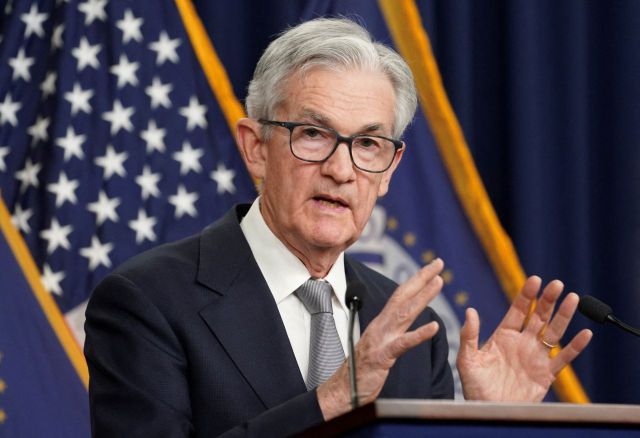
The first FOMC meeting of the year is scheduled for 2 p.m. Eastern Time on the day. It is widely expected that the FOMC will keep the benchmark interest rate steady at the current 5.25?5.5% level. There is speculation that the tightening bias phrase may be removed from the FOMC statement. The market is awaiting the press conference by Fed Chair Jerome Powell following the FOMC statement release. Powell's message is expected to provide hints about the timing and pace of rate cuts.
Seth Carpenter, Morgan Stanley's Chief Global Economist, forecasted, "The FOMC statement may remove the existing additional policy 'firming' language related to rate guidance and replace it with more neutral wording such as 'policy stance.'" Matthew Luzzetti, Chief Economist at Deutsche Bank, said, "No Fed officials expected further rate hikes at the December meeting, and now they have started discussing cuts. Removing explicit tightening bias language is a prerequisite for actively considering when to cut rates and keeping the door open for a March rate cut."
International oil prices are declining due to concerns over demand slowdown caused by a contraction in China's manufacturing sector, the world's largest oil importer. West Texas Intermediate (WTI) crude oil prices are trading at $76.87 per barrel, down $0.95 (1.2%) from the previous close. Brent crude futures are down $0.83 (1%) at $82.04.
In the New York bond market, the yield on the 10-year U.S. Treasury note, a global benchmark for bond yields, fell to around 3.95%. The U.S. Treasury announced it will issue $121 billion in bonds next week, an increase from $112 billion in the previous quarter. However, the Treasury also stated it would "not further increase issuance volume for at least the next few quarters," which led to a decline in bond yields. The yield on the 2-year Treasury note, which is sensitive to monetary policy, fell to around 4.21%.
© The Asia Business Daily(www.asiae.co.kr). All rights reserved.

















