The Only Special/Metropolitan City Among 7 with Population Growth
2022 GRDP 100 Trillion, Settling as the Second Economic City
The registered resident population of Incheon City has surpassed 3 million. This is the first record in 44 years among special and metropolitan cities nationwide since Busan in 1980.
Incheon City announced that as of the 29th, the registered resident population was counted at 3,000,043. With this, it became the third most populous city among the seven special and metropolitan cities, following Seoul (9.39 million) and Busan (3.29 million).
Generally, population status is calculated by combining registered residents and foreigners. In Incheon's case, the combined population of 3,000,043 registered residents and 81,016 foreigners totals 3,081,059.
Notably, among the seven special and metropolitan cities, Incheon was the only city where the population increased in 2023 compared to 2022. During this period, Incheon's population grew by 30,096. Considering the recent severity of the low birthrate situation, Incheon's population growth is remarkable.
According to the Ministry of the Interior and Safety, last year, only Incheon and Daegu among the special and metropolitan cities showed population growth compared to the previous year; however, Daegu's increase was due to the incorporation of 'Gunwi County, Gyeongbuk.' Previously, Incheon City had widely promoted surpassing 3 million population in October 2016, but that figure included foreigners.
Mayor Yoo Jeong-bok of Incheon said, "Incheon has risen as South Korea's second economic city and has gained growth momentum with its increasing population," adding, "We will open a great era of Incheon where 3 million Incheon citizens and 7 million overseas Koreans unite."
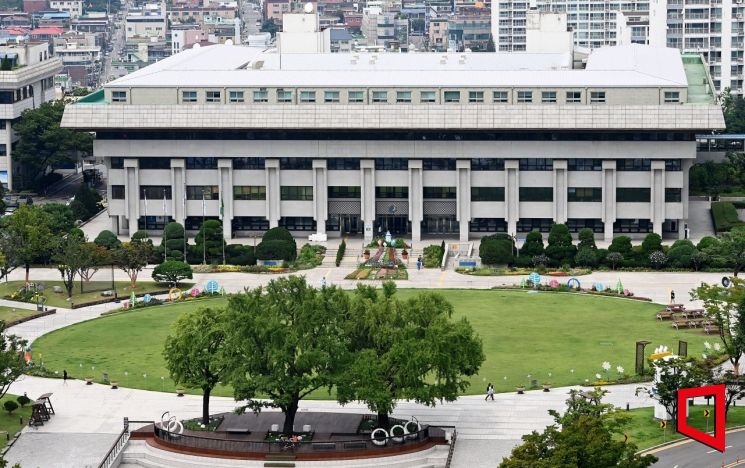
Meanwhile, according to the '2022 Regional Income (Provisional)' announced by Statistics Korea in December last year, Incheon's Gross Regional Domestic Product (GRDP) was recorded at 104.5 trillion won, surpassing 100 trillion won for the first time in history. Incheon overtook Busan to become the second-largest city in economic scale after Seoul, and its real economic growth rate recorded 6%, significantly exceeding the national average growth rate of 2.6%, showing a 6% growth rate for two consecutive years.
In this way, Incheon City is showing remarkable growth not only in population but also in economic growth, establishing itself as South Korea's second city.
Reflecting this, Incheon City has been promoting the 'Incheon-type administrative system' reform, changing the current administrative districts from 2 counties and 8 districts to 2 counties and 9 districts to address changes in administrative conditions such as population increase, resolve residents' inconveniences due to separation of living areas, proactively respond to future administrative demands, and establish a customized regional development foundation. The related legislation passed the National Assembly on the 9th and is scheduled to be applied from July 1, 2026.
The new administrative system reform aims to lay the foundation for balanced development between the old and new downtown areas and to leap into one of the world's top 10 cities by promoting projects such as the Jemulpo Renaissance and New Hong Kong City projects centered on Jung-gu and Dong-gu, and the comprehensive development plan for the northern area.
© The Asia Business Daily(www.asiae.co.kr). All rights reserved.
!["The Woman Who Threw Herself into the Water Clutching a Stolen Dior Bag"...A Grotesque Success Story That Shakes the Korean Psyche [Slate]](https://cwcontent.asiae.co.kr/asiaresize/183/2026021902243444107_1771435474.jpg)
















