Ministry of the Interior and Safety to Sequentially Introduce 'Zero Required Documents'
Breaking Down Barriers Between Ministries for Data Linkage and Sharing
Zero Required Documents at Government Offices by 2026
Major Reform of 110-Year-Old Seal Certificate System and Related Tasks
The government will sequentially introduce the 'Zero Required Documents' policy by 2026, which allows citizens to apply for civil complaints and public services without submitting information already held by the government. This aims to eliminate the hassle of submitting documents from other agencies for identity verification, with the core goal of breaking down barriers between ministries to link and share data. In particular, the seal certificate, which previously required an in-person visit for issuance, will be largely eliminated or replaced with alternative methods.
On the 30th, the government held the 7th 'Public Discussion on Livelihoods with the People,' chaired by President Yoon Seok-yeol, and announced the 'Digital Innovation Plan to Protect Citizens' Rights,' centered on these points.
The core of the innovation plan presented by the Ministry of the Interior and Safety on this day is the 'dismantling of data silos.' The ministry decided to minimize inconveniences when applying for civil complaints and public services so that citizens can receive administrative service benefits quickly and conveniently. The so-called 'Zero Required Documents' policy aims to reduce the effort citizens spend obtaining multiple documents and enable faster access to services.
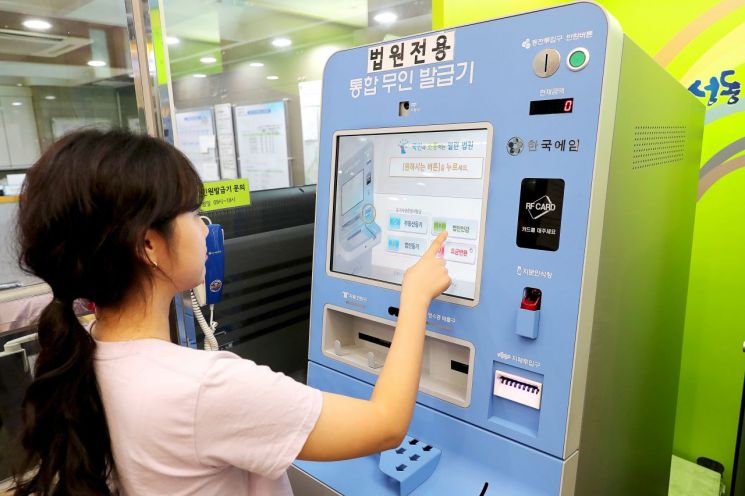
To this end, over the next three years (2024?2026), the government plans to improve 1,498 types of civil complaints and public services to be applied for without required documents from government offices. Starting in April, zero-document services will be provided for 100 types of civil complaints and public services with high public impact. For example, when infertile couples receive support for treatment costs (300,000 cases annually) or when recipients of basic living benefits or persons with disabilities receive vaccination cost support (100,000 cases annually), the four types of government-issued documents previously required will be eliminated. Until now, applying for infertility treatment support required four government-issued documents such as resident registration certificates and health insurance payment confirmations, and applying for vaccination cost support required four documents including basic living recipient certificates and disability certificates.
By the end of the year, zero-document policies will also apply to 321 services including employment incentives. When small business owners or SMEs apply for employment incentives (2 million cases annually) or when applying for discounts on public parking fees at local governments or airports (1 million cases annually), the required government-issued documents will no longer be necessary.
Another notable point is the reform of the seal certificate system, which has been used as a means of personal identification since 1914, after 110 years. The goal is to improve the seal certificate, which currently requires an in-person visit to the town or township community service center, to make it more convenient to use.
First, among a total of 2,608 seal certificate-required tasks identified through a comprehensive survey of national laws and local regulations, 2,145 tasks (82%) with low necessity, such as simple identity verification, will be gradually revised by 2025. The first goal is to revise 295 tasks that have traditionally required seal certificates by the end of the year.
For tasks that still require seal certificates, digital alternatives will be provided. These include ▲ inter-agency information sharing (real estate registration), ▲ simple authentication (online vehicle transfer registration), and ▲ online issuance of seal certificates via Government24 (for tasks less related to property rights). A Ministry of the Interior and Safety official added, "Citizens issue more than 700 million civil certificates annually, and if 30% of these can be digitally replaced through zero required documents, it is expected to save about 1.2 trillion KRW in social costs annually."
© The Asia Business Daily(www.asiae.co.kr). All rights reserved.
![Clutching a Stolen Dior Bag, Saying "I Hate Being Poor but Real"... The Grotesque Con of a "Human Knockoff" [Slate]](https://cwcontent.asiae.co.kr/asiaresize/183/2026021902243444107_1771435474.jpg)
















