Interview with Professor Kim Seong-pyo of Korea University
The 'Midwife' Emphasizing the Importance of Sewage Surveillance Projects
"Checking Various Indicators Beyond COVID-19"
"Wastewater surveillance analysis can be considered a 'community health checkup.' Just as elevated liver enzyme levels in a health checkup prompt a reduction in alcohol consumption, wastewater surveillance results showing the presence of viruses like COVID-19 allow us to assess the health indicators of the community and prepare appropriate response measures."
As COVID-19 transitions to an endemic phase (periodic outbreaks of infectious diseases), concerns about case monitoring continue to arise. Since the surveillance system has shifted from comprehensive testing to 'sample surveillance,' blind spots may occur. This is why the Korea Disease Control and Prevention Agency (KDCA) introduced the nationwide wastewater-based infectious disease surveillance project (KOWAS) in April last year. The project is based on the fact that viruses inside the body enter wastewater through feces and other excreta, allowing virus collection and concentration measurement from wastewater. It does not rely on infectious disease testing and reporting, making it more convenient and enabling community status monitoring at a low cost.
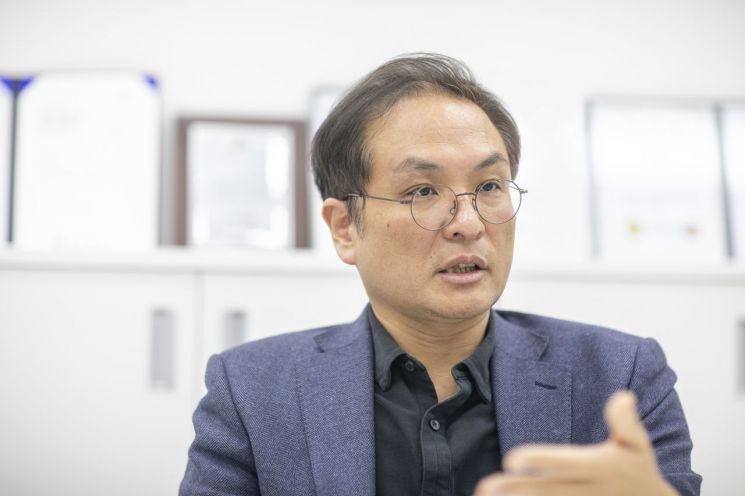
Professor Kim Seong-pyo of the Department of Environmental Systems Engineering at Korea University, who has played a midwife role in KOWAS by emphasizing the importance of wastewater surveillance since the early days of COVID-19, stated, "It is more cost-effective to track trends than comprehensive surveillance," and added, "Moreover, various information can be obtained from wastewater."
Professor Kim has also demonstrated the effectiveness of wastewater surveillance. During the pilot project phase in 2022, COVID-19 virus was detected in the wastewater of two nursing hospitals. In one facility, no confirmed cases had been reported, but based on the wastewater results, comprehensive testing was conducted, identifying four asymptomatic infected individuals, which contained the spread. In contrast, the other nursing hospital only monitored symptomatic individuals, leading to an increase in confirmed cases and eventually cohort isolation. He reflected, "If we had not confirmed through wastewater surveillance, COVID-19 would have spread inside the hospital," and added, "This showed that it is possible to effectively prevent infection spread in advance, which seems to have given the KDCA confidence."
However, he also noted that accurately determining the number of confirmed cases through wastewater surveillance is difficult. Professor Kim explained, "Virus shedding amounts can change depending on the variant, so we focus on how closely the trends match actual cases," and added, "In the U.S., after an increase in detected virus in wastewater, confirmed cases also rose subsequently." Recently, in some regions in Korea, virus concentrations have surged while the number of positive cases has not significantly changed. Professor Kim said, "Wastewater surveillance can detect the presence of asymptomatic patients, so discrepancies may occur compared to sample surveillance that only counts reported patients," and mentioned, "We are proposing complementary methods such as expanding the target wastewater treatment plants."
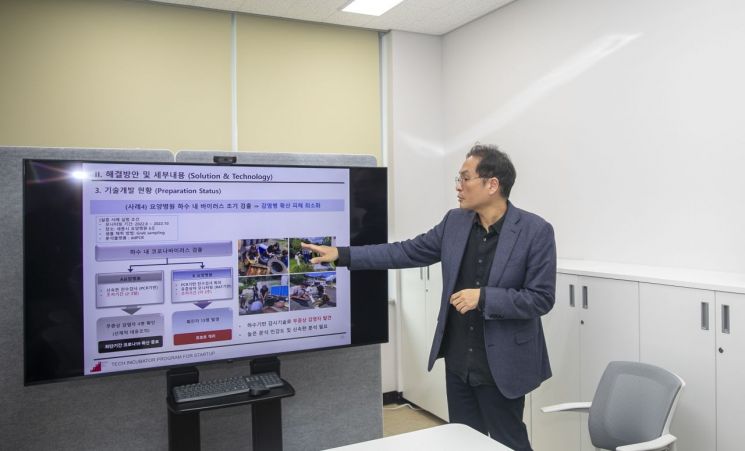 Professor Kim Seong-pyo of the Department of Environmental Systems Engineering at Korea University is explaining a case where COVID-19 positive individuals were identified through a pilot project.
 [Photo by Department of Environmental Systems Engineering, Korea University]
Wastewater contains various information besides viruses, including microorganisms and compounds. Citing an example from Australia where Professor Kim is analyzing dietary fiber in wastewater, he said, "Various information can be obtained from wastewater," and explained, "Using the diverse insights gained from wastewater surveillance can be applied to new health policies." Just as a health checkup detects various diseases, it is possible to identify a range of biomarkers from viruses like hepatitis A and dengue fever to fungi, microorganisms, and immune-related proteins. Since the project's inception, the KDCA has monitored influenza viruses and noroviruses, and at the end of last year, added antibiotic-resistant bacteria to the targets.
Professor Kim's ultimate vision is a wastewater-based 'spatial immunity.' The goal is to provide a total solution from surveillance to disinfection management for spaces where hygiene is critical, such as hospitals, senior care facilities, and postpartum care centers. To this end, he also established the venture company KAD. He said, "We plan to link systems capable of disinfecting air and water beyond just identifying the possibility of infectious disease transmission," and added, "We are also promoting projects to prevent the spread of respiratory infectious diseases in livestock based on wastewater surveillance, thereby improving productivity, not only for humans but also for animals."
© The Asia Business Daily(www.asiae.co.kr). All rights reserved.
!["The Woman Who Threw Herself into the Water Clutching a Stolen Dior Bag"...A Grotesque Success Story That Shakes the Korean Psyche [Slate]](https://cwcontent.asiae.co.kr/asiaresize/183/2026021902243444107_1771435474.jpg)

















