Foreign Workers Surpass 2 Million for the First Time
A survey revealed that 86% of university students in Japan who are set to graduate in March this year have already secured employment.
On the 26th, Yonhap News reported that the Japanese Ministry of Health, Labour and Welfare, together with the Ministry of Education, Culture, Sports, Science and Technology, announced these results based on a sample survey conducted in early December last year of over 6,000 students from 112 universities nationwide.
The job offer rate among the surveyed graduating university students was 1.6 percentage points higher than the previous year's survey and ranked as the third highest since the annual survey began in 1996. By gender, the rate was 85.0% for men and 87.2% for women, while by major, it was 86.2% for humanities and 85.4% for sciences.
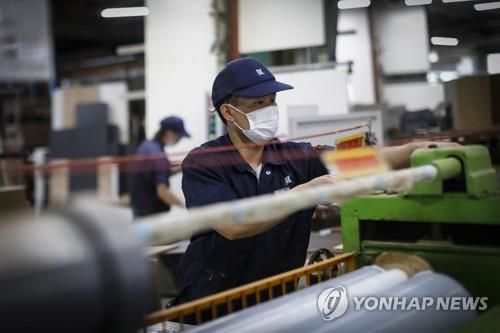
Japan is experiencing a chronic labor shortage due to low birth rates and an aging population. In this context, a survey also revealed that the number of foreign workers employed in Japan has exceeded 2 million for the first time.
The Japanese Ministry of Health, Labour and Welfare announced that, based on employer reports compiled on this day, the number of foreign workers employed as of the end of October last year was 2,048,675. This figure represents a 12.4% increase compared to one year earlier and is the largest since the survey began in 2008. It is also the first time the number has surpassed 2 million.
By nationality, the numbers were as follows: Vietnam (518,000), China (398,000), the Philippines (227,000), Nepal (146,000), and Indonesia (122,000). Koreans numbered 71,000, ranking seventh.
By industry, manufacturing accounted for the largest share with approximately 552,000 foreign workers. Other sectors included other service industries (320,000), wholesale and retail trade (264,000), accommodation and food services (234,000), and construction (145,000). It was analyzed that foreign workers are concentrated mainly in industries known to have serious labor shortages.
The Tokyo Shimbun stated, "Since 2013, the number of foreign workers has continued to rise," and predicted, "This trend will continue to strengthen going forward." In fact, the Japanese government has been implementing policies to increase foreign workers, such as expanding the sectors eligible for long-term residency permits last year.
Meanwhile, according to data from the Japanese Ministry of Internal Affairs and Communications, the proportion of the working-age population (ages 15?64) peaked at 69.8% in 1992 and has been declining every year since. The working-age population fell to 59.1% in 2020 and is projected to decrease further to 51.4% by 2065. The Japanese think tank Recruit Works Institute forecasted in a report last year that Japan will face a labor shortage exceeding 11 million people by 2040.
© The Asia Business Daily(www.asiae.co.kr). All rights reserved.

















